
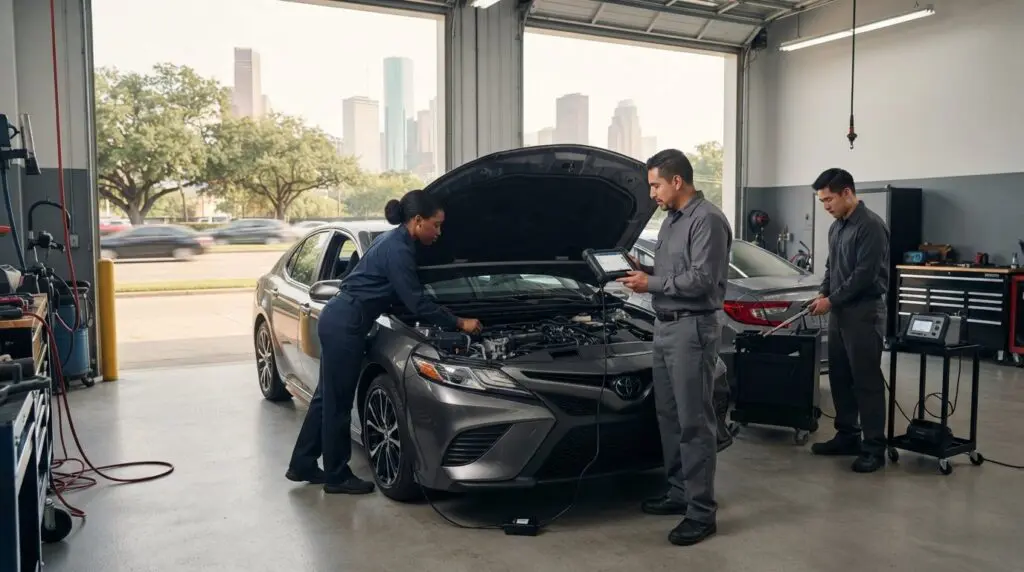
If you think a burnt-out taillight is the biggest threat to your registration sticker in 2026, you’re in for a surprise. The most common reasons for failing Texas state inspection have shifted away from simple hardware and toward complex emissions and onboard computer data. You probably feel the weight of these new regulations and the anxiety of potential repair costs. It’s frustrating to face a rejection when you rely on your vehicle every day to get across Houston. We understand that stress and want to act as your dependable partner in keeping your car road-legal.
This guide clears the confusion by explaining exactly why vehicles fail the updated 2026 requirements and how to ensure your car passes the first time. We’ll break down the new focus on smog checks and electrical diagnostics. You’ll also find a practical DIY checklist to perform in your own driveway before you ever head to the shop. Take control of your maintenance now to avoid surprises later. By the end of this article, you’ll have a clear understanding of the 2026 laws and a plan to avoid wasting time on expensive re-tests.
Key Takeaways
- Understand how HB 3297 changes your yearly routine by removing safety checks while keeping emissions requirements mandatory in Harris County.
- Identify the common reasons for failing Texas state inspection, including the critical role your check engine light plays in the 2026 process.
- Learn why a lack of a mandatory safety test doesn’t mean you’re off the hook for maintaining brakes and tires to avoid roadside citations.
- Master a simple five minute pre-inspection walk-around to catch dashboard warnings and visual defects before they lead to a failure.
- Discover how specialized diagnostics can solve complex OBD-II system errors, ensuring you pass your re-test without unnecessary repair bills.
The 2026 Texas Inspection Landscape: Safety vs. Emissions
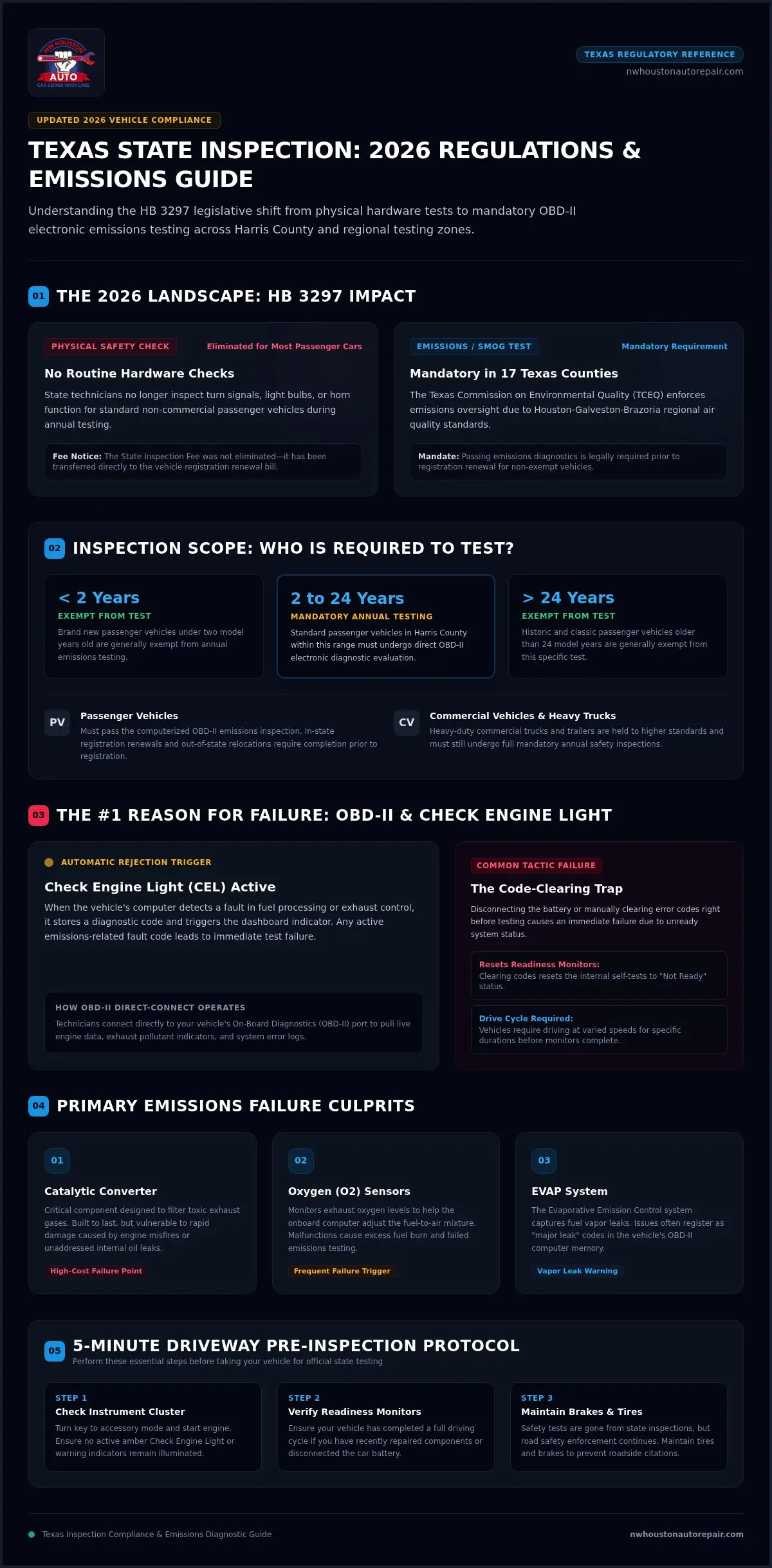
HB 3297 fundamentally changed the way we handle vehicle registration in our state. Starting in 2025, the mandatory physical safety inspection was eliminated for the majority of non-commercial vehicles. This means you no longer have to worry about a technician checking your horn, turn signals, or light bulbs as part of the official state process. However, don’t mistake this for a total pass. The “State Inspection Fee” was not eliminated; it was simply moved to your registration bill. For those of us living in Harris County, the technical requirements haven’t disappeared. They’ve just narrowed their focus. Understanding the common reasons for failing Texas state inspection in 2026 requires looking past the exterior of your car and into its internal computer systems.
Why Houston Drivers Still Need Inspections
The Houston-Galveston-Brazoria region faces unique air quality challenges. Because of this, the Texas Commission on Environmental Quality (TCEQ) maintains strict oversight of local emissions. If your passenger vehicle is between 2 and 24 years old, you are legally required to pass an annual emissions test. This isn’t a visual check. Technicians connect to your on-board diagnostics (OBD-II) system to pull data directly from the engine. This system monitors everything from fuel efficiency to exhaust pollutants. If the computer reports a fault, you fail. It’s that simple.
We see many drivers get caught off guard because they assume the new laws mean no more testing. In Houston, that’s a mistake that leads to expired stickers and potential fines. Consider these factors:
- The emissions test is still mandatory in 17 Texas counties, including Harris.
- Vehicles newer than 2 years or older than 24 years are generally exempt from this specific test.
- A passing result is required before you can renew your registration.
Commercial vs. Passenger Vehicle Rules
The rules differ depending on what you drive. Commercial vehicles, including heavy-duty trucks and trailers, must still undergo a full safety inspection every year. These vehicles are held to a higher standard due to their size and the miles they cover. For individual owners, the 2026 landscape is all about the smog check. If you’ve recently moved to Houston from out of state, the transition can be tricky. You must complete your emissions testing before you can register your vehicle in Texas. We recommend checking your dashboard for any warning lights well before your registration expires. A clear dashboard is your best friend when heading into a 2026 inspection. If you’re driving a vehicle that doesn’t meet these specific standards, you’ll find that the common reasons for failing Texas state inspection are often tied to neglected sensor maintenance or exhaust system leaks.
The #1 Reason for Failure: Emissions and the Check Engine Light
In Harris County, a glowing amber light on your dashboard is more than an annoyance. It is an automatic rejection. A Check Engine Light (CEL) remains the most frequent of the common reasons for failing Texas state inspection. Your vehicle’s OBD-II system acts as a constant watchdog. When it detects a fault in how your engine processes fuel or manages exhaust, it stores a code and triggers that light. Because 2026 regulations focus almost entirely on air quality, any emissions-related fault makes your car ineligible for registration renewal.
We often see drivers try to bypass the system by disconnecting their battery or using a handheld scanner to clear codes minutes before an inspection. This tactic backfires every time. Clearing the codes also resets your Readiness Monitors. These are internal self-tests that the car’s computer must complete to prove the emissions system is functioning correctly. If these monitors show a “Not Ready” status, the inspection station cannot pass you. Your vehicle requires a specific drive cycle, which involves driving at various speeds for a set amount of time, to reset these monitors after a repair or a code clear.
Common Emissions Component Failures
Several specific parts often trigger these failures. The catalytic converter is the most well-known. It is a high-cost component that filters toxic gases, and while it is built to last, engine misfires or oil leaks can destroy it quickly. Faulty Oxygen (O2) sensors are another frequent culprit. These sensors monitor the oxygen levels in your exhaust to help the computer adjust the fuel mixture. If they fail, your car may burn too much gas, leading to a failed smog check. Finally, don’t overlook the Evaporative Emission (EVAP) system. Sometimes, a “major leak” code is caused by something as simple as a loose or damaged gas cap that isn’t maintaining pressure in the fuel tank.
The Danger of Ignoring Electrical Warnings
Sometimes the problem isn’t mechanical at all. Modern cars rely on complex wiring and stable voltage to communicate. If you’re dealing with “phantom” lights that come and go, you likely need professional auto electrical repair to find the root cause. A failing alternator can also wreak havoc on your sensors. When voltage drops, the computer receives faulty data, triggering codes for parts that aren’t actually broken. You can learn more about these symptoms in our guide on Expert Car Alternator Repair in Houston. If your dashboard is currently lit up, contact our shop today so we can perform a precise diagnostic check before you head to the inspection station.
Critical Safety Components: Why They Still Matter
While the 2026 regulations have removed the physical safety check for most Houston drivers, legal compliance is not the same as road readiness. It is a dangerous mistake to assume your vehicle is safe just because you passed the emissions test. In the past, items like worn wipers or cracked lenses were common reasons for failing Texas state inspection. Today, those same issues won’t stop you from getting a registration sticker, but they will make you a target for law enforcement. A valid sticker does not grant immunity from “equipment violation” citations. If a Harris County deputy sees a headlight out or tires with no tread, you’re still getting pulled over.
Our collision experts see the aftermath of neglected safety components every day. In heavy Houston traffic, your ability to stop and steer is your only defense against an accident. Proactive maintenance keeps you out of our collision center and keeps your family safe on the I-45. We treat your vehicle as a complete system. We ensure that every component works together to protect you, regardless of what the state mandates. Your safety is our priority, and we take pride in being the partner that keeps your property dependable.
Brakes and Tires: The Essentials
Stopping power is non-negotiable. Timely brake repair is the most critical service you can invest in, especially now that no state inspector is checking your pad thickness. When you’re cruising at 70 mph on a wet Houston highway, “bald” tires become a liability. Without deep tread grooves to channel water, your car will hydroplane, leaving you with zero control. We also find that many handling problems stem from alignment issues. If your car pulls to one side, it creates uneven tire wear that can lead to a dangerous blowout. Don’t wait for a vibration to tell you something is wrong.
Visibility and Lighting
Being seen is just as important as seeing the road. Functioning headlights, brake lights, and turn signals are your primary communication tools with other drivers. Beyond bulbs, your glass plays a major role in safety. Professional windshield repair is vital because your windshield provides up to 60% of the structural integrity of your cabin during a rollover. A small chip can quickly turn into a spiderweb crack during a sudden Houston downpour. Speaking of rain, check your wiper blades every six months. If they streak or chatter, replace them immediately to maintain a clear view of the road ahead.
The 2026 Pre-Inspection Checklist: 5 Minutes to Pass
Passing your registration renewal doesn’t have to be a gamble. While we’ve discussed the technical common reasons for failing Texas state inspection, most failures are preventable with a quick five minute evaluation. Before you drive to a station, perform a simple walk-around. Look for puddles under the car and ensure your gas cap seal is free of cracks or debris. A faulty seal here often triggers an EVAP code that results in an immediate fail. Also, verify that your insurance and registration paperwork are current; an expired insurance card is the fastest way to get turned away before the test even begins.
Listen for any unusual engine noises. A loud puffing or ticking sound often points to an exhaust leak. These leaks can interfere with sensor readings and lead to an automatic rejection. If you notice a heavy smell of fuel or burning oil, address it immediately. Taking these few minutes to inspect your vehicle at home saves you the frustration of a failed test and the time spent on a re-test.
Dashboard Diagnostic Self-Check
Your dashboard is the most honest indicator of your vehicle’s health. Start the engine and verify that all warning lights, including the CEL, ABS, and Airbag indicators, turn off after a few seconds. If a light was recently on but went away, your computer might still have “stored” codes that will trigger a failure. We strongly advise that you never go for an inspection immediately after a car battery replacement. Readiness Monitors are the internal self-tests the car must complete before an inspection, and a battery swap wipes this data clean. You’ll need to complete a full drive cycle to let the sensors recalibrate, or the technician will see a “Not Ready” status.
Fluid and Exhaust Check
Don’t ignore what you can see and hear. Even if your computer doesn’t catch a fault, visible exhaust smoke can lead to a “Visual Failure” during the emissions process. Thick blue or black smoke indicates the engine is burning oil or fuel improperly. Maintaining a regular oil change schedule is vital for clean emissions; old, dirty oil can cause your engine to run less efficiently, potentially affecting sensor readings. Finally, check for heavy fluid leaks. A steady drip of oil or coolant isn’t just a maintenance issue; it can be classified as a fire or safety hazard that prevents a technician from completing the test. If you’ve spotted any of these red flags during your walk-around, schedule a pre-inspection checkup with our team to resolve them before they cost you a passing grade.
How NW Houston Auto Repair Ensures You Pass
Facing the updated 2026 regulations alone can feel overwhelming. At NW Houston Auto Repair and Collision, we don’t just identify the faults that keep you off the road; we provide the technical mastery to fix them. Our car diagnostics process is designed to strip away the mystery of that glowing dashboard light. We use advanced scanning technology to pinpoint the exact sensor or circuit causing the issue. This precision prevents you from wasting money on a “guess-and-check” approach where shops replace components blindly until the light goes out. We understand that your time is valuable, and we aim to get you through your inspection on the very first attempt.
Technical skill is only half the story. We believe in neighborly warmth, which means we take the time to explain the “Why” behind every recommended repair. If your vehicle is struggling with one of the common reasons for failing Texas state inspection, we’ll show you the data. Whether it’s a failing sensor or a communication error in the computer system, you’ll leave our shop with a clear understanding of your vehicle’s health. We treat every car as if it belonged to our own family, ensuring transparency in both our pricing and our service explanations.
Precision Diagnostics and Master Repair
Our heritage in the NW Houston area dates back to 1999. Over those decades, we’ve developed a specialized “Solution-First” approach to emissions failures. While generic shops might struggle with complex OBD-II errors, our team utilizes specialized tools specifically for O2 sensor and catalytic converter testing. We don’t just tell you the part is bad; we verify its performance under load. This deep-level mastery is critical in 2026, as emissions have become the primary focus for local drivers. We invite you to book a pre-inspection check with us to identify potential failure points before they become a legal headache.
Your Partner in Road Safety
We see ourselves as more than just mechanics; we are protective figures dedicated to keeping your property dependable. Even though the state has relaxed some physical checks, our commitment to your safety remains unwavering. We want you to feel confident every time you merge onto the Beltway. To help you prepare further, read our guide on Emissions Inspection Near Me: Your 2026 Houston Passing Checklist. Don’t let a surprise failure ruin your week. Schedule your inspection or diagnostic service today and let our family take care of yours.
Drive With Confidence Through the 2026 Inspection Season
The landscape of vehicle registration in Houston has changed, but your need for a reliable vehicle hasn’t. By focusing on your emissions system and staying ahead of dashboard warnings, you can navigate the new requirements without the headache of a failed test. We have explored every common reason for failing Texas state inspection, from faulty oxygen sensors to unready computer monitors. Remember that while the state’s physical checklist has shrunk, your responsibility to maintain brakes and tires remains vital for your family’s safety on our busy highways.
Don’t let a “Not Ready” status or a hidden fault code delay your registration. As family-owned Harris County certified emissions experts with technical mastery dating back to 1999, we’re here to ensure your vehicle is both legal and dependable. We’ll find the root cause of any issue and provide the precision repair needed to pass. Book Your 2026 State Inspection Diagnostic at NW Houston Auto Repair and Collision today. We look forward to serving you and keeping your car in peak condition for the road ahead.
Frequently Asked Questions
Do I still need a safety inspection in Texas for 2026?
Most passenger vehicles in Houston no longer require a physical safety inspection as of 2025. However, commercial vehicles and certain trailers are still subject to these requirements. While the physical check is gone for your daily driver, you’ll still pay the state inspection fee when you renew your registration. Don’t neglect your brakes or lights just because a technician isn’t looking at them; law enforcement can still pull you over for equipment violations.
Can my car pass the Texas inspection with the Check Engine light on?
No, a Check Engine light is an automatic failure in Harris County. The inspection computer communicates with your vehicle to ensure all emissions systems are functioning within state mandated limits. If that light is on, your car is reporting a fault that must be repaired before you can pass. This is one of the most common reasons for failing Texas state inspection in our area, often requiring professional diagnostic tools to resolve.
What happens if my vehicle fails the emissions test in Harris County?
If you fail, the technician will provide a Vehicle Inspection Report detailing the specific codes or reasons for the rejection. You’ll need to have the necessary repairs performed and then return for a re-test. In many cases, if you return to the same station within 15 to 30 days, the re-test is performed at no additional cost. We recommend bringing your report to a specialized repair facility to ensure the fix is accurate.
How long do I have to get my car repaired after failing a Texas inspection?
You generally have 15 to 30 days to complete repairs and receive a free re-test at the same station where you failed. It’s important to act quickly because you cannot legally renew your registration until you receive a passing result. If you wait longer than the allotted grace period, you’ll likely have to pay the full inspection fee again. Use this time to address the root cause of the failure immediately.
Will a cracked windshield cause me to fail the Texas state inspection in 2026?
A cracked windshield will not cause a passenger vehicle to fail the 2026 inspection. Since the physical safety check was eliminated for non-commercial cars, visual defects like glass cracks or torn wipers are no longer part of the official pass or fail criteria. However, we strongly suggest visiting us for windshield repair. Large cracks compromise the structural integrity of your vehicle and can still lead to expensive citations from local police officers.
Why did my car fail for ‘Readiness Monitors’ not being set?
Your car failed because its internal computer hasn’t finished its self-diagnostic cycles. This usually happens if you recently replaced a battery or cleared a fault code. The system needs to see a variety of driving conditions, known as a drive cycle, to verify that all sensors are working correctly. It’s a frustrating but common reasons for failing Texas state inspection that simply requires more time on the road before re-testing.
Is the inspection fee different now that safety checks are gone?
The total cost you pay hasn’t significantly decreased; the state simply restructured how it is collected. While you no longer pay the safety inspection portion at the shop, the state still collects an equivalent fee during your annual registration process. This ensures that road maintenance and environmental programs remain funded. You’re effectively paying for the administrative right to drive even without the physical safety component being performed at a local station.
Do new cars need an emissions test in their first two years?
No, brand-new vehicles are typically exempt from emissions testing for their first two model years. Texas law recognizes that newer engines are highly unlikely to have developed emissions faults. Once your vehicle reaches its third year, it will fall into the standard annual testing cycle for Harris County residents. Check your registration renewal notice to see exactly when your specific vehicle is due for its first official smog check at a certified facility.