
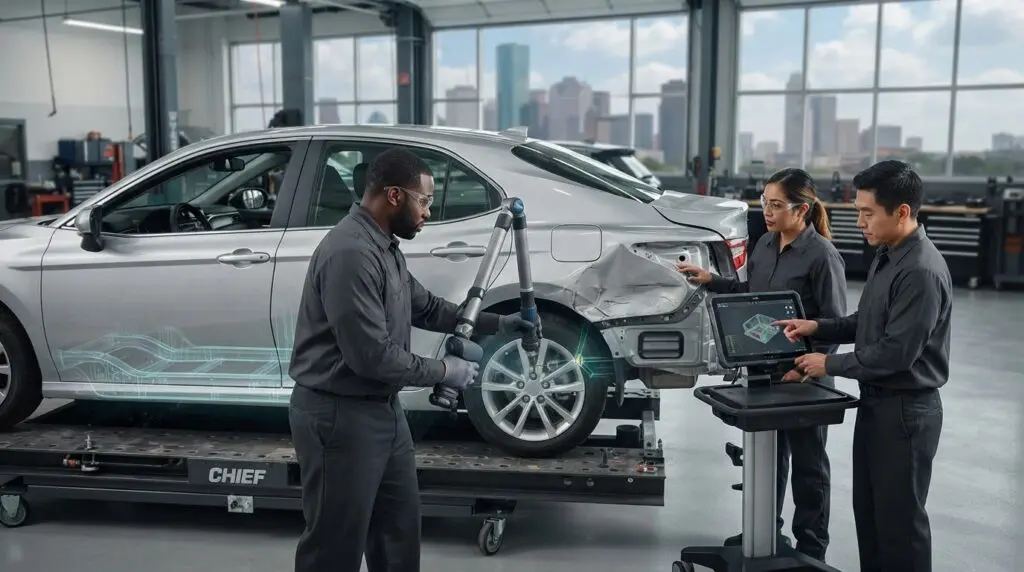
What if the damage you can see is only part of the story? A dented panel or misaligned door may not reveal whether the vehicle’s integrated body structure was affected. That’s why choosing unibody repair specialists Houston drivers can trust means looking beyond a broad service label and asking how the shop assesses the damage.
It’s understandable to want clear answers before committing to a repair. An estimate or polished website alone may not explain what was inspected, what repair steps are proposed, or how the work will be documented. A unibody’s structure helps protect occupants in a collision, so an accurate assessment matters.
This guide explains what unibody damage can involve and what to ask when comparing Houston collision repair shops. You’ll learn how to discuss measuring methods, technician training, manufacturer repair procedures, documentation, and timing, then use those answers to decide on a next step. NW Houston Auto Repair and Collision is a family-owned Houston-area business established in 1999, but unibody-specific capability should be confirmed directly. Bring the vehicle’s make, model, year, and a description of the collision when you speak with a shop, and ask what it can verify about your vehicle’s structure.
Key Takeaways
- Learn how unibody construction differs from body-on-frame design and why collision force can affect areas beyond visible panels.
- Understand why a structural assessment should be based on inspection findings and measurements, not an automatic repair recommendation.
- Compare unibody repair specialists Houston drivers are considering by asking for evidence of relevant capability, clear documentation, and straightforward communication.
- Keep collision photos, incident details, and any existing inspection documents together to make your first shop conversation more useful.
- Before committing, confirm the shop’s unibody repair capability and ask how it will explain its findings and proposed next steps.
What Unibody Damage Means for Houston Drivers After a Collision
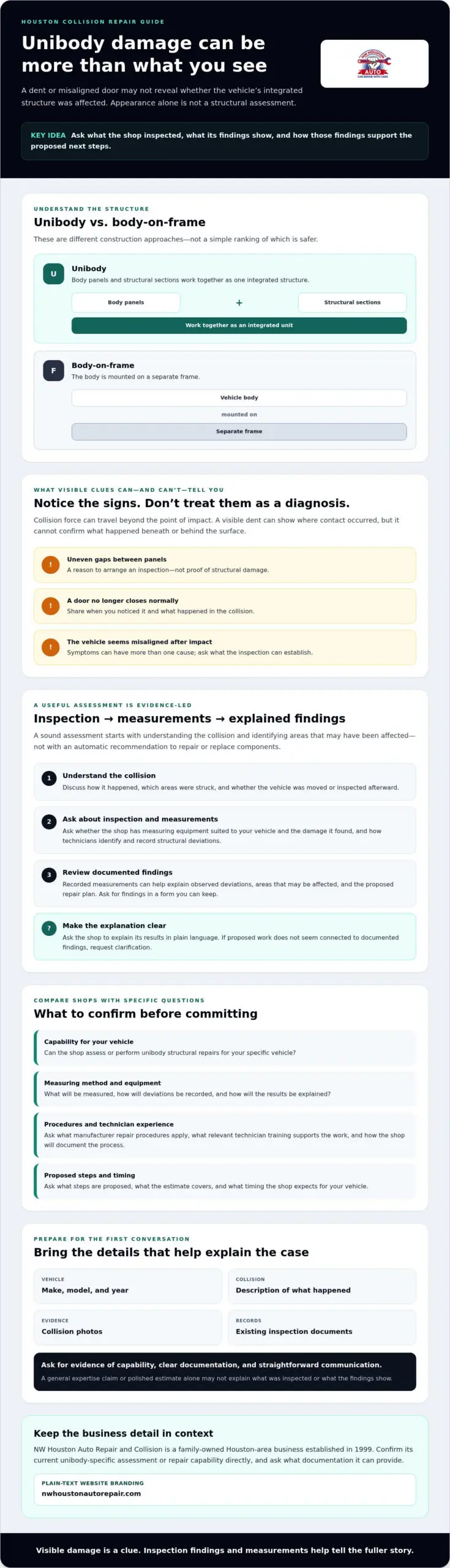
Unibody construction combines a vehicle’s body and structural framework into one integrated structure. Unlike a body-on-frame vehicle, which has a separate frame supporting the body, a unibody vehicle relies on connected structural sections as part of its overall design. For a plain-language overview of the distinction, see this explanation of unibody construction.
That design matters after a collision because force can travel beyond the point of impact. A vehicle struck at a Houston intersection, for example, may show damage on one exterior panel while nearby structural areas are also affected. The visible dent can indicate where contact occurred, but it can’t confirm what happened beneath or behind the surface. Appearance alone isn’t a structural assessment.
How unibody construction differs from body-on-frame design
In a unibody vehicle, body panels and structural sections work together as an integrated unit. In a body-on-frame design, the body is mounted on a separate frame. These are different construction approaches, not a simple ranking of which is safer. If you’re unsure which design your vehicle uses, check reliable vehicle information, such as the owner’s manual or manufacturer resources, and share the make, model, and year with the repair shop.
Why hidden structural damage deserves a professional assessment
Look for changes such as uneven gaps between panels, a door that no longer closes normally, or a vehicle that seems misaligned after impact. Treat these as reasons to arrange an inspection, not proof of structural damage. A quick look at the exterior can’t rule out hidden issues, and symptoms can have more than one cause.
Share how the collision happened, which areas were struck, and whether the vehicle was moved or inspected afterward. Bring photos and any existing inspection findings, too. That context can help a shop understand what to examine and explain what its findings do, or don’t, show. Drivers comparing unibody repair specialists Houston should ask what assessment the shop can perform for their specific vehicle rather than relying on a general claim of expertise.
NW Houston Auto Repair and Collision lists collision repair services. Contact the shop to confirm whether it currently assesses or performs unibody structural repairs and what documentation it can provide.
How Houston Unibody Repair Specialists Assess Structural Damage
A sound assessment starts with inspection, not an automatic recommendation to repair or replace structural components. A shop should first understand the collision, identify areas that may have been affected, and explain what it has actually found. The approach can vary with the vehicle’s design and the damage, so ask the shop to describe how it will assess your specific vehicle before work is approved.
Measurements can help show whether structural points differ from their expected positions. Recorded measurements give the shop a basis to compare observed deviations, explain which areas may be affected, and support a repair plan you can review. Ask for the findings in a form you can keep, and request clarification if the proposed work doesn’t seem connected to the documented results.
What to ask about measurements and repair equipment
Ask whether the shop has measuring equipment suited to your vehicle and the damage it found. Find out how technicians identify and record structural deviations, and whether they can explain the results in plain language. Don’t rely on a general claim that a shop has advanced equipment; ask what it will use for this assessment and what evidence you’ll receive.
A clear answer should connect the inspection to the next step. For example, ask what was measured, what the results indicate, and whether any additional assessment is needed before the shop can recommend a repair. These questions help you distinguish a finding-based plan from a broad estimate that doesn’t explain how structural concerns were evaluated.
How manufacturer repair information fits into the process
Vehicle construction and repair approaches can differ, so ask whether technicians consult applicable information from your vehicle’s manufacturer. Then ask how the proposed work addresses the structural areas identified during inspection. Procedures aren’t universal; the shop should be able to explain how its plan relates to your vehicle and the damage found.
You can also ask about relevant technician training or credentials. The ASE Certified Master Collision Repair Technicians page outlines collision-repair certification areas, including structural repair. Use it as a reference for questions, not as evidence that a particular shop or technician holds a credential. Confirm any qualification directly with the shop.
As you compare unibody repair specialists Houston drivers may contact, listen for specific, consistent answers about assessment methods, measurement records, manufacturer information, and the reasoning behind the proposed plan. A shop that can explain what it knows, what remains uncertain, and what it recommends next gives you a clearer basis for deciding. To discuss collision findings with NW Houston Auto Repair and Collision, contact the shop and ask whether it can assess your vehicle’s unibody concerns.
How to Compare Unibody Repair Specialists in Houston
A shop’s collision-repair listing tells you it handles collision work, but it doesn’t confirm that it assesses or performs unibody structural repairs. Before proceeding, ask directly whether the shop can evaluate your vehicle’s structural damage and whether any proposed repairs would be performed in-house. Compare specific answers and documentation, not labels such as “expert” or “specialist.”
Use this checklist when speaking with unibody repair specialists Houston drivers are considering:
| What to compare | Evidence to look for | Question to ask |
|---|---|---|
| Inspection process | A clear explanation of who evaluates the structure and how findings are determined. | “Who will assess the structural damage, and how will you explain what you find?” |
| Documentation | Written findings, measurements where applicable, and a repair plan tied to the assessment. | “What inspection records and repair documents will I receive?” |
| Communication | Direct answers about the proposed scope and how changes will be discussed. | “How will you contact me if the assessment changes the plan?” |
| Qualifications | Specific, verifiable training or credentials relevant to the vehicle and structural work. | “Which qualifications apply to this work, and how can I verify them?” |
Questions to ask before choosing a repair shop
Ask who evaluates structural damage, how the findings will be shared, and what documentation supports the proposed plan. If a shop mentions certifications or specialized experience, request the exact credential or training and confirm that it applies to the person and work involved. A general claim of expertise isn’t the same as verifiable technical evidence.
How to review estimates and repair explanations
Compare the scope and reasoning, not just the estimate’s headline. Ask what the listed work addresses and how it connects to the inspection findings. If more damage is discovered or the plan changes, find out how the shop will explain the revision before proceeding. Don’t hesitate to ask for unfamiliar terms to be put in plain language.
NW Houston Auto Repair and Collision lists collision repair services. That provides context about its listed service, but doesn’t establish unibody-specific equipment, procedures, or capability. Confirm those details directly with the shop before authorizing structural work.
What to Do After Suspected Unibody Damage in Houston
Keep the next steps organized. A clear record of the collision and what you noticed afterward can help a repair shop understand your concerns and explain what it can assess. Photos and documents are useful context, but they can’t confirm whether structural damage is present.
- Record the collision details. Note when and how it happened, the areas of impact, and any changes you noticed afterward, such as altered panel gaps or a door that behaves differently.
- Gather useful records. Save relevant photos, prior inspection findings, and any estimates or repair-related documents you already have.
- Contact a shop to discuss an assessment. Share your vehicle’s year, make, and model, then ask whether the shop can assess the specific vehicle and suspected damage.
- Clarify coordination. Ask the repair shop and your insurer how estimates, inspection findings, and updates will be shared, and who will contact you if new information changes the proposed plan.
Information to prepare before contacting a Houston shop
Before you call, gather the vehicle details, collision description, and any warning signs or changes you noticed afterward. Have photos and prior inspection documents ready to share. They can help explain what happened, but a photograph can’t establish the condition of hidden structural areas. Ask directly whether the shop can assess the type of vehicle and damage you’re describing.
If you’re reviewing local auto body repair services, remember that a general service listing doesn’t by itself confirm unibody-specific capability. Ask what the shop can evaluate and what findings or documentation it can provide before you decide on next steps.
How to keep communication clear during repair planning
Request plain-language explanations of the inspection findings and proposed next steps. If a term or recommendation is unclear, ask what it means for your vehicle and what evidence supports it. Before authorizing work, clarify who will provide updates and how the shop will review any additional findings or changes with you.
Keep copies of estimates, inspection notes, photos, and repair-related messages together. This makes it easier to compare what was first assessed with any later updates and to ask focused questions. As you contact unibody repair specialists Houston drivers may consider, provide the same basic information to each shop so you can compare their answers and confirm their specific capability.
Have questions about collision or auto body repair? Contact NW Houston Auto Repair and Collision to discuss your vehicle and ask whether the shop can assess the unibody concern.
Discuss Unibody Repair With a Houston Collision Shop Before You Commit
Before choosing a shop, make sure three things are clear: it can handle the structural work your vehicle may need, you understand how its assessment supports the proposed plan, and you know what findings and repair documents you’ll receive. A careful conversation can help you decide whether to proceed or gather another opinion. Don’t treat a collision-repair listing or a confident-sounding label as proof of unibody-specific capability.
NW Houston Auto Repair and Collision is a family-owned Houston-area business established in 1999, and collision repair is among its listed services. That history offers context about the business, but it doesn’t confirm specific unibody equipment, procedures, credentials, or in-house structural repair capability. Review its collision repair services, then ask directly whether the shop currently handles the structural work your vehicle may require.
What to confirm with NW Houston Auto Repair and Collision
Be specific about your vehicle’s year, make, model, and collision details. Ask whether the shop currently performs unibody structural repairs for that vehicle, or whether it can assess the concern and explain available next steps. Then ask what inspection methods and measuring equipment apply, which technician qualifications are relevant, and whether the shop consults applicable manufacturer repair information. These are questions to verify, not capabilities to assume.
Ask what findings it can document and what repair records it provides. If the shop recommends work, invite the team to connect the proposed steps to the assessment in plain language. Clear explanations help you understand what’s known, what still needs confirmation, and why the suggested plan fits the damage found.
Make an informed next move after a Houston collision
Use the assessment and written explanations to compare your options. If the findings or plan aren’t clear, ask follow-up questions or seek another opinion before deciding. Keep the focus on evidence and fit: a shop’s general collision experience may be relevant, but you still need confirmation that it can address your vehicle’s specific structural needs. The right next step should be understandable to you, not simply presented as a recommendation to accept.
Drivers comparing unibody repair specialists Houston can use the same questions with each shop: Does it handle this structural work? How will it assess the vehicle? What findings and documentation can it share? Answers can help you make a more informed choice without relying on assumptions about credentials, repair methods, timing, or outcomes.
Have a vehicle you’d like to discuss? Contact NW Houston Auto Repair and Collision with your vehicle details and questions about its collision services and possible next steps. Ask whether the shop can assess the specific unibody concern before you commit to repair work.
Choose Your Next Step With Confidence
Visible damage alone can’t confirm whether a vehicle’s unibody structure was affected. Before choosing a shop, ask how it will assess the vehicle, what findings it can document, and whether it currently handles the specific structural work involved. Those direct answers matter more than a general claim of expertise.
As you compare unibody repair specialists Houston drivers may consider, use the collision details and inspection records you’ve gathered to guide the conversation. NW Houston Auto Repair and Collision is family-owned, has served the Houston area since 1999, and lists collision repair and auto body repair among its services. That background is useful context, not proof of unibody-specific capability, so confirm the shop’s current services, methods, and documentation directly.
Ready to discuss your vehicle and possible next steps? Contact NW Houston Auto Repair and Collision with your questions. With clear information and a careful assessment, you can move forward with greater confidence.
Frequently Asked Questions
What is unibody damage?
Unibody damage affects parts of a vehicle’s structure, where the body and framework work together. A collision can affect these areas even if the exterior damage looks limited, so appearance alone can’t confirm the vehicle’s structural condition. Ask a repair shop to assess the vehicle and explain its findings. Request a clear account of any recommended structural work and the information supporting that recommendation.
Can a unibody vehicle be repaired after a collision?
It may be repairable, but the answer depends on the vehicle, the location and extent of damage, and applicable repair information. A visual estimate alone may not settle the question. Ask the shop to describe its inspection findings, proposed approach, and any limitations before authorizing work. Confirm that it has the capability and relevant experience for your specific vehicle and the structural work being considered.
How do I choose unibody repair specialists in Houston?
Compare shops by asking how they assess structural damage, what measurements or documentation they can provide, and which relevant technician qualifications they can verify. Ask whether they handle your vehicle’s specific repair needs. A collision-repair listing or general claim of expertise doesn’t establish unibody capability. Choosing unibody repair specialists Houston drivers can rely on starts with direct questions and clear answers about the assessment and proposed work.
How much does unibody repair cost?
The cost depends on the vehicle and the damage identified during assessment, so a general article can’t provide a reliable quote for your repair. Ask a shop to assess the vehicle and explain the proposed scope in writing. Clarify how it will communicate if additional damage is found or the plan changes. When reviewing estimates, compare the work described and its explanation, not just the headline figure.
What happens if unibody damage is not visible?
Structural damage may not be obvious from the outside, and exterior appearance alone can’t confirm the vehicle’s condition. A repair professional can assess the vehicle and explain whether further inspection is appropriate. Share how the collision happened and any changes you’ve noticed afterward, such as altered panel gaps. Ask for findings in plain language so you understand what’s known, what remains uncertain, and what next step is recommended.
Should I contact my insurance company before choosing a unibody repair shop?
Contact your insurer to ask how it handles collision estimates and repair updates, and ask the shop how it coordinates with insurers. Processes can differ, so confirm the steps for your claim directly rather than relying on general assumptions. Keep copies of estimates and messages. Before authorizing work, make sure you understand the proposed repair scope and how any newly identified damage or plan changes will be communicated.