

What if the only thing standing between your vehicle and a high-speed collision on I-45 is a safety inspection that the State of Texas no longer requires? Since mandatory safety checks ended in 2025, the responsibility for your vehicle’s stopping power rests entirely on your shoulders. In a city where drivers lose nearly four days a year to rush hour congestion, your pads and rotors endure punishing heat and constant stop and go stress. Finding reliable brake repair Houston drivers can actually trust shouldn’t feel like another high-pressure hazard. Know exactly what is happening under your wheel wells. Don’t let the fear of being overcharged for unnecessary parts stop you from staying safe.
We understand that your vehicle is your lifeline in our car-dependent city. A squealing pedal or a soft stop can trigger immediate anxiety about safety and vehicle downtime. This 2026 guide will help you master the essentials of modern brake maintenance, from understanding new copper-free standards to identifying early warning signs. You’ll discover why Houstonians have turned to NW Houston Auto Repair and Collision since 1999 for technical mastery and neighborly transparency. We’re going to break down how to achieve quiet, responsive performance so you can navigate the daily commute with total confidence.
Key Takeaways
- Learn how Houston’s extreme humidity and stop and go traffic on the I-45 loop accelerate brake fluid degradation and pad wear.
- Identify critical warning signs like grinding sounds and soft pedals before they lead to dangerous safety issues or costly vehicle downtime.
- Understand the technical difference between resurfacing rotors and full replacement to ensure you only pay for the services your vehicle actually requires.
- Discover why expert brake repair Houston services are more vital than ever following the 2025 removal of mandatory state safety inspections.
- See how NW Houston Auto Repair and Collision combines 25 years of technical mastery with a neighborly approach to keep your family safe.
Why Houston Drivers Face Unique Brake Repair Challenges
Driving in Southeast Texas puts your vehicle through a mechanical gauntlet that standard maintenance schedules don’t always account for. Between the heavy Gulf Coast humidity and the punishing 2026 summer heat, your braking components are under constant environmental stress. When you seek out brake repair Houston drivers depend on, you need a partner who understands how our local climate affects every component from the pedal to the wheel. At NW Houston Auto Repair and Collision, we’ve seen how these factors lead to premature wear for over 25 years. We treat your vehicle like it belongs to our own family, ensuring it’s ready for the unique demands of Bayou City roads.
Humidity and Brake Fluid Degradation
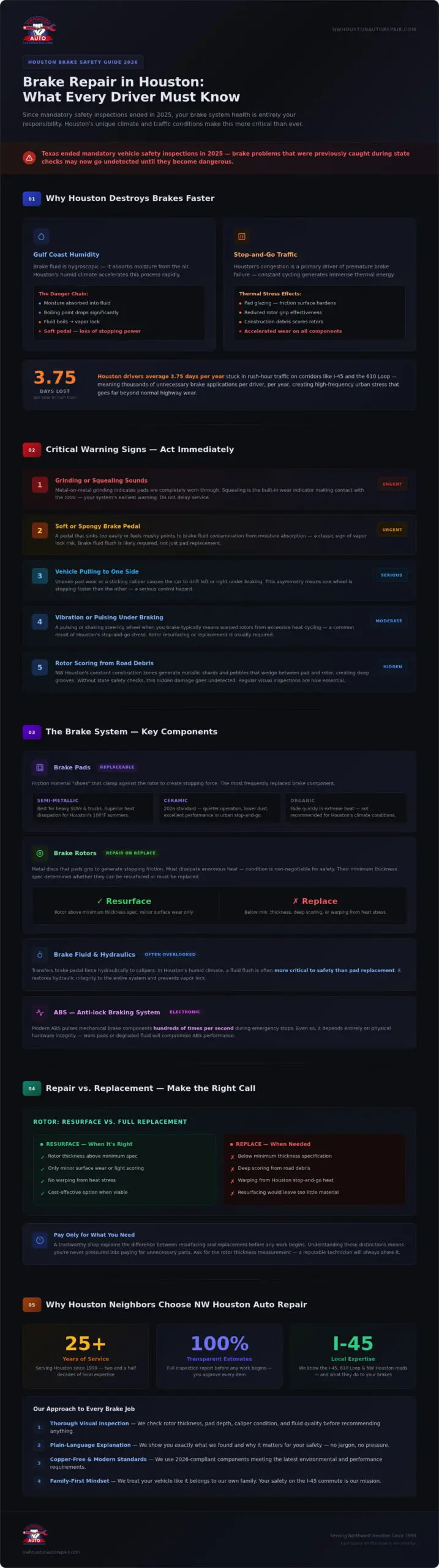
Brake fluid is hygroscopic, meaning it acts like a sponge for moisture in the air. In Houston’s humid climate, this moisture absorption happens rapidly. As water content in the fluid rises, its boiling point drops. During extreme heat or heavy braking, this can cause the fluid to boil and create gas bubbles, a dangerous condition known as vapor lock. This results in a soft or spongy pedal that fails to provide immediate stopping power. We often find that a professional fluid flush is more critical for safety than simply swapping out pads, as it restores the hydraulic integrity of the entire system.
The Stop-and-Go Toll on Brake Components
Houston’s traffic congestion is more than just a daily headache; it’s a primary cause of brake failure. With drivers losing an average of 3.75 days to rush hour traffic annually, the constant cycling of the brakes generates immense thermal energy. This repetitive heat cycle can lead to pad glazing, where the friction material becomes smooth and hard, losing its ability to grip the rotor effectively. This isn’t typical highway wear. It’s high-frequency urban stress that demands a deeper understanding of the anatomy of a brake system to diagnose correctly. You can learn more about our comprehensive approach to these issues on our brake repair service page.
Road debris from constant construction in NW Houston adds another layer of risk. Small pebbles or metallic shards often wedge themselves between the pad and rotor, leading to deep scoring. Since the state ended mandatory safety inspections in 2025, these hidden damages frequently go unchecked. We prioritize thorough visual inspections to catch rotor scoring before it compromises your safety on the I-45 commute. Don’t wait for a grinding sound to tell you there’s a problem. Regular checks are the only way to ensure your vehicle remains a dependable partner on the road.
The Anatomy of a Precision Brake System
Stopping a modern vehicle in 2026 requires a flawless synergy between mechanical hardware and electronic safety systems. When you visit us for brake repair Houston, we don’t just look at the surface. We examine how your pads, rotors, calipers, and hydraulic lines work together to keep you safe. Even passenger cars now utilize sophisticated Anti-lock Braking Systems (ABS) that pulse the mechanical components hundreds of times per second. While these systems are advanced, they still rely on the physical integrity of the hardware. Adhering to standards similar to Federal brake system requirements ensures that your vehicle responds exactly when you need it most, especially during sudden stops on the 610 Loop.
Brake rotors are the metal discs that pads grip to stop the vehicle. Because these discs dissipate the massive heat generated during friction, their condition is non-negotiable for safety. At NW Houston Auto Repair and Collision, we’ve spent over 25 years mastering the nuances of these systems to provide the brake repair Houston neighbors rely on for daily peace of mind. Our team combines technical mastery with a neighborly approach, ensuring you understand the state of your brake service needs before any work begins.
Brake Pads vs. Brake Rotors
The relationship between pads and rotors is one of controlled friction. Brake pads are the replaceable friction material “shoes,” while rotors provide the surface area for that grip. For the heavy SUVs and trucks common in Houston, we typically recommend semi-metallic pads. They offer superior heat dissipation compared to organic pads, which can fade quickly in our 100-degree summers. Ceramic pads are another excellent 2026 standard, offering a quiet ride and low dust for luxury sedans and daily commuters alike.
The Role of Calipers and Hydraulic Lines
Calipers act as the clamps that force the pads against the rotors using hydraulic pressure. If a caliper sticks, it causes the pad to drag, which destroys your fuel economy and creates dangerous levels of heat. We also pay close attention to your hydraulic lines. The intense Texas sun and high under-hood temperatures can cause rubber lines to become brittle or crack over time. If a line fails, you lose the hydraulic pressure needed to stop. If you’ve noticed a strange pull when braking or a drop in your mileage, it might be time to connect with our friendly team for a precision inspection.
Signs Your Vehicle Needs Immediate Brake Service
Your vehicle is constantly talking to you. When it’s time for maintenance, these messages arrive via your ears, your feet, and even your nose. Recognizing these early warning signs is the best way to secure the brake repair Houston drivers need to stay safe on our busy highways. Since 2025, when Texas ended mandatory safety inspections, the burden of monitoring these systems has shifted entirely to the owner. We’ve spent over 25 years helping our neighbors at NW Houston Auto Repair and Collision interpret these signals, ensuring that a minor maintenance issue doesn’t turn into a high-speed emergency.
Beyond the obvious dashboard warning lights, look for visual cues like low fluid levels in the reservoir. If you notice an acrid, chemical odor after a long drive, your pads might be overheating or a caliper could be sticking. This burning smell is a clear directive from your car: pull over and let the system cool down before you lose braking ability entirely. Taking action now prevents permanent damage to your rotors and keeps your family protected during the unpredictable I-45 commute. We take pride in being your protective guide, helping you avoid the stress of unexpected vehicle downtime.
Deciphering Brake Noises
Listen closely. A high-pitched squeal or chirp that happens while you’re moving but disappears when you brake is usually a mechanical wear indicator. It’s a small metal tab designed to scrape the rotor when the pad gets thin. This is your early warning phase. However, a deep, metallic grinding sound is a critical failure. It means the friction material is completely gone, and you’re now grinding metal against metal. This destroys rotors instantly and significantly increases your stopping distance. While some squealing is just moisture from a humid Houston morning, any sound that persists requires professional brake repair Houston expertise to diagnose correctly.
Handling and Pedal Feel
Do you feel a rhythmic vibration in the steering wheel when you apply pressure? This pulsation typically indicates warped rotors, often caused by the extreme heat of stop and go traffic. Another red flag is brake fade, where the pedal feels soft or sinks to the floor during a long commute. This suggests air in the lines or degraded fluid, which is a major risk in our humid climate. For modern vehicles with complex electronic stability controls, these physical symptoms might be tied to your ABS. In these cases, our expert car diagnostics can pinpoint whether the issue is mechanical or a sensor failure. Trust your gut. If the pedal feels different today than it did yesterday, it’s time for a check-up.
Brake Repair vs. Replacement: Making the Right Choice
Deciding between a quick fix and a full overhaul is one of the most stressful parts of vehicle ownership. At NW Houston Auto Repair and Collision, we treat this decision with the gravity it deserves. We don’t guess; we measure. Our technicians use precision micrometers to determine if your components meet safety tolerances or if they’ve reached the end of their service life. This level of technical mastery ensures you never pay for parts you don’t need, while guaranteeing that your brake repair Houston service provides the safety your family deserves. We aim to be your dependable partner, not just another service provider.
One dangerous practice we see far too often is “pad slapping.” This happens when a shop installs new pads onto old, worn rotors without resurfacing or replacing them. This shortcut leads to poor heat dissipation, uneven wear, and a significant decrease in stopping power. Your new pads will wear out twice as fast, and you’ll likely experience a pulsating pedal within weeks. We believe in doing the job right the first time to keep your property dependable and your commute stress-free. Precision is our standard because your safety is our priority.
Resurfacing Rotors: Is it Still a Viable Option?
Resurfacing, or “turning,” involves shaving a thin layer of metal off the rotor to restore a flat surface. Every rotor has a stamped “minimum thickness” safety standard. If the rotor is too thin, it can’t handle the heat of a Houston summer without warping or cracking. In 2026, many manufacturers produce rotors that are thinner and lighter to improve fuel efficiency. This design shift often makes replacement a safer and more cost-effective long-term choice than resurfacing. We always provide a transparent explanation of our measurements so you understand exactly why a specific recommendation is made.
Choosing the Right Replacement Parts
When replacement is necessary, the quality of the parts matters just as much as the skill of the technician. We help you navigate the choice between Original Equipment Manufacturer (OEM) parts and high-quality aftermarket options. While budget-grade components might save a few dollars today, they often lack the precision casting and friction material quality needed for heavy Houston traffic. You can explore our specific brake replacement options to see how we prioritize your safety. If you’re unsure which path is right for your vehicle, schedule a precision inspection with our team today to get a transparent, expert recommendation for your brake repair Houston needs.
Why NW Houston Auto Repair is Your Trusted Brake Specialist
Choosing a shop for brake repair Houston shouldn’t feel like a gamble. Since 1999, NW Houston Auto Repair and Collision has served as a cornerstone of the local community. We’ve built our 25-year legacy on a simple foundation: technical mastery delivered with neighborly warmth. Unlike corporate chains that prioritize volume, we focus on precision. Our background in both mechanical repair and collision restoration gives us a unique safety perspective. We’ve seen the structural aftermath of brake failure first-hand. This makes us more meticulous than a standard repair shop. We understand how a small mechanical oversight can lead to a major safety crisis. This dual expertise ensures that every inspection we perform is thorough, transparent, and focused on keeping your property dependable.
We pride ourselves on being the authoritative guide for our neighbors. We combine the deep knowledge of seasoned experts with the approachability of a local, family-run establishment. When you walk through our doors, you aren’t just a ticket number. You’re a member of our community who deserves honest answers and reliable work. Our communication is always direct and functional. We start with high-energy invitations to connect and transition into methodical, thorough explanations of your vehicle’s technical needs. This creates a sense of efficiency. While we’re quick to respond to your needs, we’re never rushed in our execution of technical tasks. Precision takes time, and we take that time for you.
A Family-Owned Approach to Safety
Trust is the most important component in any repair. As a family-owned and operated establishment, we don’t just see vehicles; we see the families inside them. We treat your car with the same care we’d give our own. This protective mindset is why we’ve prioritized brake repair as a core safety service. We believe in total transparency. Our technicians will walk you through their findings, showing you exactly what needs attention and explaining the “why” behind every recommendation. You’ll never leave our shop wondering if a repair was truly necessary. We aim to alleviate the stress of vehicle malfunctions by being a dependable partner.
Comprehensive Houston Auto Care
Your vehicle is a complex ecosystem where every system affects the others. We recommend integrating your brake inspections with other routine maintenance, such as oil changes, to ensure peak performance. For readers interested in how specialized facilities handle high-standard requirements like STAR-certified smog checks, you can find out more about these rigorous testing processes. This holistic approach helps you beat the heat by identifying potential electrical or cooling issues before they leave you stranded. We provide full-vehicle health checks that address the specific challenges of our local environment. Experience the difference that 25 years of local dedication makes. Stop by today and let our family keep yours safe on the road. We’re ready to handle everything from routine maintenance to your most complex mechanical challenges.
Navigating the I-45 commute requires more than just a running engine; it demands absolute confidence in your vehicle’s ability to stop. You now understand how Houston’s intense humidity degrades brake fluid and how our 2026 summer heat accelerates pad wear. Since mandatory safety inspections ended in 2025, the responsibility for monitoring these critical systems rests entirely with you. Don’t let the stress of potential downtime or safety anxiety keep you off the road when proactive care is so accessible.
At NW Houston Auto Repair and Collision, we’ve provided the brake repair Houston drivers have trusted since 1999. As a family-owned shop with expertise in both mechanical safety and collision restoration, we offer a level of technical mastery you won’t find at corporate chains. We take pride in being your dependable partner, providing calm and transparent inspections that show you exactly what your vehicle needs to stay safe. Take the first step toward quiet, responsive brakes and total peace of mind for your daily travels. Schedule Your Precision Brake Inspection in Houston Today. We look forward to keeping your family safe on every journey.
Frequently Asked Questions
How much does brake repair cost in Houston?
Costs vary based on the vehicle type and the specific components needed. While independent shops are generally more affordable than dealerships, the final price depends on whether you need simple pads or a full rotor replacement. We provide a transparent breakdown of all costs before starting any work. This ensures you aren’t surprised by hidden fees. Whether you choose our team or another North Houston specialist like Fix My Car, we focus on providing honest value to our Houston neighbors rather than chasing high-pressure sales.
We recommend a professional inspection every 6,000 miles or during every oil change. Since Texas discontinued mandatory annual safety inspections in 2025, regular check-ups are your only line of defense. Houston’s stop and go traffic on the 610 Loop puts extreme stress on your braking system. Catching thin pads or degraded fluid early prevents expensive rotor damage and ensures your vehicle remains dependable for the long I-45 commute.
Why are my brakes squealing even though they are new?
New brakes may squeal due to moisture accumulation or a lack of proper bedding-in after installation. Houston’s high humidity often causes a thin layer of surface rust to form on rotors overnight. This usually disappears after a few stops. However, persistent squealing could indicate a hardware issue or a lack of anti-seize lubricant on the caliper contact points. If the noise continues for more than a few days, let our team take a look.
Can I drive my car with the brake warning light on?
No, you should stop driving and have your vehicle inspected immediately if the brake light stays illuminated. This light often signals a dangerous drop in hydraulic pressure or a low fluid level in the reservoir. Driving with a compromised system puts you and other Houston drivers at significant risk. It’s much safer to address a potential leak or sensor failure now than to risk a complete loss of stopping power on the highway.
How long does a typical brake pad replacement take?
A standard brake pad replacement usually takes between one and two hours per axle. This allows our technicians to perform a thorough cleaning and inspection of the calipers and rotors. We understand that vehicle downtime is a major stressor in Houston. Our team works efficiently to get you back on the road quickly without ever compromising precision. We prioritize getting the job done right the first time for your safety.
What is the difference between ceramic and semi-metallic brake pads?
Ceramic pads are quieter and produce less dust, making them ideal for daily commuters and luxury vehicles. Semi-metallic pads contain more metal, which helps them dissipate heat more effectively during heavy use. For the heavy SUVs and trucks common in Houston, semi-metallic options often provide better durability against our extreme summer temperatures. We help you choose the best friction material based on your specific driving habits and the weight of your vehicle.
Do I need to replace my rotors every time I get new pads?
Not necessarily, but your rotors must meet specific thickness and surface quality standards to be safe. We measure every rotor with precision micrometers during your brake repair Houston service. If the rotors are warped or too thin to be resurfaced, replacement is mandatory for safety. Installing new pads on damaged rotors leads to poor performance and premature wear. We always show you our measurements so you can make an informed, confident decision.
Is brake fluid flushing really necessary for Houston drivers?
Yes, regular fluid flushes are vital because Houston’s Gulf Coast humidity causes brake fluid to absorb moisture rapidly. Over time, this water content lowers the fluid’s boiling point and can lead to internal corrosion. This results in a spongy pedal and reduced stopping power. We recommend a flush every two years to maintain hydraulic integrity. It’s a simple maintenance step that prevents the high cost of replacing expensive master cylinders.