

What if the fix for weak air conditioning isn’t simply adding refrigerant? Houston heat can make every drive uncomfortable when your vents aren’t cooling, but a recharge and an auto ac refrigerant flush Houston drivers may hear about are different services. A recharge adds refrigerant; a flush is a targeted procedure intended to remove contamination from appropriate parts of the AC system.
It’s understandable to want a fast answer when the cabin stays warm. But a flush isn’t routine maintenance or a substitute for finding the cause of poor cooling. A leak, a failing component, or another system issue may call for a different repair, so diagnosis should come first.
In this guide, you’ll learn what a refrigerant flush does and doesn’t do, what findings can make it worth discussing, and why vehicle-specific procedures matter. We’ll also compare a flush with a recharge so you can understand the options for your vehicle. NW Houston Auto Repair and Collision provides auto air-conditioning repair for local drivers, helping address AC concerns with service suited to the problem.
Key Takeaways
- Learn how flushing compatible AC components differs from recovering, evacuating, and recharging refrigerant.
- Weak cooling in Houston’s heat is a reason to investigate, not proof that refrigerant is the problem.
- Diagnosis can help distinguish between refrigerant service, component flushing, and repair.
- For auto ac refrigerant flush Houston service, look for a clear explanation of the findings and the concern a flush is meant to address.
- Prepare for AC service by describing the symptoms, reviewing the diagnosis, and understanding the proposed next step.
What Does an Auto AC Refrigerant Flush Do?
An AC flush is a targeted cleaning procedure used to address certain contamination concerns in components that the vehicle’s service procedure permits technicians to flush. It isn’t a routine step for every cooling problem, and it doesn’t mean sending refrigerant through the entire AC system to clean it. Which components can be flushed, and how the procedure is performed, depends on the vehicle.
Quotable definition: An AC flush clears certain contaminants from compatible components; an AC recharge restores refrigerant to the specified amount. They address different needs, and neither should be recommended by default without diagnosis.
What is flushed, and what is not?
Flushing is intended to clear contamination from parts that can be cleaned using the vehicle-appropriate procedure. It is not a blanket rinse of every AC component. Some parts may not be flush-compatible, so the service information for the vehicle helps determine what can be cleaned and what may need a different approach.
Flushing also isn’t the same as recovering refrigerant. Recovery removes refrigerant from the system using service equipment. If the system is opened, evacuation draws out air and moisture before refrigerant is reintroduced. These steps have different purposes and should not be confused with cleaning compatible components. For a broader overview of how car AC systems work, see the system’s main components and their roles.
How is a flush different from an AC recharge?
A recharge restores refrigerant to the amount specified for the vehicle after appropriate service. It does not clean contaminated parts or repair the cause of a leak. A flush, by contrast, may be considered when inspection identifies a contamination concern and the relevant components can be treated according to the manufacturer’s procedure. It isn’t a routine recharge step.
Weak cooling alone doesn’t show that a flush is needed. Similar symptoms can have different causes, so evaluate the system rather than assuming it needs more refrigerant or cleaning. For drivers considering an auto ac refrigerant flush Houston service, diagnosis should connect the observed concern to the recommended work. That’s the practical starting point for auto air conditioning repair: understand the findings first, then determine which service, if any, addresses them.
How Houston Heat and AC Symptoms Point to the Right Diagnosis
Weak AC in Houston can make a drive through traffic or a hot afternoon feel much longer. The discomfort is real, but the weather alone doesn’t tell you why the cabin isn’t cooling. Low refrigerant is one possible concern, not an automatic conclusion, and flushing isn’t a general remedy for warm air.
AC symptoms alone cannot confirm contamination or low refrigerant. They’re clues that help guide an inspection. A technician evaluates system performance and looks for evidence related to the symptoms before deciding whether refrigerant service, flushing, another repair, or a different next step is appropriate.
Which AC symptoms should prompt an inspection?
Pay attention to changes in performance, not just whether the vents feel warm once. Note if cooling has gradually weakened, varies unexpectedly, or seems different in stop-and-go Houston traffic than on an open road. Also consider whether the problem is more noticeable after the vehicle has been parked in the afternoon heat or occurs consistently. These details give the technician useful context, but they don’t identify a failed part by themselves.
Keep your description simple and specific: when the issue began, when it tends to happen, and whether it comes and goes. A symptom that appears under one set of conditions may lead to a different line of investigation than cooling that stays weak on every drive.
What can an AC inspection help identify?
An inspection helps compare system performance with the concern you’ve reported and look for relevant signs of a refrigerant or other AC-system problem. Because different faults can lead to similar warm-air complaints, the goal is to narrow down the cause before recommending work. That includes determining whether refrigerant service is called for, whether there’s evidence of contamination that could make a flush worth discussing, or whether another repair is a better fit.
Refrigerant type and appropriate handling also matter. The EPA’s guidance on motor vehicle air-conditioning refrigerants offers background on refrigerant requirements and service. A diagnosis-led approach ties the recommendation to the vehicle’s findings rather than treating a flush as a guaranteed way to restore cooling.
If your AC is struggling, record the conditions you notice and arrange an evaluation before choosing a service. Explore auto air-conditioning repair for help addressing poor cooling in NW Houston.
AC Flush vs. Recharge vs. Repair: Which Service Fits the Problem?
Weak cooling doesn’t automatically call for a flush. Several AC concerns can feel similar from the driver’s seat, so inspection findings and the vehicle-specific service procedure should guide the recommendation. This comparison shows how the options differ.
| Option | General purpose | What may lead to it |
|---|---|---|
| Diagnosis | Evaluate system performance and identify evidence related to the reported concern. | Any cooling complaint, especially when its cause isn’t clear. |
| Refrigerant service | Recover, evacuate, and recharge the system as appropriate for the work and vehicle procedure. | Findings indicate a refrigerant-related concern or that the system needs its specified charge after service. |
| Component flushing | Address contamination in components that the vehicle procedure permits technicians to flush. | Inspection points to contamination, and the affected component is suitable for flushing. |
| Component repair | Address a faulty or leaking component rather than treating the symptom alone. | Inspection identifies a component concern that requires repair or replacement. |
When might flushing be considered?
Contamination may be a reason to discuss flushing, but it shouldn’t be assumed from warm airflow alone. Suitability depends on which component is affected and what the manufacturer’s procedure allows. The technician should explain what evidence suggests contamination, which component is involved, and what the proposed flush will cover. For related service-equipment context, SAE J2797 addresses refrigerant identifier equipment used in mobile air-conditioning service.
When might a recharge or another repair be more relevant?
Refrigerant service and flushing address different needs. A recharge restores refrigerant to the vehicle’s specified amount after appropriate service; it doesn’t clean components or fix a leak. If inspection finds a leak or another component fault, adding refrigerant alone may not address the underlying concern. The next step depends on the findings, not on a one-size-fits-all rule.
For drivers considering an auto ac refrigerant flush Houston service, ask for a plain explanation of the evidence and why the proposed work fits the affected component and vehicle procedure. A clear diagnosis helps distinguish a justified flush from refrigerant service or a repair that better matches the problem.
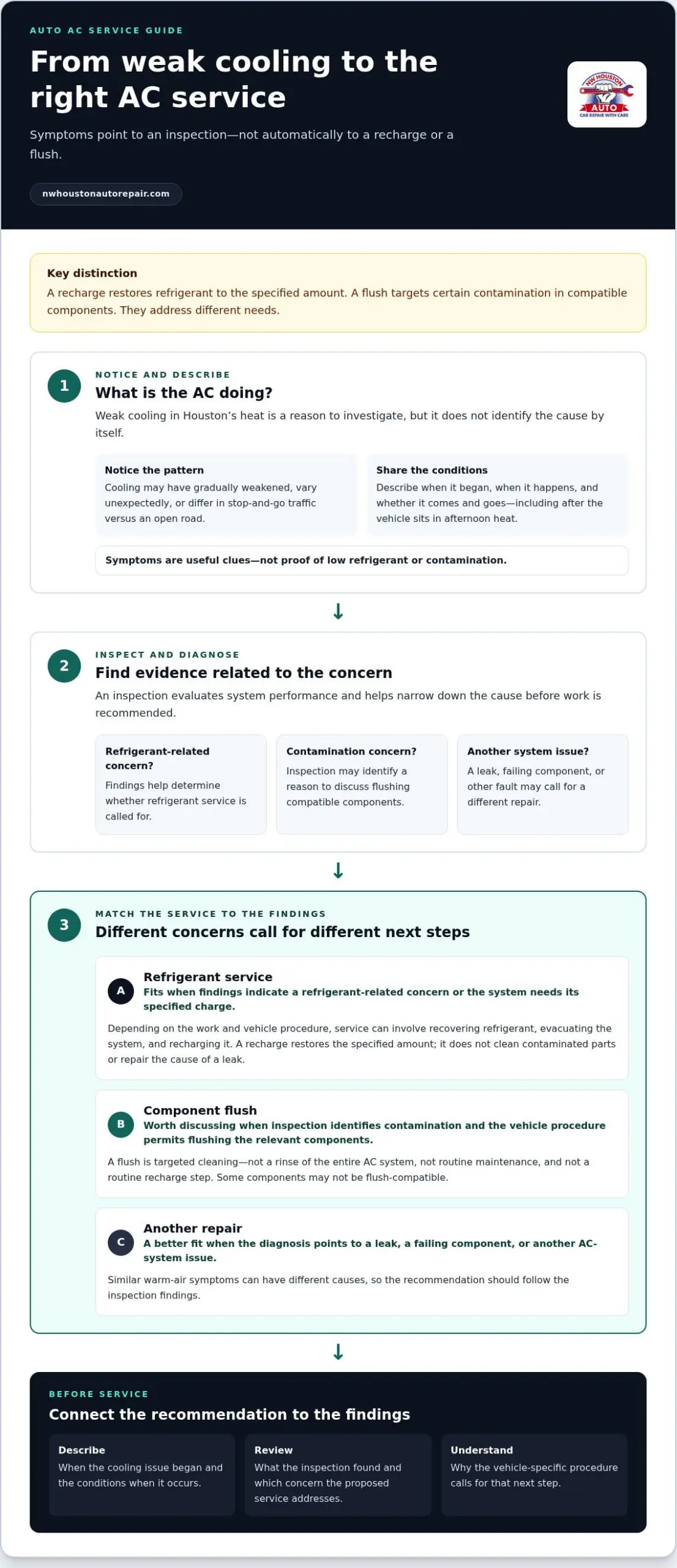
How to Choose Auto AC Refrigerant Flush Service in Houston
A clear recommendation should start with your symptoms and end with an explanation that connects the inspection findings to the proposed work. Use this sequence:
- Describe the symptoms. Explain what changed, when the cooling problem occurs, and how long you’ve noticed it.
- Request a diagnosis. Have the AC system evaluated before assuming it needs a flush or refrigerant service.
- Review the findings. Understand what the inspection showed and which concern needs attention.
- Clarify the proposed work. Ask what the service is intended to address and how its scope follows the vehicle’s requirements.
What information should you share about the AC problem?
Be specific about changes in cooling. Does the airflow feel warmer than before, does performance vary during a drive, or has cooling declined gradually? Note when the symptoms happen, such as in Houston traffic or during hot afternoons, and how long the issue has been occurring. Share any recent AC work or known system concerns, too. These observations help guide inspection; you don’t need to identify contamination or name a failed part yourself.
What should a clear recommendation explain?
A sound explanation should connect what the technician found to the work being proposed. If flushing is recommended, understand what contamination concern it addresses, which components are involved, and why the vehicle’s procedure supports that scope. If refrigerant service or another repair is suggested instead, the explanation should show how that option relates to the findings. A flush, recharge, and component repair aren’t interchangeable.
The work involved, and therefore the service scope, depends on diagnosis and vehicle-specific requirements. For broader service-planning context, review our auto air-conditioning repair information. The key is to understand the reason for the recommendation before authorizing a particular service.
Choosing auto AC refrigerant flush service in Houston shouldn’t mean guessing from a warm vent. Bring your observations, review the inspection results, and look for a plain-language explanation of the next step. For help with a cooling concern, contact the NW Houston AC repair team.
Get Diagnosis-Led Auto AC Repair in NW Houston
Persistent weak cooling can make everyday Houston driving uncomfortable. NW Houston Auto Repair and Collision provides auto air-conditioning repair for local drivers. The practical first step is to understand what’s happening with your vehicle, then connect the inspection findings to an appropriate service.
What to expect when discussing an AC concern
Describe what you’ve noticed, such as cooling that has declined over time, airflow that changes during a drive, or warm air during a hot afternoon. Share when the symptoms occur and mention recent AC work or other known concerns. You don’t need to identify the cause yourself. Ask what the inspection found and what the findings mean for your vehicle.
The goal is a clear next step, not a predetermined flush. If contamination is identified and the vehicle’s procedure supports flushing the affected component, that may be part of the recommendation. If the findings point to refrigerant service or another repair, the explanation should connect that work to the concern instead. Learn more about auto air-conditioning repair and how an evaluation can guide service decisions.
Take the next step before Houston heat makes driving harder
Don’t let persistent poor cooling or changing AC performance become something you simply work around. Sharing a clear description of the symptoms can help start a useful conversation about the problem. The right service depends on the inspection and procedures for your specific vehicle, so a flush shouldn’t be assumed based on warm airflow alone.
For drivers researching auto ac refrigerant flush Houston service, the important thing is to understand why a particular service is being recommended and what it is intended to address. NW Houston Auto Repair and Collision can help you discuss your AC concern and its next steps in a straightforward way. Contact NW Houston Auto Repair and Collision about your AC concern.
Make Your Next AC Service Decision With Confidence
A refrigerant flush and a recharge serve different purposes, and neither is the automatic answer to weak cooling. The sensible next step is a diagnosis that connects your symptoms to the inspection findings and follows the procedure for your vehicle. A flush is worth discussing when there’s evidence of contamination and the affected component can be treated appropriately.
For auto ac refrigerant flush Houston service, clear communication matters: understand what concern the proposed work addresses and why it fits the findings. NW Houston Auto Repair and Collision provides auto air-conditioning repair for local drivers. The family-owned and operated business has served customers since 1999 and can help you make sense of your vehicle’s AC concern.
Don’t let uncertain cooling performance leave you guessing through another Houston drive. Contact NW Houston Auto Repair and Collision about your AC concern to discuss the next step with a local team.
Frequently Asked Questions
Is an auto AC refrigerant flush always necessary when the air conditioner blows warm air?
No, warm air by itself doesn’t show that an AC flush is needed. Several system concerns can cause weak cooling, and a flush is intended to address certain contamination issues in components that the vehicle’s procedure permits to be flushed. In Houston, describe when the cooling problem occurs and have the system evaluated before deciding whether a flush, refrigerant service, or another repair fits the findings.
Can you flush refrigerant through a car’s AC system?
No. A component flush isn’t performed by simply circulating refrigerant through the entire AC system. It’s a targeted procedure for addressing contamination in compatible components, and vehicle-specific service information guides which parts may be flushed. Refrigerant recovery, evacuation, and recharging are separate service steps with different purposes. A technician can determine the appropriate procedure based on the vehicle and inspection findings.
What is the difference between an AC flush and an AC recharge?
An AC flush addresses certain contamination concerns in components that are suitable for flushing under the vehicle’s service procedure. An AC recharge restores refrigerant to the vehicle’s specified amount after appropriate service. They aren’t interchangeable: a recharge doesn’t clean contaminated components, and a flush doesn’t correct every refrigerant problem. Diagnosis helps identify which service, if any, addresses the concern.
How do I know if my car’s AC system is contaminated?
You usually can’t confirm contamination from warm airflow or another symptom alone. Those signs can have different causes, so a technician needs to inspect the system and look for evidence relevant to the reported concern. If findings point to contamination, the technician can explain which component is affected and whether the vehicle’s procedure allows it to be flushed. Don’t assume a flush is needed without that connection.
How often should a car’s AC refrigerant system be flushed?
There isn’t a routine flush interval that applies to every vehicle. Flushing is generally considered in response to a diagnosed contamination concern, not as a standard substitute for recharging or routine maintenance. Whether it’s appropriate depends on the affected component and the manufacturer’s procedure. If your AC performance changes, have the concern evaluated rather than scheduling a flush based only on time or mileage.
How long does an auto AC refrigerant flush take?
There isn’t one reliable timeframe for every vehicle or AC concern. The work involved depends on the diagnosis, which components are affected, and the vehicle-specific procedure. Related service or repair needs may also affect the overall job. For auto ac refrigerant flush Houston service, the proposed scope and timing depend on the work identified during inspection, rather than a generic estimate.
Can an AC recharge fix a refrigerant leak?
No. A recharge can restore refrigerant to the specified amount, but it doesn’t repair a leak. If refrigerant is escaping, adding more may only provide temporary cooling before the problem returns. An inspection can help identify whether there’s evidence of a leak and what repair may be needed. The right next step is to address the cause, not treat a recharge as a permanent fix.