

When your air con for car comfort takes too long to kick in, Houston’s heat and stop-and-go traffic can make even a short drive uncomfortable. The right settings and airflow habits can help, but cooling that stays weak may point to a system issue.
It’s frustrating to wait for relief while warm air keeps moving through the cabin. This guide explains how a car’s cooling cycle works, how to use AC settings effectively, and what signs suggest that adjustments alone aren’t solving the problem.
We’ll cover practical ways to manage cabin airflow in Houston conditions, factors that can affect AC performance in traffic, and when professional service makes sense. NW Houston Auto Repair and Collision provides auto air-conditioning repair in Houston.
Key Takeaways
- Houston’s heat and humidity make effective cooling and dehumidifying important for cabin comfort.
- Learn how air moves through a car AC system, from the cabin intake to the vents.
- Understand when recirculation may help cool a hot cabin more comfortably.
- Use a simple airflow routine, and keep vents clear of obstructions.
- If basic settings don’t restore comfortable cooling, professional inspection can help identify the cause and guide an appropriate repair.
What Car Air Conditioning Does for Cabin Comfort in Houston
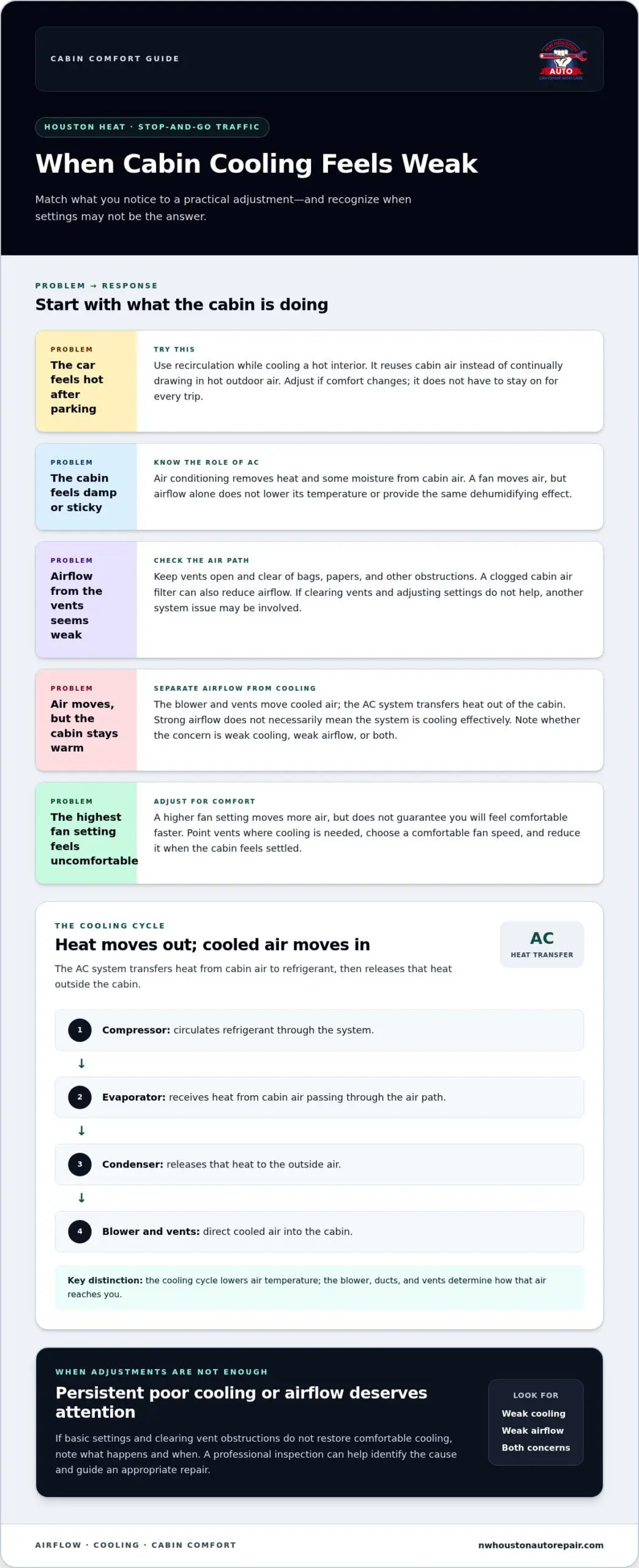
Car air conditioning cools and dehumidifies cabin air, then circulates it through the vehicle’s vents. Comfortable air con for car use depends on more than cold air: airflow, cabin conditions, and the settings you choose all matter.
How does air conditioning make a car cabin more comfortable?
The AC system draws in air and removes heat before sending cooler air back into the cabin. As air passes through the system, some moisture is removed too, which can make the cabin feel less damp and sticky on humid days.
That differs from simply moving warm outside air through the vents. A fan creates airflow, but airflow alone doesn’t lower the air’s temperature. For an overview of the components and cooling process, see How a Car AC System Works.
Cabin comfort depends on three things working together: the system must cool the air, the vents must direct it where it’s useful, and the settings must suit the conditions. If one part isn’t working as expected, the cabin may remain uncomfortable even with the fan running.
Why Houston heat changes the everyday AC experience
A car parked outdoors can feel hot before you start driving. The seats, steering wheel, and cabin air may all be warm, so the AC has to cool the space as you get underway. On humid days, removing moisture matters too. Cool air may feel less refreshing if the cabin still feels damp.
Stop-and-go traffic adds another challenge: you may spend longer sitting in a warm cabin, with less airflow around the vehicle than during steady driving. Keep vents clear and point them toward the areas where you want cooling.
If the AC runs but the cabin stays warm, or airflow seems weak, changing settings may not address the underlying issue. Note what you’re experiencing and when it occurs. Persistent poor cooling is a reason to consider professional auto air-conditioning service.
How a Car AC System Cools and Circulates Air
A car’s AC system has two connected jobs: moving heat out of the cabin and moving cooled air through it. Refrigerant carries heat from air passing through the evaporator to the condenser, where the heat is released outside the cabin, while the blower sends cooled air through the vents.
What the compressor, condenser, and evaporator do
The compressor circulates refrigerant through the AC system, helping move heat from one part of the cycle to another. The condenser, usually at the front of the vehicle, releases that heat to the outside air. The refrigerant then continues through the system toward the evaporator, which sits in the cabin’s air path.
As cabin air passes over the evaporator, heat transfers from the air to the refrigerant. The blower pushes the cooled air toward the dashboard or other vents. The refrigerant returns to the compressor, and the cycle continues. You don’t need to memorize each component to understand the main point: the system transfers heat out rather than simply making air move.
Cooling and airflow are related but distinct. The AC system cools air, while the blower, ducts, and vents determine how that air reaches you. Strong airflow doesn’t necessarily mean the system is cooling effectively. Knowing the difference can help you describe whether the concern is weak cooling, weak airflow, or both.
Why airflow and the cabin air filter matter
Vents direct air into different parts of the cabin, so their position affects where you feel the cooling. Keep them open and clear of bags, papers, and other items. The cabin air filter catches dust and other particles before air reaches the interior. If it becomes clogged, airflow may be reduced, even if the AC cooling cycle is still working.
A clogged filter is only one possible reason for weak airflow or poor comfort. If clearing vents or adjusting settings doesn’t help, another part of the system may be involved. A professional inspection can help identify the cause. SAE International’s SAE safety standards address safety and refrigerant handling in mobile air-conditioning systems, underscoring why system service calls for care.
If cooling or airflow remains consistently poor, explore professional AC service in Houston.
Car AC Settings and Common Comfort Misconceptions
AC controls help manage comfort, but no single button can cool every cabin the same way. Interior heat, outside conditions, airflow, and the system’s condition all affect how comfortable the drive feels. Use the settings to adjust comfort, not to diagnose a mechanical issue.
When should drivers use recirculation in Houston?
Recirculation reuses air inside the cabin instead of continually drawing in outside air. After entering a hot car, it may help the cabin feel comfortable sooner by letting the system work with the interior air rather than repeatedly pulling in hot outdoor air. The result depends on the vehicle and conditions, so adjust as needed.
| Setting | What it does | When it may help |
|---|---|---|
| Recirculation | Circulates cabin air again. | Try it while cooling a hot interior. |
| Outside air | Draws air in from outside the vehicle. | Use it when you want to bring in outside air, then adjust based on comfort. |
Controls vary between vehicles, and conditions can change during a drive. Treat recirculation as an option, not a setting that has to stay on for every trip. If the cabin feels less comfortable, switch settings and see whether it helps.
Does running the AC only on high cool the car faster?
A higher fan setting moves more air through the cabin, making airflow more noticeable. It doesn’t guarantee that every driver will feel comfortable faster, and the highest setting may feel too forceful or noisy. Choose a fan speed that suits the cabin and the people inside, then adjust as conditions change.
Air temperature and air volume are separate controls. If the vents point away from you, a strong fan may not direct air where you need it. Set the temperature and vent direction for comfort, then reduce the fan when the cabin feels settled.
A particular setting isn’t a repair. Changing recirculation or fan speed can improve comfort, but it can’t confirm that the system is working properly or fix a mechanical issue. If cooling remains poor across reasonable settings, professional auto air-conditioning service can help identify the cause. Using air con for car controls thoughtfully can make everyday driving more comfortable, while persistent problems deserve a closer look.
How to Maintain Comfortable Car Air Con in Houston
A consistent routine can help you manage a hot cabin without constantly switching controls. Follow your vehicle’s owner’s manual, since control labels and recommended settings vary by model.
A simple routine for cooling a hot parked car
Try this sequence when you get into a warm vehicle:
- Check the vents. Make sure they’re open and not blocked by bags, papers, or other items.
- Choose a comfortable temperature and fan speed. Direct airflow where it’s useful, then adjust as the cabin changes.
- Use recirculation thoughtfully. It may help while the cabin is hot by circulating interior air. Change the setting if it no longer feels comfortable.
- Reassess as you drive. Adjust the fan, vent direction, and air source as conditions change.
There’s no guaranteed cooling time, since cabin conditions and vehicle systems differ. Start with clear airflow and comfortable settings, then adjust based on how the cabin feels.
When comfort changes suggest it is time for service
Look for a pattern rather than judging by one uncomfortable moment. If cooling stays weak, airflow changes unexpectedly, or the system behaves abnormally, repeated adjustments may not address the cause. These symptoms don’t identify a specific fault, so don’t assume a particular component or refrigerant issue is responsible.
Keep vents unobstructed and note whether the problem continues across different settings. If it does, professional inspection can help determine what’s affecting comfort and what repair may be appropriate. Learn more about auto air conditioning service for persistent cooling concerns.
Simple habits can help, but it’s also useful to recognize when settings aren’t enough. Addressing unusual or ongoing changes can help you make an informed decision about your next step for comfortable air con for car use in Houston.
Professional Car AC Service in NW Houston: What to Expect
If adjusting temperature, fan speed, and airflow doesn’t restore comfortable cooling, the issue may need more than a change in settings. A professional inspection can assess how the system is operating and help narrow down what may be affecting cabin comfort. The goal is to understand the cause before recommending an appropriate repair, rather than guessing from one symptom.
What a professional AC inspection helps assess
Several parts work together to cool the cabin, and more than one issue can affect what you feel. During an inspection, a technician can assess system operation and airflow, then consider the symptoms you’ve noticed. Persistent weak cooling is a reason to look more closely, but it doesn’t identify a failed part or determine the repair on its own.
The next step depends on the inspection findings. You should understand what was found and why a repair is recommended before work proceeds. That helps distinguish a system concern from a setting or airflow issue and keeps the focus on addressing the actual problem.
Get help with car air conditioning in NW Houston
Houston heat and traffic make cabin comfort a practical concern. NW Houston Auto Repair and Collision provides local auto AC repair. If your car’s cooling remains poor after you’ve checked the basic controls and airflow, professional attention can help clarify the next step.
Learn more about auto air conditioning repair in Houston. The team can assess the concern and recommend a suitable repair based on the inspection findings.
If you’re dealing with persistent cooling concerns, contact NW Houston Auto Repair and Collision to discuss your car’s AC needs.
Keep Your Houston Drives Comfortable
Cabin comfort takes more than cold air. A working AC system removes heat and moisture, while clear vents and thoughtful settings help cooled air reach where you need it. Recirculation may help in a hot cabin, but no control setting can diagnose or repair persistent weak cooling.
Use a simple routine: check vent airflow, adjust temperature and fan speed as conditions change, and notice unusual or ongoing performance changes. If those steps don’t restore comfort, professional inspection can help identify the cause and guide an appropriate repair.
For dependable air con for car comfort in Houston, NW Houston Auto Repair and Collision provides auto air-conditioning repair. The family-owned and operated business has served the area since 1999.
Don’t let persistent cooling trouble become part of every drive. Contact NW Houston Auto Repair and Collision to discuss your car’s air conditioning needs.
Frequently Asked Questions
How does air conditioning work in a car?
A car AC system moves heat out of the cabin and circulates cooled air through the vents. The compressor circulates refrigerant, the condenser releases heat outside the cabin, and the evaporator helps cool air before it reaches the interior. A blower moves that air through the vents. Because these parts work together, an air con for car comfort problem can’t always be traced to one control or component.
Why is my car AC not cooling well in Houston?
Several factors can affect cooling, including a hot parked vehicle, restricted airflow, AC settings, or a system that needs professional attention. Check that the vents are open and the controls are set as intended. If cooling remains weak or the system behaves unusually, an inspection can help identify the cause. A symptom alone doesn’t prove that a particular component has failed.
Should I use recirculate when running my car AC?
Recirculation reuses air inside the cabin instead of continually drawing in outside air. It may help while cooling a hot cabin, including after your car has been parked in Houston weather. The most comfortable setting depends on conditions and your vehicle’s controls, so adjust as needed and follow the owner’s manual. Recirculation changes airflow, but it doesn’t repair an AC system.
Can a clogged cabin air filter affect car AC airflow?
Yes. A clogged cabin air filter can restrict air reaching the vents, making airflow feel weak. That doesn’t necessarily mean the AC system has stopped cooling, and replacing a filter won’t resolve every cause of poor comfort. Check for blocked vents too. If airflow or cooling remains unsatisfactory after these basic checks, have the system assessed rather than treating the filter as a complete diagnosis.
How often should I run my car air conditioning?
There’s no single schedule that suits every vehicle and driving pattern. Use the system when cabin comfort calls for it, and follow your owner’s manual for vehicle-specific care. Pay attention to changes in cooling or airflow rather than relying on a universal interval. If the system behaves unusually or no longer provides comfortable air, professional inspection in Houston can help clarify what may be affecting its operation.
What should I do if my car AC stops cooling while driving?
Adjust the controls only when it’s safe, and keep your attention on driving. If the air remains warm, airflow changes significantly, or the system behaves unusually, arrange a professional inspection when practical. Repeatedly changing settings may not resolve a mechanical concern. In Houston heat, if the cabin becomes difficult to tolerate, prioritize finding a safe place to stop before troubleshooting further.
Does my car need AC repair if the air feels weak?
Not necessarily, but persistent weak airflow or air that doesn’t feel cool deserves attention. Weak airflow and inadequate cooling are different symptoms, and either can have more than one possible cause. Check that vents are open and settings are appropriate. If the problem continues, an auto AC inspection can help determine whether airflow, cooling, or another system concern needs attention. Symptoms alone can’t identify a specific repair.