

If your car seems to drive normally, does it still need an alignment on a regular schedule? The answer to “how often should you get a wheel alignment” depends on your vehicle, its condition, and where you drive. In Houston, a hard hit from a pothole or curb can affect how your car handles, but routine driving does not automatically call for an appointment on a fixed date.
Uneven tire wear or a slight pull can be a reason to look more closely, but those symptoms may also point to a tire or suspension concern. Noticing changes early can help you address tire wear and handling issues before they become more pronounced. The first step is to identify what changed, not to assume the cause.
This guide explains when to schedule an alignment inspection, when it may be reasonable to monitor how your vehicle drives, and which events can affect wheel angles. You’ll also learn what warning signs to watch for and what information to share during an inspection. For NW Houston drivers, family-owned NW Houston Auto Repair and Collision provides wheel alignment, tire rotation, tire repair, and suspension repair to help address tire and handling concerns.
Key Takeaways
- How often should you get a wheel alignment? Start with your owner’s manual, since timing depends on your vehicle and driving conditions.
- Watch for a consistent pull, an off-center steering wheel, or uneven tire wear. These changes are reasons to have the vehicle assessed.
- After a hard pothole or curb impact, pay attention to handling and visible tire or wheel damage. The impact alone does not confirm an alignment problem.
- Before an inspection, note symptoms, recent impacts, tire wear, and relevant steering or suspension repairs.
- An alignment inspection measures wheel angles against your vehicle’s specifications and helps determine whether an adjustment is needed.
How Often Should You Get a Wheel Alignment? Start With Your Vehicle
There isn’t one schedule that fits every car and driver. If you’re asking, “how often should you get a wheel alignment,” start with your owner’s manual for vehicle-specific maintenance guidance. Then consider your driving conditions and whether the car’s handling or tire wear has changed. A routine alignment check and an alignment adjustment are not the same thing: an inspection measures the wheel angles against vehicle specifications, and an adjustment is appropriate when the measurements show it’s needed.
Alignment timing depends on your vehicle’s maintenance guidance, the roads you drive, and your vehicle’s condition. A calendar reminder can prompt you to review the manual, but it is not a universal rule to book an adjustment.
Is there a standard mileage interval for wheel alignment?
No single mileage interval applies to every vehicle. The manufacturer’s recommendations for your model are the best starting point. Driving conditions and the vehicle’s condition can also affect when an inspection makes sense. If you regularly travel over rough or damaged roads, notice a change in handling, or see unusual tire wear, it may be worth checking the alignment before your next routine maintenance visit. Use the manual as your baseline and respond to changes between visits.
What does a wheel alignment check actually assess?
An alignment check measures the wheels’ angles against the specifications for your vehicle. The angles can include camber, caster, and toe. The Wheel alignment overview offers a technical introduction. In practical terms, the important question is whether the measurements fall within your vehicle’s specifications, not whether an adjustment is automatically required.
Alignment and tire balancing address different concerns. Alignment concerns wheel angles in relation to the vehicle. Balancing addresses how the tire and wheel assembly rotates, helping identify and correct an imbalance. A vibration or tire concern may need inspection to identify its cause rather than an assumption that alignment is the answer. Measurements help determine the right next step.
For drivers in NW Houston, an alignment inspection can help assess tire wear and handling. Learn more about NW Houston Auto Repair and Collision’s wheel alignment service. Keep your vehicle’s manual handy, use its model-specific guidance as a baseline, and pay attention to changes in how your car behaves between maintenance visits.
When Should You Get a Wheel Alignment? Watch for These Signs
Your vehicle’s behavior can offer useful clues between routine maintenance visits. If you’re wondering how often should you get a wheel alignment, watch for changes in how the car tracks and in the condition of its tires. A symptom can be a reason for an inspection, but it cannot confirm alignment is the cause on its own.
Uneven tire wear, a vehicle that consistently pulls, or a steering wheel that sits crooked while driving straight are reasons to have your tires and alignment inspected. An alignment involves adjusting the wheel angles to match vehicle specifications. A technician needs to assess the vehicle before determining what is behind a symptom.
Can uneven tire wear mean your wheels are out of alignment?
It can. If one tire looks more worn than another, or wear appears uneven across a tire, alignment may be one factor. Wear patterns are not a diagnosis by themselves. Look at the tire tread and compare wear across the tire and between tires. Check tire condition and pressure, and consider whether the wear has appeared alongside a change in handling. Regular tire maintenance matters, too: learn about tire rotation service as part of caring for your tires. If wear looks unusual or progresses quickly, have the tires and alignment assessed instead of assuming an adjustment will solve it.
What if your car pulls or the steering wheel sits crooked?
Notice whether the pull or off-center steering wheel happens consistently on a reasonably level road. A road’s slope can make a vehicle feel as if it’s drifting, so one brief impression may not tell you much. Note when the behavior occurs and whether it continues under similar driving conditions.
Other causes are possible, including tire condition, tire pressure, or suspension concerns. An inspection can help distinguish among them and determine whether alignment measurements call for adjustment. That is more reliable than treating a pull or crooked steering wheel as proof of misalignment.
If these signs persist, don’t ignore them. A focused inspection can help identify the source and guide the next step. NW Houston Auto Repair and Collision provides wheel alignment service for drivers addressing tire wear and handling concerns.
Do You Need an Alignment After a Pothole, Curb Impact, or Repair?
A hard jolt can be more than a rough moment on the road. Hitting a deep pothole or striking a curb may affect steering or suspension components and change wheel alignment. Houston drivers encounter uneven pavement and road hazards in everyday travel, but not every bump means the alignment is out. Pay attention to what happens afterward.
How often should you get a wheel alignment? A significant impact or relevant repair can make an inspection sensible between routine maintenance visits, especially if the vehicle’s handling changes. The impact itself does not confirm a problem. An inspection and measurements determine whether the alignment needs adjustment.
Should you check alignment after hitting a pothole or curb?
After a hard impact, notice whether the vehicle begins pulling, the steering wheel sits differently, or the tires show damage. These clues deserve attention, but they do not all point to the same issue. Look for visible tire or wheel damage as well as changes in handling. If you see damage or the car behaves differently, arrange an inspection to assess the concern rather than assuming an alignment adjustment is the only step needed.
A jolt on a Houston-area road is a reason to pay attention, not a diagnosis. If the vehicle feels unchanged, that alone does not establish whether the alignment is within specification. Likewise, one pothole encounter does not automatically mean the wheels need adjustment. Measurements provide a clearer answer.
When can tire or suspension work make an alignment check relevant?
Some steering or suspension repairs can affect wheel geometry, so an alignment check may be relevant after that work. The need for an adjustment depends on what was repaired and what the measurements show. Don’t assume every repair requires alignment, but mention recent work if you notice new handling changes or uneven tire wear.
If suspension concerns are part of the picture, suspension repair can address that side of the issue. Full-service facilities such as Eagle Transmission & Auto Repair frequently evaluate related chassis and steering components alongside wheel alignment to ensure complete vehicle stability. Considering related symptoms alongside alignment measurements helps distinguish a component concern from wheel angles that need correction.
Keep a simple record: where the impact happened, what changed afterward, whether you noticed visible tire or wheel damage, and what work was recently completed. That context helps an inspection focus on the right concerns. For drivers in NW Houston, an alignment check is a practical next step when an impact or repair is followed by a noticeable change. Measurements determine whether an adjustment is needed.
How to Decide Whether Your Car Needs an Alignment Now
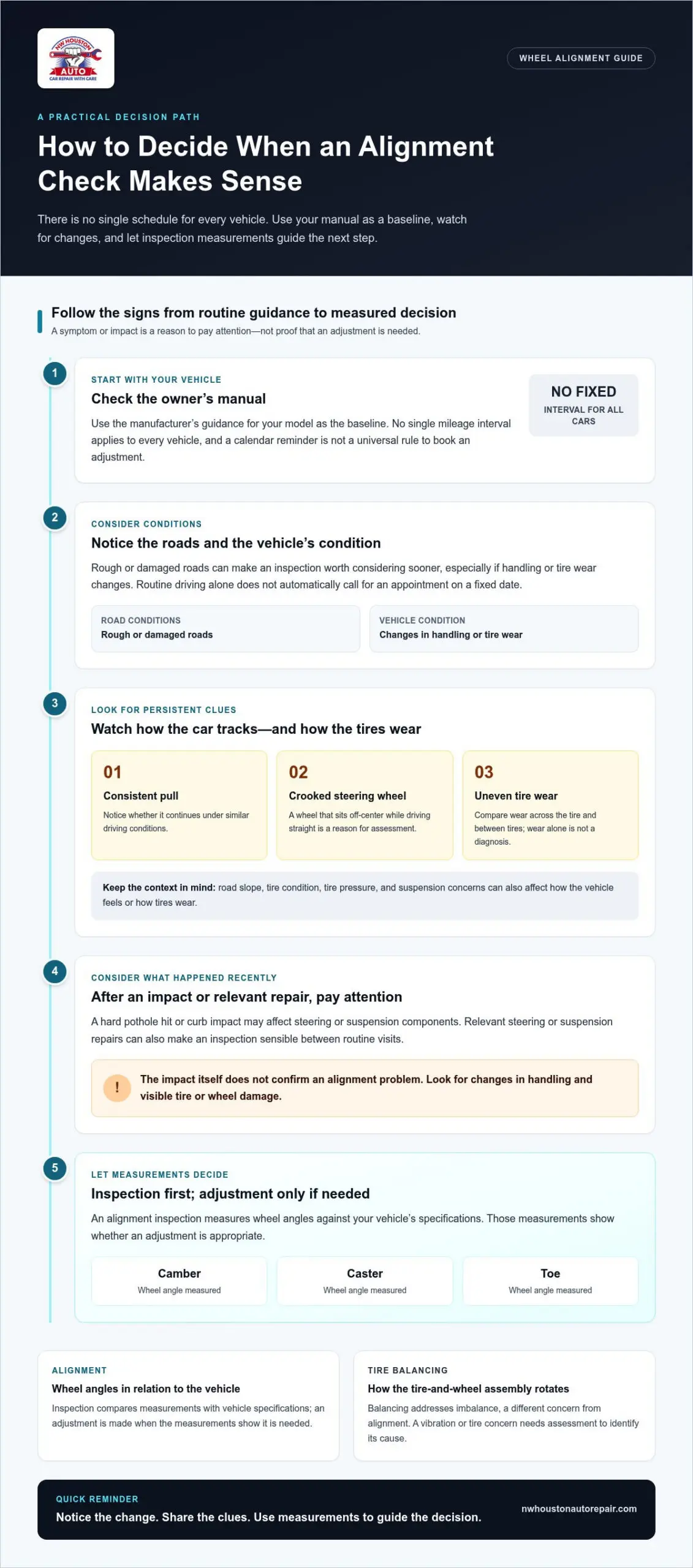
Use a simple process instead of guessing from one symptom. First, check your owner’s manual for maintenance guidance specific to your vehicle. Next, note any changes in steering, handling, or tire wear. Then consider whether you’ve recently hit a pothole or curb, changed tires, or had steering or suspension work done. If these clues point to a concern, arrange an inspection.
An inspection is not an automatic commitment to an adjustment. It helps determine whether measured wheel angles fall outside your vehicle’s specifications and whether adjustment is needed. That distinction matters: the goal is to identify the cause, not to make an assumption based on a single clue.
What should you note before an alignment inspection?
Keep track of when you first noticed a pull, an off-center steering wheel, or unusual tire wear. Note whether the change is constant or comes and goes. Share any recent pothole or curb impacts, tire changes, and steering or suspension work. These details provide useful context, but don’t try to diagnose alignment from one symptom or a quick visual check alone.
How can regular tire care help you spot alignment changes?
Look over your tires periodically as part of routine vehicle care. Noticing a new or uneven wear pattern can help you catch a concern earlier, though appearance alone cannot confirm the cause. Tire rotation supports tire maintenance, but it does not correct wheel alignment. If your observations raise a concern, an inspection can establish whether alignment measurements call for adjustment.
For local details, visit the page about NW Houston wheel alignment service. If you’ve noticed a change in handling or tire wear, contact the shop about your alignment concern. Bring notes about when the symptoms began and any recent tire or suspension work so the team understands what you’ve observed.
Get a Wheel Alignment in NW Houston When the Signs Point to a Check
There’s no single calendar interval that suits every vehicle. Use your owner’s manual for model-specific maintenance guidance, then respond to changes in how your car handles, visible tire wear, a hard road impact, or relevant steering and suspension work. If you’re still asking how often should you get a wheel alignment, let vehicle guidance and your car’s condition lead the decision rather than relying on a one-size-fits-all schedule.
An alignment inspection shows whether measured wheel angles are within your vehicle’s specifications. It does not automatically mean an adjustment is needed. NW Houston Auto Repair and Collision provides wheel alignment service for drivers who want to address a handling or tire-wear concern with an inspection based on the vehicle’s condition.
What to expect when arranging a local alignment inspection
Share what you’ve noticed: when a pull or steering-wheel change began, where tire wear appears, and whether you recently hit a pothole or curb. Mention tire changes and any steering or suspension repairs, too. These details provide useful context, but they are not a substitute for inspecting the vehicle and checking alignment measurements. The next step depends on the findings, not on an assumption that every symptom calls for an adjustment.
When should Houston drivers take the next step?
If a new handling change appears after an impact or repair, arrange an inspection rather than waiting for a routine maintenance visit. If the vehicle feels normal and the tires show no unusual wear, follow the owner’s manual and keep tire condition on your routine maintenance radar. This approach helps distinguish a scheduled check from attention prompted by a change.
For drivers in NW Houston, the shop’s wheel alignment service is a practical local option when signs point to a check. Keep a note of symptoms and recent work so you can describe what changed. Contact NW Houston Auto Repair and Collision to arrange an inspection for your alignment concern.
Keep Your Tires and Handling on Track
There’s no universal calendar for alignment. Follow your owner’s manual and pay attention to changes in handling, uneven tire wear, hard impacts, or relevant repairs. If you’re asking how often should you get a wheel alignment, let your vehicle’s guidance and condition shape the timing. An inspection can determine whether wheel-angle measurements call for an adjustment, rather than relying on symptoms alone.
NW Houston Auto Repair and Collision is family-owned and operated and has served drivers since 1999. The shop provides wheel alignment and tire rotation to support tire care and dependable handling.
If your car is pulling, the steering wheel feels off-center, or tire wear looks unusual, contact NW Houston Auto Repair and Collision about your alignment. Share what you’ve noticed and take the next step toward addressing the concern.
Frequently Asked Questions
How often should you get a wheel alignment if your car drives normally?
If your car drives normally, follow the maintenance guidance in its owner’s manual rather than relying on a universal alignment interval. How often should you get a wheel alignment depends on the vehicle, its condition, and how it’s driven. A check does not automatically mean an adjustment is needed. Measurements help determine whether wheel angles fall outside your vehicle’s specifications.
Is a wheel alignment needed every time you get new tires?
No, new tires do not automatically mean your vehicle needs an alignment adjustment. However, tire installation can be a useful time to notice existing wear patterns or handling concerns and consider whether an inspection is appropriate. If your old tires wore unevenly, or the car pulls or the steering wheel sits off-center, mention those observations so alignment measurements can guide the next step.
Can hitting a pothole throw your wheels out of alignment?
Yes, a hard pothole impact can affect alignment, but hitting one does not prove the wheels are out of specification. Houston drivers should watch for new pulling, a changed steering-wheel position, or visible tire or wheel damage after a jolt. If you notice a change, arrange an inspection. Measurements can determine whether alignment needs adjustment or another concern needs attention.
What are the signs that your car needs a wheel alignment?
Common warning signs include the vehicle consistently pulling to one side, a steering wheel that appears off-center while driving straight, or uneven or unusually rapid tire wear. These symptoms can also have other causes, so they do not diagnose alignment on their own. Note when the changes occur and have the tires and vehicle inspected if the signs persist or appear together.
Should you get a wheel alignment after suspension repair?
An alignment check may be relevant after suspension repair because some suspension work can affect wheel geometry. The specific repair and the vehicle’s measured alignment determine whether an adjustment is needed, so don’t assume every repair automatically requires one. Share what work was done and mention any changes in handling or tire wear. An inspection can help determine whether the angles need correction.
Can uneven tire wear be caused by something other than alignment?
Yes. Uneven wear can be associated with alignment concerns, but tire condition, tire pressure, or suspension issues may also be involved. Look at the tires as part of routine vehicle care, but don’t rely on appearance alone to identify the cause. If wear looks unusual or develops alongside a handling change, have the tires and alignment inspected to help determine what needs attention.
Does a tire rotation fix wheel alignment?
No. Tire rotation changes the position of tires on the vehicle as part of tire maintenance. It does not correct wheel angles. Alignment is assessed by comparing those angles with the vehicle’s specifications, and adjustment is considered if measurements show it’s needed. Rotation and alignment can both support tire care, but they address different concerns. If handling changes or uneven wear persist, consider an inspection.