
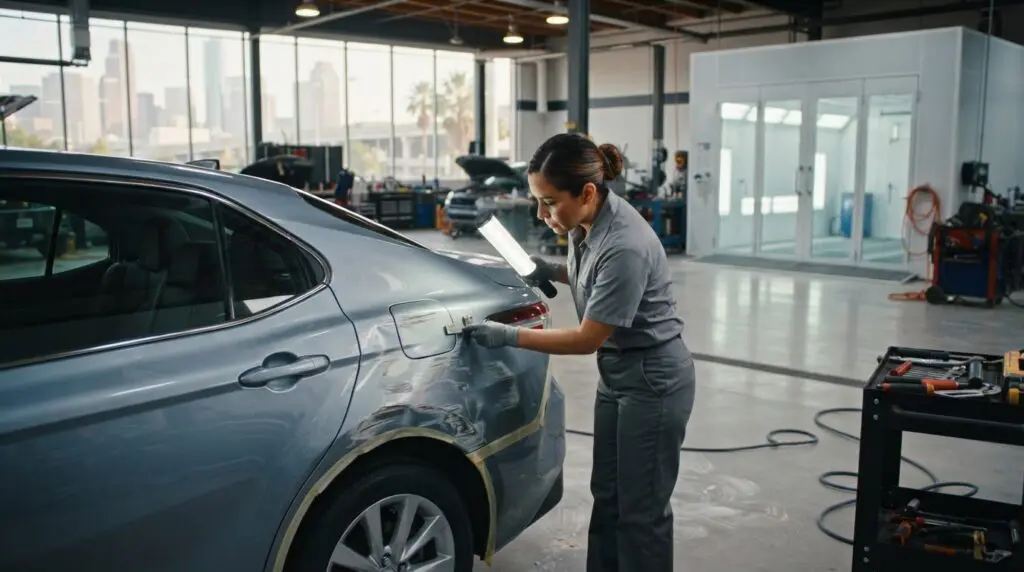
What if the paint is the least of the damage? After a collision, a scratch or scraped panel may look like a straightforward repaint, but dents or damage beneath the surface can call for broader collision repair. If you’re considering collision paint repair Houston drivers can rely on, start with an accurate assessment, not just a fresh coat. That’s the first step toward understanding the work and setting clear expectations for the finish.
It’s reasonable to worry about whether new paint will match, how long repairs may take, and whether a shop has identified everything that needs attention. A trustworthy repair conversation should explain the proposed work, how the shop plans to address the finish, and what could affect timing, without leaving you guessing.
In this guide, you’ll learn what to expect from the collision paint repair process, what can influence the result, and which questions to ask before choosing a Houston-area shop. NW Houston Auto Repair and Collision is family-owned and operated and has served the community since 1999, with collision repair and auto paint correction among its listed services. Knowing what to ask can help you discuss your vehicle and next steps with confidence.
Key Takeaways
- Learn why collision paint repair Houston may involve more than refinishing a visible scratch, and why the damage should be assessed first.
- Get a clear overview of the typical stages, from inspection and repair-plan discussion to surface work and final review.
- Compare collision paint repair, paintless dent repair, and paint correction by the kind of damage or finish concern each addresses.
- Use practical questions to clarify the repair scope, paint work, communication, and how the completed work will be reviewed.
- Find out how to discuss collision damage with NW Houston Auto Repair and Collision, a family-owned business offering collision repair and auto paint correction.
Collision Paint Repair in Houston: When Does a Vehicle Need It?
Seeing chipped or scraped paint after a collision can be stressful, especially when you’re unsure whether the mark is only cosmetic or part of a larger repair. Collision paint repair Houston drivers consider is about restoring painted surfaces affected by an impact, but not every scratch calls for repainting. A professional assessment can help clarify what’s damaged and what work may be appropriate.
Look for paint that’s chipped, scraped, cracked, or noticeably different from the surrounding finish. These signs are reasons to ask a repair professional to inspect the area, not proof that a particular repair is needed. A visual review can help identify the affected surface and discuss likely repair scope. It can’t, on its own, confirm hidden or structural damage.
Paint damage may occur by itself, or alongside a dent, shifted panel, or other collision damage. If the panel is visibly distorted or the impact affected more than the finish, ask whether the proposed work includes broader body repairs. For help assessing damage beyond the paint, review the shop’s collision repair service.
How collision damage can affect a painted surface
An impact can scrape or chip the paint directly. It can also dent a panel, leaving the finish cracked or disturbed around the damaged area. Because modern automotive paint involves multiple layers, the visible mark may not show the full extent of surface damage. The overview of Modern automotive paint explains common paint layers, but a shop needs to inspect your vehicle to discuss its condition and repair needs.
Collision paint repair, paint correction, and dent repair compared
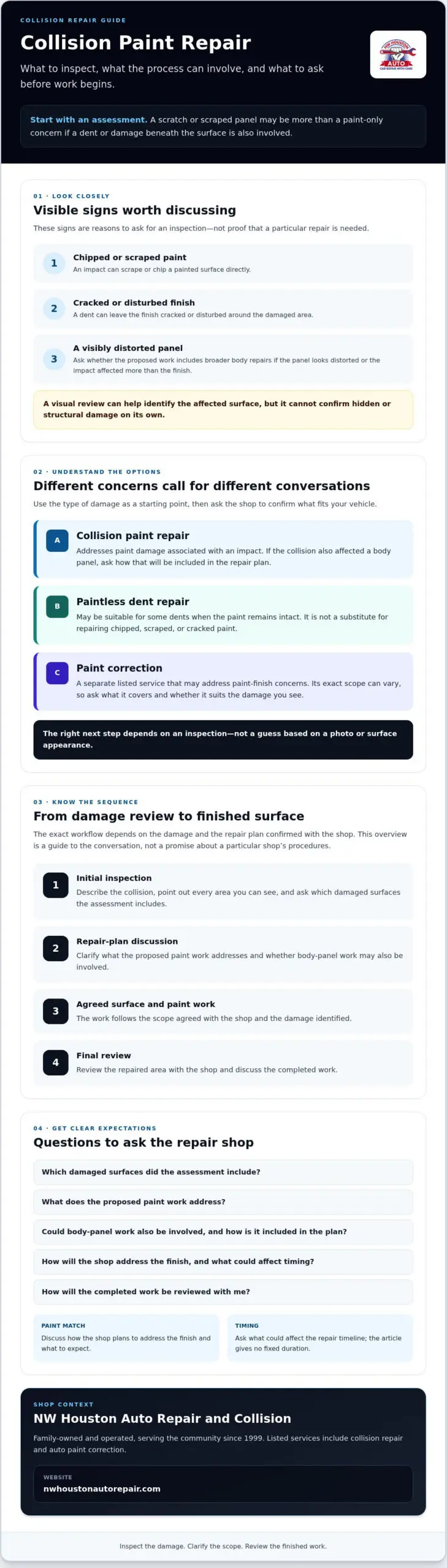
These services address different concerns. Use the type of damage as a starting point, then ask the shop to confirm which option fits your vehicle.
- Collision paint repair: Addresses paint damage associated with an impact. If the collision also affected a body panel, ask how that will be included in the repair plan.
- Paintless dent repair: May be suitable for some dents when the paint remains intact. It isn’t a substitute for repairing chipped, scraped, or cracked paint.
- Paint correction: A separate listed service that may address paint-finish concerns. Its exact scope can vary, so ask what it covers and whether it suits the damage you see.
The right next step depends on an inspection, not a guess based on a photo or surface appearance. Ask the shop to explain what it sees, what work it recommends, and whether paint repair or broader collision work is part of the plan.
How Collision Paint Repair Works: From Damage Review to Finished Surface
Knowing the steps can make collision paint repair Houston less uncertain. The exact workflow depends on the damage and the repair plan confirmed with the shop, so treat this overview as a guide to the conversation, not a promise about a particular shop’s procedures.
In brief: the shop reviews the damage, discusses the proposed scope, completes the agreed surface and paint work, then reviews the repaired area with you.
- Initial inspection: Describe the collision and point out every area you can see, even if a mark seems minor. Ask which damaged surfaces the assessment includes.
- Repair-plan discussion: Clarify what the proposed paint work addresses and whether body-panel work may also be involved. If the impact appears to affect a panel, the shop’s auto body repair services page can help you understand the broader service category.
- Surface and paint work: The work should follow the agreed plan. Ask what preparation and refinishing the repair involves, and how the shop considers the surrounding finish when selecting and applying paint.
- Final review: Inspect the repaired area with the shop and compare it with the concerns and work discussed beforehand.
What happens during the initial damage assessment?
Give a clear account of where the impact occurred and point out chipped, scraped, cracked, or otherwise changed areas. Ask the shop to explain which damage the proposed paint work covers and what remains outside that scope. Don’t assume a photo or surface appearance can establish whether there’s hidden damage; ask the shop directly what its inspection can determine and whether any additional checks are part of its process.
Before work begins, make sure you understand the proposed work and any estimate. The Federal Trade Commission’s consumer advice on auto repair offers general guidance for discussing repairs and estimates.
How should drivers evaluate the completed paint work?
Paint matching deserves a specific conversation. Ask how the shop will assess the color and finish against the surrounding areas, and what factors could affect the result. Don’t assume a particular matching method or expect a guaranteed invisible repair unless the shop has explained what it can deliver for your vehicle.
At pickup, look at the repaired area in clear, even lighting and from more than one angle. Check that the areas you discussed appear to have been addressed, then raise any concerns with the shop before you leave. If you’re still clarifying what your vehicle may need, you can contact the shop to discuss the damage.
Paint Repair or Another Fix? Compare the Options for Collision Damage
After an impact, the right repair depends on what’s affected: the paint, the panel shape, or the finish more generally. A dent with intact paint raises a different question from a scrape that has removed or cracked paint. A professional assessment can help distinguish these issues and clarify whether the damage is limited to the finish or includes a dent or panel damage.
| Option | Issue it addresses | Question to ask |
|---|---|---|
| Collision paint repair | Paint damage associated with an impact, such as chipped, scraped, or cracked paint. | Does the proposed work address only the paint, or is panel repair also needed? |
| Paintless dent repair | Some dents, depending on the damage and condition of the paint. | Is this dent suitable for paintless repair, and is the paint intact? |
| Paint correction | A separate service related to paint-finish concerns. | Does the service address this specific concern, or is it collision damage requiring another approach? |
Use the table as a starting point, not a diagnosis. For example, a dent with intact paint may be worth asking about for paintless dent repair, while visible paint loss calls for a discussion about how that damaged finish will be addressed. If a dent and paint damage appear together, ask the shop to explain how each part factors into its recommendation.
When might paintless dent repair be worth asking about?
Paintless dent repair may suit some dents, but it isn’t automatically right for every impact. The condition of the paint and the specifics of the dent matter, so ask a shop to assess the damage before settling on an approach. If you’re exploring that option, review the shop’s paintless dent repair service information. Visible chips, scrapes, or cracked paint may need a different repair plan.
When is auto paint correction a separate consideration?
Auto paint correction and collision paint repair describe different service needs. The first is a listed service for paint-finish concerns; the second addresses paint damage associated with an impact. Don’t assume correction is suitable for collision damage or expect a particular technique or result without confirming the service scope. Ask the shop what it covers and whether it fits your vehicle’s condition. You can learn more about auto paint correction as a separate service.
If you’re comparing repair shops, ask what relevant training or credentials their technicians hold and how you can verify them. ASE provides information about ASE certified technicians. The key is to get a clear explanation of the damage and proposed work before choosing between repair options.
Choosing a Collision Paint Repair Shop in Houston: Questions to Ask
A clear explanation of the proposed work is a useful sign that a shop is taking your questions seriously. It isn’t a guarantee of the finished result, but it helps you understand what the estimate covers, what remains uncertain, and how the shop plans to communicate. For collision paint repair Houston drivers are considering, look for straightforward answers about both the paint and any related body damage.
Questions to ask before approving collision paint work
Before authorizing repairs, make sure you understand the scope. Ask the shop to explain its assessment in plain language, including what paint damage it identified and whether body-panel work is included or needs separate discussion. If you’re comparing estimates, check that you understand what each one includes rather than comparing totals alone.
- Which areas are included? Confirm the affected panels or surfaces covered by the proposed work, and ask whether any related body repair is included.
- How will paint selection and matching be handled? Ask how the shop will consider the vehicle’s existing finish and what factors could affect the result. Don’t assume a specific method or guaranteed match.
- What does the estimate cover? Ask for clarification about the repair scope, any items that may need further assessment, and how changes to the proposed work would be discussed.
- What should I expect for timing and insurance communication? Share the information you have and ask what the shop can confirm. Processes and timelines can depend on the vehicle and repair plan, so get clear answers before making assumptions.
- How will we review the repair? Ask how you can inspect the completed work and raise any concerns about the areas discussed.
If the assessment suggests damage beyond the paint, ask whether the shop’s auto body repair services are relevant and how that work relates to the proposed plan. A shop that explains what it knows, what it recommends, and what still needs confirmation gives you a better basis for deciding.
What to share when requesting a local assessment
Help a Houston-area shop understand the situation by providing the vehicle’s make, model, and year if you know them. Describe how the collision happened and point out the visible paint damage, dents, and any other areas that may have been affected. Photos can provide useful context, but they can’t replace an in-person assessment or establish hidden damage on their own.
Ready to discuss your vehicle and what information may help with an assessment? Contact the shop about your collision damage and ask about the next steps.
Discuss Collision Paint Repair with NW Houston Auto Repair and Collision
After a collision, it can be hard to tell whether the visible paint damage needs attention on its own or is connected to a dent or other panel concern. NW Houston Auto Repair and Collision is a family-owned and operated business founded in 1999. Its listed services include collision repair and auto paint correction, giving Houston drivers a local option for discussing collision damage and questions about the appropriate next step.
Review the shop’s collision repair services for information about that offering. Before deciding how to proceed, ask what an assessment can clarify, which areas a proposed repair would address, and whether any related body work is included. You can also ask how paint selection and matching will be considered for your vehicle. The shop’s specific process and recommendations should be confirmed directly.
What to prepare before contacting a Houston collision shop
A little preparation can make the first conversation more useful. Gather the vehicle’s basic details, including its make, model, and year if known. Then describe when and how the collision happened and note the areas you can see are affected. Include paint chips or scrapes, dents, and any panel concerns, even if you’re not sure whether each issue is related.
It can also help to have your questions ready. For example:
- What information do you need to assess the visible damage?
- Which areas would the proposed repair cover, and is related body work included?
- What will the estimate explain, and how should I ask about insurance communication?
- What timing can you discuss based on the vehicle and proposed work?
Photos may help explain what you’re seeing, but use them as context rather than a substitute for an in-person assessment. A photograph can’t confirm the full condition of a panel or establish the repair scope by itself.
Take the next step for your vehicle’s paint damage
You don’t need to have every repair decision settled before asking questions. Explain what happened, describe the visible damage, and ask what information the shop needs to discuss your options. Clear answers can help you understand the proposed scope before deciding how to proceed; availability, repair duration, insurance approval, and finish results should be confirmed rather than assumed.
Ready to discuss your vehicle? Contact NW Houston Auto Repair and Collision to share what happened and ask about the next step.
Take the Next Step Toward a Clear Repair Plan
Choosing collision paint repair Houston drivers can feel confident about starts with understanding what the impact damaged. Paint chips or scrapes may need a different approach from a dent or panel damage, so ask for a clear assessment before agreeing to work. Confirm which areas the proposed repair includes, how paint selection and matching will be considered, and what to expect for estimates, communication, and timing.
Keep the key points in mind: visible paint damage doesn’t automatically mean repainting is the only option, and paint correction or paintless dent repair may address different concerns. The right recommendation depends on the vehicle and damage. Clear answers help you understand the scope and decide how to proceed.
NW Houston Auto Repair and Collision is a family-owned and operated business founded in 1999, with collision repair and auto paint correction among its listed services. Have questions about the damage or what to do next? Contact NW Houston Auto Repair and Collision to discuss your vehicle’s damage. A straightforward conversation is a good place to begin, and you can take the next step with greater confidence.
Frequently Asked Questions
Can collision paint repair fix scratches and chipped paint after an accident?
Yes, collision paint repair may address scratches, chips, or scraped paint caused by an impact, but the right work depends on what an assessment finds. A mark might affect only the finish, or it could accompany a dent or panel damage. Describe when the damage happened and point out each affected area. For collision paint repair Houston drivers should get the proposed repair scope explained before approving work.
How do I know whether collision damage needs paint repair or paintless dent repair?
The condition of the paint is an important clue, but a shop should assess the damage before recommending an approach. Paintless dent repair may suit some dents when the paint remains intact. If the impact chipped, scraped, or cracked the finish, ask how that paint damage would be addressed. A dent and paint damage can require different considerations, so don’t assume one service will resolve both.
Will repaired paint match the rest of my vehicle?
A shop can discuss how it will consider the existing paint and finish, but don’t assume a perfect or invisible match is guaranteed. Ask how paint selection and matching will be handled for your vehicle and what factors may affect the result. At the final review, inspect the repaired area in clear, even lighting and from more than one angle. Raise any concerns with the shop and ask for an explanation.
What happens during a collision paint repair assessment?
Expect to describe the collision and point out the visible damage so the shop can discuss the areas that may need attention. Ask which paint damage the proposed work covers and whether related body-panel work may be involved. An assessment can help clarify the likely repair scope, but don’t treat photos or surface appearance alone as proof that there’s no hidden damage. Confirm the shop’s findings and recommendations directly.
Can I choose a Houston collision repair shop if I am using insurance?
Texas vehicle owners can choose their own collision repair shop, even if their insurer recommends another one. Before authorizing work, contact your insurer to understand its process, documentation needs, and any policy considerations. Ask the repair shop what it can confirm about insurance communication rather than assuming it will coordinate with your insurer. Keep the estimate and proposed repair scope clear as you discuss next steps.
How long does collision paint repair take?
Repair time depends on the damage and the work included in the confirmed plan, so there isn’t one reliable timeline for every vehicle. A repair limited to a painted surface may differ from work that also involves a dent or body panel. Ask the shop what timing it can estimate after reviewing the vehicle, what factors could affect that estimate, and how it will communicate if the plan changes.
Should I get an estimate before approving collision paint repair?
Yes. Ask for an estimate and make sure you understand which areas and types of work it includes before approving repairs. If the proposed work involves paint and related body repairs, ask how each is reflected and what may need further assessment. Clarify questions about insurance communication and timing as well. If anything is unclear, ask the shop to explain it in plain language before you decide how to proceed.