
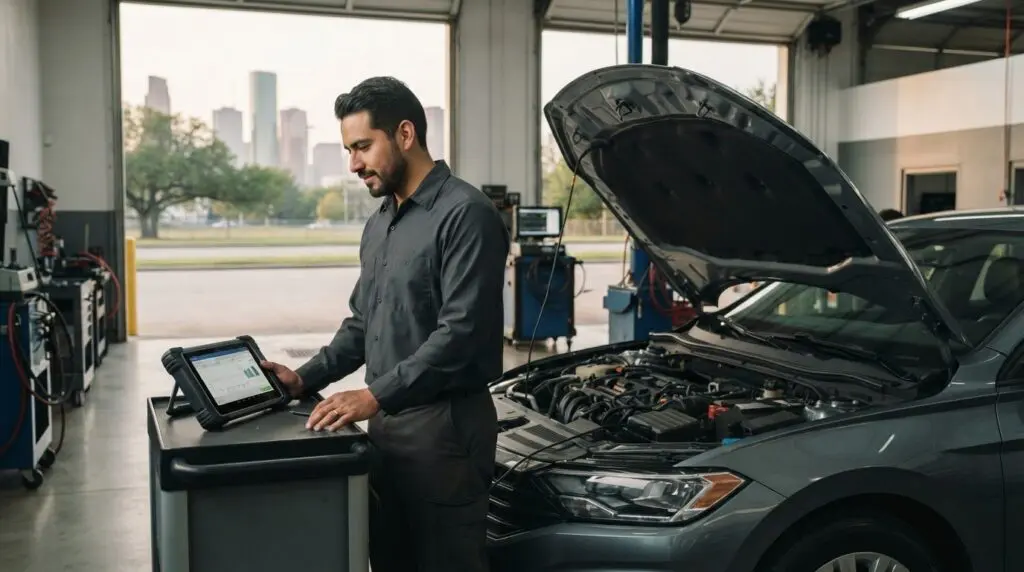
A failed emissions test calls for focused attention, not guesswork. If you’re asking what happens if I fail my emissions test in Texas, this guide explains what the result means and how to prepare your vehicle for a re-inspection. A proper diagnosis can help you understand the problem and choose practical next steps.
For Houston drivers, NW Houston Auto Repair and Collision performs Texas State Inspections and offers auto electrical repair. This article covers what a failed result means, common emissions-system trouble spots, retesting and waiver options, and how to approach repairs with a clear plan.
Key Takeaways
- Learn what happens if I fail my emissions test in Texas and how a failed result can affect vehicle registration renewal.
- Understand why a Check Engine light or faulty oxygen sensor may cause a test failure, and why identifying the root cause matters.
- Use your Vehicle Inspection Report to guide your next steps, then arrange a diagnostic before returning for a re-test.
- Find out when a free re-test may be available within 15 days and what to check before you go back.
- Explore whether a state repair waiver or extension may apply to your situation before deciding how to proceed.
Immediate Consequences of a Failed Texas Emissions Test
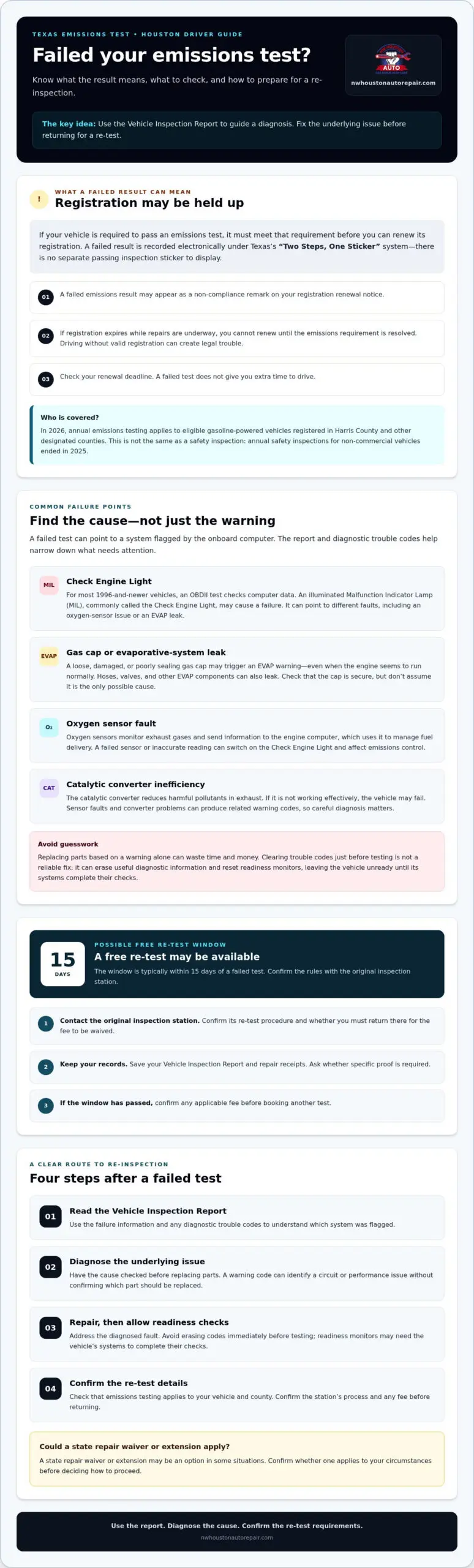
A failed emissions result can hold up your registration renewal, but it doesn’t mean every Texas driver needs an inspection sticker. In 2026, annual emissions testing applies to eligible gasoline-powered vehicles registered in Harris and other designated counties. Annual safety inspections for non-commercial vehicles ended in 2025, so a failed emissions test isn’t the same as an expired safety inspection.
For a vehicle that must pass an emissions test, the result is recorded electronically. Texas uses the “Two Steps, One Sticker” system: required inspections must be passed before registration can be renewed, and there’s no separate passing inspection sticker to display. If your registration expires while you’re arranging repairs, you can’t renew it until the emissions requirement is resolved. Driving without valid registration can create legal trouble, so check your renewal deadline and don’t assume a failed test gives you extra time to drive.
Texas’s testing system is part of a wider national approach to vehicle inspections and emissions controls. For background, see Vehicle inspection in the United States. For Houston drivers, the practical step is to act on the failure report promptly and confirm your registration status through the appropriate state channels.
The 15-Day Free Re-Test Rule
A free re-test is typically available within 15 days of a failed test. Because the window is short, contact the original inspection station to confirm its retest procedure, including whether you must return there for the fee to be waived. Keep your Vehicle Inspection Report and repair receipts. They document what you’ve done, but ask the station or Texas inspection authority whether specific proof is required. If the 15-day period has passed, confirm any applicable fee before booking another test.
Registration Blocks and Legal Deadlines
A failed emissions result may appear as a non-compliance remark on your registration renewal notice, preventing renewal until the issue is resolved. Don’t wait until the final days before expiration to arrange a diagnostic and repair. If your vehicle needs a Houston smog check, make sure the test applies to your vehicle and county, then keep the failure report as your guide. Knowing what happens if I fail my emissions test in Texas helps separate the immediate registration issue from the repair steps needed to clear it.
The Most Common Reasons Vehicles Fail Emissions in Houston
A failed test often points to a system flagged by the vehicle’s onboard computer, not a problem you can identify by sight alone. In Houston, common causes include an illuminated Check Engine Light, a faulty oxygen sensor, an EVAP leak, or a catalytic converter that isn’t working effectively. The Texas vehicle emissions inspection program explains the state’s inspection and maintenance requirements. Your test report and diagnostic trouble codes can help narrow down the cause.
OBDII Systems and the Check Engine Light
For most 1996-and-newer vehicles, emissions testing uses the OBDII system to check computer data. If the Malfunction Indicator Lamp (MIL), commonly called the Check Engine Light, is illuminated, the vehicle may fail the test. The light can point to faults ranging from an oxygen sensor problem to an EVAP leak, so replacing a part based on the warning alone can waste time and money.
Clearing trouble codes with a handheld scanner just before testing isn’t a reliable fix. It can erase useful diagnostic information and reset readiness monitors, which may leave the vehicle unready for inspection until its systems complete their checks. Have the underlying issue diagnosed instead. A professional car diagnostic service can help interpret codes and determine what needs attention.
Gas Caps and Minor EVAP Leaks
The gas cap helps seal the fuel system so the evaporative emissions control system can monitor and contain fuel vapors. A loose, damaged, or poorly sealing cap may trigger an EVAP-related warning, even if the engine seems to run normally. Check that the cap is secure, but don’t assume it’s the only possible cause. Hoses, valves, and other EVAP components can also leak.
A cap may be a relatively simple repair, but guessing at parts can add expense without fixing the actual leak. Proper testing can help locate the source before you choose a repair.
Oxygen Sensors and Catalytic Converter Problems
Oxygen sensors monitor exhaust gases and send information to the engine computer, which uses it to manage fuel delivery. When a sensor fails or reports inaccurate readings, the computer may turn on the Check Engine Light, and emissions control can be affected. A code may identify a sensor circuit or performance issue, but a technician needs to check the cause before recommending a replacement.
The catalytic converter reduces harmful pollutants in exhaust. If it becomes inefficient, the vehicle may fail emissions testing. Sensor faults and converter problems can produce related warning codes, so careful diagnosis matters. If your report points to a sensor or emissions-control fault, have the result reviewed before scheduling another test.
Navigating the Re-Test Process and Texas Repair Waivers
A re-test determines whether the vehicle now passes emissions testing. A repair waiver is different: it may provide an exception when a vehicle still fails despite meeting specific state requirements. A waiver isn’t automatic, and repair spending alone doesn’t guarantee approval. If repairs haven’t resolved the emissions issue, check the state’s eligibility rules before deciding whether to apply.
The Texas Department of Public Safety explains available Texas emissions test waivers and time extensions. TCEQ administers the emissions inspection and maintenance program. Eligibility and documentation requirements can change, so review current state instructions before authorizing work or submitting an application.
Recognized Emissions Repair Facilities
A Recognized Emissions Repair Facility (RERF) is a shop recognized by Texas for qualifying emissions-related repairs. Facility status matters because it can affect which expenses count toward a waiver. Under the guidance summarized here, eligible diagnostic, parts, and labor costs may count when repairs are completed at a RERF. Work done elsewhere or by the vehicle owner may have more limited eligibility, with only certain parts costs qualifying.
Before approving repairs, ask whether the facility currently has RERF recognition and what records you’ll need. NW Houston Auto Repair and Collision performs Texas State Inspections and offers auto electrical repair, but those services alone don’t confirm RERF status. Verify the shop’s current recognition directly.
Financial Thresholds for Waivers
For an Individual Vehicle Waiver, the 2026 guidance summarized here sets the emissions-related repair threshold at $600. The vehicle must still fail after qualifying repairs. Keep itemized invoices and test reports, and confirm which expenses count with the state before relying on a particular total. Meeting the spending threshold doesn’t guarantee that a waiver will be approved.
Other options may apply to drivers in different circumstances. A Low-Income Time Extension provides one year for owners whose income is below the national poverty level. Separate provisions may address qualifying low-mileage vehicles or parts that aren’t available for repair. Each option has distinct conditions, so review current requirements and gather supporting records before applying. A waiver or extension is a possible route for eligible owners, not a substitute for the standard repair-and-retest process in every case.
Step-by-Step Guide to Passing Your Emissions Re-Inspection
Passing a re-inspection takes more than switching off the Check Engine Light. The vehicle’s emissions fault must be repaired, and its onboard diagnostic system may need time and suitable driving conditions to complete its self-checks. Follow these steps to avoid a preventable “Not Ready” result.
- Get the Vehicle Inspection Report (VIR). Keep the official failure report and use it to see what the test identified. It’s a starting point for diagnosis, not necessarily a complete explanation of the underlying fault.
- Arrange a professional diagnostic. Have a technician read the stored codes and check the related system. Clearing a code without fixing its cause can hide useful information and reset readiness monitors.
- Complete the necessary repairs. Address the diagnosed issue, whether it involves a sensor, an emissions-control component, or another fault. Keep repair records for reference.
- Check readiness before returning. After repairs, use a scan tool or ask a technician to confirm whether the required monitors have completed.
- Return for the re-test promptly. A free re-test is typically available within 15 days, subject to the inspection station’s requirements. Confirm the deadline and procedure with the original station.
Understanding OBDII Readiness Monitors
Readiness monitors are onboard checks that evaluate emissions-related systems. A vehicle can have its Check Engine Light off and still show “Not Ready” if a monitor hasn’t completed its self-test, including after codes are cleared or the battery is disconnected. The number of incomplete monitors allowed can depend on vehicle model year and applicable testing rules. Don’t assume a universal limit. Ask the inspection station or a qualified technician to confirm what applies to your vehicle.
The Proper Houston Drive Cycle
There isn’t one drive cycle that reliably works for every vehicle. Required conditions vary by make, model, year, and the monitor that needs to run. A general mix of city and highway driving may help some systems complete their checks, but it isn’t a guaranteed recipe. Follow the vehicle manufacturer’s instructions or get model-specific guidance from a technician. Avoid relying on fixed fuel-level advice unless it’s confirmed for your vehicle.
If monitors remain incomplete or the vehicle has persistent performance problems, don’t keep guessing or make unnecessary trips to the inspection lane. Complex faults may require further diagnostic work. For more information about engine repair, see the service page. That’s especially useful if you’re unsure what happens if I fail my emissions test in Texas and want a clear path from the failure report to a retest-ready vehicle. Contact the shop to discuss your inspection concern.
Professional Diagnostics: How NW Houston Auto Repair Gets You Back on the Road
A failed emissions test can feel like one more problem to manage, especially with a registration deadline approaching. NW Houston Auto Repair and Collision is a family-owned shop in Houston, with experience in Texas State Inspections and auto electrical repair. The team can help explain what the test result points to and discuss practical next steps.
No shop can guarantee a passing re-test before the cause of the failure is confirmed. Guessing at parts can add expense without resolving the fault. Clear diagnostic findings and an estimate give you a better basis for deciding what to repair and planning your next steps.
Precision Diagnostics vs. Parts Guessing
A trouble code identifies a system or condition the vehicle computer has detected. It doesn’t always prove that a particular part has failed. A sensor-related code, for example, may call for checking the sensor circuit and related components before choosing a repair. Replacing parts based on a code alone can leave the original problem unresolved.
With its auto electrical repair service, NW Houston Auto Repair and Collision can address electrical troubleshooting concerns. The shop also performs Texas State Inspections. Ask questions about the findings and estimate so you know what’s confirmed, what work is recommended, and what remains uncertain.
Schedule Your Emissions Repair Today
If you’re within the 15-day period for a potential free re-test, check the deadline and requirements with the original inspection station, then arrange diagnosis promptly. Have your Vehicle Inspection Report ready when discussing the issue. It helps the repair team understand what the test recorded and provides a practical starting point.
Not sure what happens if I fail my emissions test in Texas? You don’t have to interpret every code or readiness reading on your own. Share the report and your concerns with a qualified repair shop, and ask for a clear explanation before approving work. NW Houston Auto Repair and Collision can discuss your inspection concern and available repair options.
Take the Next Step Toward a Passing Re-Test
Knowing what happens if I fail my emissions test in Texas makes the next move clearer: use your inspection report to guide diagnosis, repair the underlying fault, and check that OBDII readiness monitors are complete before returning for a re-test. If you may qualify for a waiver or extension, confirm the current requirements with the state and keep your repair records.
There’s no need to sort through sensor codes and inspection steps alone. NW Houston Auto Repair and Collision is family-owned and serves Houston drivers with Texas State Inspections and auto electrical repair. No shop can promise a passing result before evaluating the vehicle, but a careful diagnosis can help you make an informed plan.
Have your failure report handy and contact NW Houston Auto Repair and Collision to discuss your emissions test and next steps. Take it one step at a time, starting with a clear plan for diagnosis and re-inspection.
Frequently Asked Questions
Can I drive my car in Texas if I fail the emissions test?
A failed test can prevent you from renewing registration, but it doesn’t by itself mean your current registration has expired. Check the expiration date on your registration and verify your status before driving. If your registration expires before you resolve the emissions issue, you can’t legally drive the vehicle on public roads. Don’t treat the failed test as extra time or permission to drive after registration expires.
How much does it cost to fix a failed emissions test?
The repair cost depends on what caused the failure, so the test result alone isn’t enough to estimate it. Ask the repair shop to diagnose the issue and explain the recommended work before you approve it. A warning code can point to a system without proving which part needs replacement. An itemized estimate helps you compare the proposed repair with the failure report and make an informed decision.
Will my car fail if the Check Engine Light is on but it runs fine?
It may fail. A vehicle can feel normal while its computer detects an emissions-related problem, and an illuminated Check Engine Light can indicate a fault relevant to the inspection. Have the code and related components checked rather than relying on how the car drives. Don’t clear the code just to turn off the light. That can erase diagnostic information and leave readiness monitors incomplete.
How many miles do I need to drive after a repair to pass the emissions test?
There’s no universal mileage target. The vehicle must complete applicable OBDII self-checks, and the conditions differ by model and monitor. Instead of driving an arbitrary distance, ask a technician to check readiness status and consult guidance specific to your vehicle. If a monitor still shows “Not Ready,” find out which system hasn’t completed its check before returning for inspection.
What is a Texas emissions repair waiver and how do I get one?
A waiver may let an eligible vehicle proceed with registration even though it still fails an emissions test after qualifying repairs. For an Individual Vehicle Waiver, the 2026 guidance summarized here lists at least $600 in qualifying emissions-related repairs. Which costs count can depend on whether repairs were completed at a Recognized Emissions Repair Facility. Keep test reports and itemized receipts, and confirm current application rules with state authorities.
Does a cracked windshield cause an emissions failure in Texas?
No. A windshield crack isn’t an emissions-system fault, so it doesn’t explain a failed emissions result. Use the inspection report to identify the emissions issue and handle windshield damage separately. If the crack affects visibility, consider having it assessed as a distinct safety concern. Keeping these issues separate helps you focus emissions diagnosis on the systems the test evaluates.
Can I go to a different station for my emissions re-test?
You can check with another authorized inspection station about testing your vehicle, but don’t assume the re-test will be free there. The free re-test is typically available within 15 days at the original facility. Before choosing a different location, ask the station about its procedure and any charge. Bring your failure report so the result and prior test information are easy to reference.
What happens if I fail the emissions test three times?
A third failure doesn’t automatically clear the registration hold or qualify the vehicle for a waiver. Review the results from each test, confirm that repairs addressed the diagnosed fault, and check whether a state waiver or extension fits your circumstances. Some waiver pathways have specific test, mileage, repair, or income criteria. Keep records from every test and repair, then verify current requirements with the state before applying.