
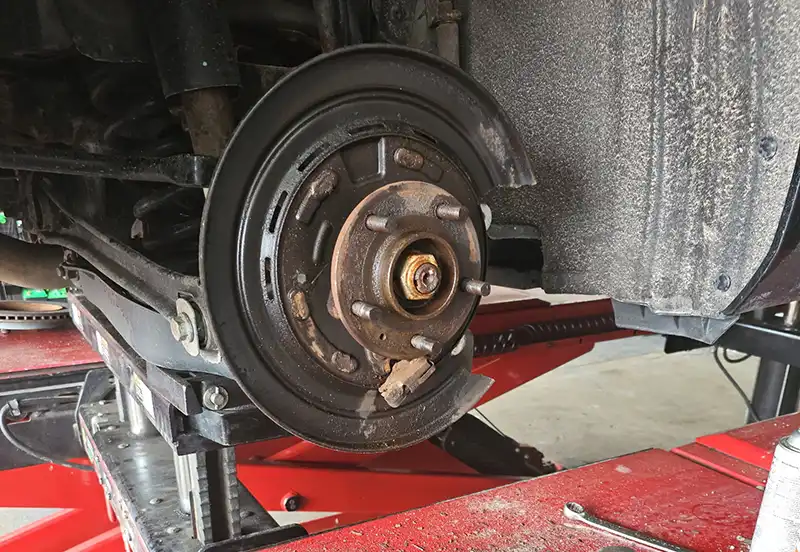
Suddenly hitting a wall of stopped I-10 traffic is a daily reality for local commuters. Surviving that stop-and-go chaos requires absolute confidence in your vehicle’s stopping power.
According to automotive experts, Houston Heights driving creates unique stress on your car. Our intense heat, high humidity, and constant braking dramatically accelerate how quickly parts wear down. Knowing when to schedule a brake repair or service in 77008 means recognizing the difference between everyday dark brake dust on your wheels and the dangerous metallic scraping of critical failure.
Try performing a quick ‘feel test’ at your next 20th Street red light by pressing firmly on the pedal. If it feels squishy instead of firm, prioritizing brake safety becomes an urgent investment in your family’s protection.
From High-Pitched Squeaks to Spongy Pedals: Decoding Your Car’s Cry for Help
Whether you are navigating the busy H-E-B parking lot on N Shepherd or hitting stop-and-go traffic on 610, you need brakes you can trust. It is easy to overlook subtle changes in how your car stops until an annoying noise forces you to pay attention. In fact, asking a local mechanic why do my brakes squeak when stopping is usually the very first step in diagnosing a larger issue.
Fortunately, learning how to tell if brake pads are worn out just requires you to listen and feel carefully. Your car uses four distinct signals to communicate trouble:
- Squeal: A high-pitched chirp is a built-in brake pad wear indicator, warning you the pad is thinning like a used pencil eraser.
- Grind: Harsh crunching means the pad is completely gone, creating dangerous metal-on-metal scraping.
- Pulse: A shaking steering wheel reveals symptoms of bad brake rotors, meaning the smooth metal disc has warped from intense heat.
- Fade: A sinking pedal points to hydraulic air bubbles, making fixing a spongy brake pedal a top priority.
Dashboard alerts add another vital layer of safety communication. Seeing brake system diagnostic warning lights illuminate, especially alongside a low fluid warning, is an immediate red flag that your car lacks the hydraulic pressure needed to stop safely. Catching these warning signs early gives you the upper hand before minor maintenance escalates into a major repair.
Pads, Rotors, and the ‘Eraser’ Effect: Choosing the Right Parts for Houston Heat
Living in Texas means blistering heat, putting intense stress on your car’s friction materials. During a brake replacement 77008 drivers often choose between ceramic vs semi-metallic brake pads. Semi-metallic pads offer heavy-duty grip, but ceramic pads are popular locally because they handle high temperatures beautifully without fading.
To decide at a local Heights auto repair shop, compare these daily driving features:
- Noise: Ceramic pads are nearly silent; semi-metallic pads often hum.
- Dust: Ceramic produces unnoticeable dust; semi-metallic leaves a dark residue.
- Heat Tolerance: Both handle Houston’s climate well, but ceramic recovers much faster from relentless stop-and-go friction.
Beyond the pads, mechanics inspect the shiny metal disc your brakes clamp onto, called the rotor. You will often weigh resurfacing rotors vs buying new ones. Think of resurfacing like sanding a scratched wooden table smooth; if the metal is thick enough, “turning” it saves money while safely restoring your tight stopping grip.
Finally, these new parts will fail if the mechanical “hand” squeezing them gets stuck. Spotting the signs of failing brake calipers—like pulling to one side or a sudden burning smell—ensures a seized part doesn’t quickly ruin your fresh pads. While maintaining this solid hardware keeps your daily commute safe, the hydraulic liquid powering it faces its own local battle against the climate.
The Invisible Safety Hazard: Why Houston’s Humidity Makes Your Brake Pedal Feel ‘Squishy’
Houston’s thick humidity doesn’t just make you sweat—it silently attacks your car’s stopping power. Brake fluid is naturally “hygroscopic,” meaning it acts like a sponge, pulling water vapor directly out of the muggy air through microscopic pores in your sealed rubber hoses. This hidden moisture contamination lowers the fluid’s boiling point dramatically during heavy stop-and-go traffic on I-10.
Imagine pushing water through a rigid straw; the liquid immediately pushes out the other side because it cannot be squeezed smaller. But when absorbed moisture boils into steam, or if you spot oily puddles near your tires—classic hydraulic brake line leak symptoms—you are suddenly trying to compress air instead of liquid. This hydraulic compression creates that terrifying “squishy” pedal feeling when you try to stop quickly on 20th Street.
Preventing this dangerous scenario requires replacing that contaminated liquid every 24 months. Recognizing the importance of regular brake fluid flush procedures ensures your vehicle reacts instantly, making routine brake service appointments an essential safety investment.
Navigating 77008 Brake Shops: Getting Quality Service Without the Heights Price Tag
Local drivers shouldn’t have to overpay for reliable service near 20th Street. While the average cost of brake jobs in Houston varies, standard maintenance should always feel like a fair safety investment rather than a luxury expense. The top-rated auto shops in Houston Heights distinguish themselves through transparent pricing, avoiding the high-pressure sales tactics that leave you wondering what you actually paid for.
Understanding the fine print is equally crucial, particularly regarding the benefits of lifetime brake pad warranties. These popular guarantees typically replace the physical parts for free when they wear down, but they still charge you for the labor—the mechanic’s actual time to install them. To ensure that labor is performed safely, look for ASE Certification, a national credential proving a technician’s professional expertise.
Protect your wallet before approving a full brake system diagnostic by asking the service advisor these five essential questions:
- Does this specific warranty cover both parts and labor?
- Will you be testing my brake fluid for moisture?
- Is the technician assigned to my car ASE-certified?
- Are you installing premium-grade brake pads?
- Can you provide a written, completely itemized estimate?
Your 3-Step Action Plan for Reliable Brakes in The Heights
You no longer have to guess what a sudden screech means when navigating stop-and-go traffic on I-10. You now know exactly how often to schedule brake inspections based on your daily Houston driving habits. Start by making a quick pedal-feel and listening check your personal safety standard before every major commute.
When those warning signs appear, you can confidently choose between the driveway convenience of mobile brake repair options near 77008 or comprehensive facility support. Taking this proactive step transforms a stressful mechanical mystery into reliable stopping power, ensuring safer trips for you and your family on every drive.
NW Houston Auto Repair and Collision
1608 W 22nd St
Houston, TX 77008-1504
281-607-0753
View our Google Listing