

What if the part you suspect isn’t the part keeping your car from starting? A click, slow cranking, or a silent engine can point to starter trouble, but a weak battery, poor electrical connection, or charging-system issue can cause similar symptoms. A dependable starter replacement service Houston drivers can turn to starts by identifying the cause, not swapping parts on a guess.
If your vehicle starts only sometimes, getting across Houston can quickly become stressful. A careful diagnosis helps distinguish a failing starter from related electrical faults before replacement is recommended. NW Houston Auto Repair and Collision provides starter replacement and auto electrical repair to address starting-system concerns.
This guide covers common warning signs, how technicians assess the battery, connections, and starter, and what a thorough replacement process involves. You’ll also learn what details to share when arranging service, so you can take a practical next step with more confidence.
Key Takeaways
- Clicking, grinding, or intermittent starting are clues, not proof that the starter has failed.
- A step-by-step diagnosis considers the battery, electrical connections, starter, and charging system together.
- Starter, battery, connection, and alternator problems can have overlapping symptoms, so testing helps guide the repair.
- A sound replacement process follows inspection findings and includes checks after the repair.
- When arranging starter replacement service Houston, share the symptoms you’ve noticed with NW Houston Auto Repair and Collision.
Starter Replacement Service in Houston: Which Symptoms Should You Take Seriously?
A car that won’t start can disrupt work, school, and everyday plans. An intermittent problem can be just as stressful: the engine starts normally one morning, then hesitates or stays quiet the next. These signs deserve attention, but they don’t automatically mean the starter has failed. Note what happens and arrange a diagnosis before deciding what repair is needed.
The starter motor turns the engine over during startup. When you turn the key or press the start button, it helps begin the engine’s operation. A problem in this system may affect what you hear or feel, but sounds alone can’t identify the failed component. The starter motor has several parts, and its operation depends on the vehicle’s electrical system as well.
What does a failing starter sound or feel like?
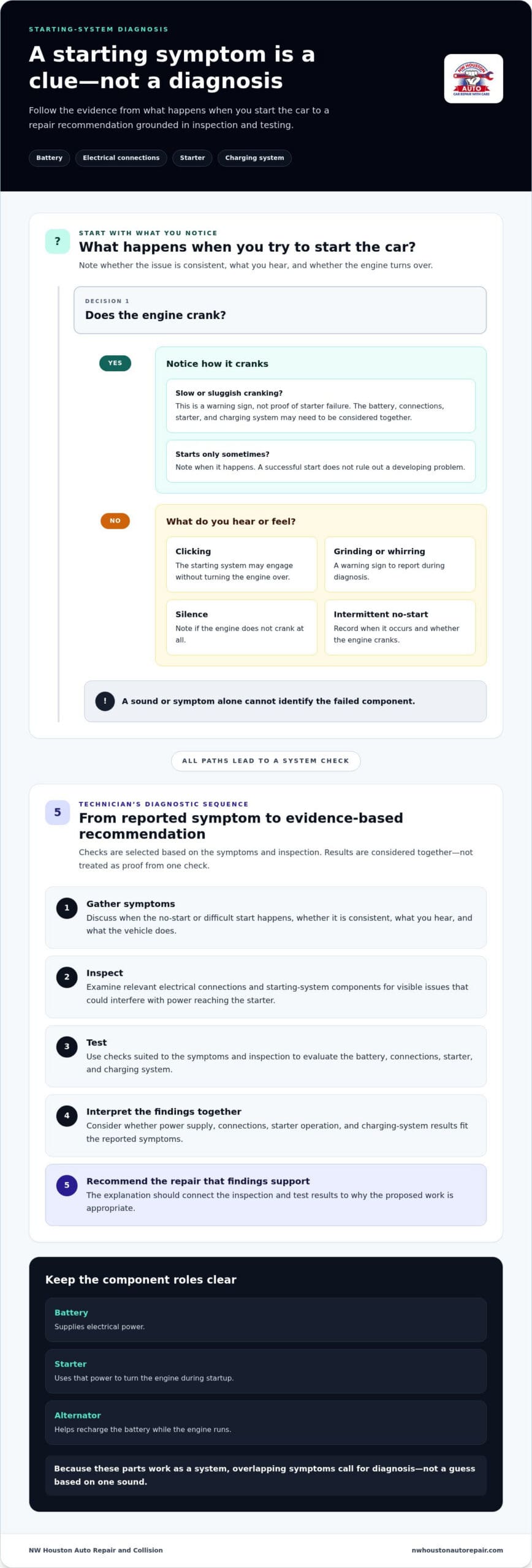
Pay attention to what happens when you try to start the car. Clicking may mean the starting system engages without turning the engine over. Slow cranking feels like the engine is turning more sluggishly than usual. Grinding or whirring can also be warning signs. Silence is another clue, especially if the engine doesn’t crank at all. None of these sounds identifies the cause on its own.
Intermittent starting can be harder to diagnose because the symptom may disappear before the vehicle is assessed. Note when it happens, what you hear, and whether the engine cranks. A single successful start doesn’t rule out a developing problem.
A symptom is a clue to investigate, not proof that the starter needs replacement.
When could the problem be something other than the starter?
A weak or discharged battery may not supply enough power for the engine to crank properly. A loose or damaged electrical connection can interrupt power, while a charging-system problem can affect how the battery is replenished. These issues can overlap with starter symptoms, so the full starting system needs to be considered rather than judging by one click or a slow crank.
A technician can evaluate these possibilities as part of auto electrical diagnosis. Avoid reaching around electrical components or trying to test them yourself if you’re unsure how to do so safely. If battery trouble is suspected, car battery replacement may be relevant, but diagnosis helps determine whether that’s the right repair.
For drivers considering a starter replacement service Houston, the practical next step is to describe the symptoms and have the cause assessed. Share whether the problem happens every time or only occasionally, whether you hear clicking or grinding, and whether the engine turns slowly or not at all. That gives the technician useful context without turning a warning sign into a premature conclusion. A careful assessment can distinguish starter trouble from battery, connection, or charging-system concerns.
How Houston Technicians Diagnose Starter and Starting-System Problems
A dependable recommendation starts with evidence, not a guess based on one noise. The starter depends on the battery and electrical connections, and the battery relies on the charging system to stay replenished. Technicians consider these parts together to narrow down the cause and determine whether starter replacement is appropriate or another repair should come first.
What does a starter-system inspection consider?
The process begins with your account of the problem: when it happens, whether it’s consistent, what you hear, and what the vehicle does when you try to start it. The technician then inspects relevant connections and starting-system components for visible issues that could affect operation. Those observations help guide the next steps, but they aren’t a diagnosis by themselves.
A clear sequence keeps the investigation focused:
- Gather symptoms. The technician asks about the circumstances around the no-start or difficult start, including whether it happens after the vehicle has been sitting or during repeated attempts.
- Inspect. Relevant electrical connections and starting-system components are examined for problems that could interfere with power reaching the starter.
- Test. Checks are selected based on the symptoms and inspection. Testing can help evaluate the battery, connections, starter, and charging system, but no single check proves every possible fault.
- Interpret. The technician considers the results together. A starter concern may require a closer look at the power supply before the starter itself can be identified as the likely source.
- Recommend. The proposed repair should reflect the inspection and test findings, with an explanation of what they indicate and why the work is appropriate.
How are starter, battery, and alternator issues distinguished?
These components have different jobs. The battery supplies electrical power, the starter uses that power to turn the engine during startup, and the alternator helps recharge the battery while the engine runs. Since a weakness elsewhere in the system can affect starting, a familiar sound or symptom may have more than one explanation.
Testing is more useful than guessing from sound alone. A technician considers whether the available power, connections, starter operation, and charging system fit the reported symptoms. If the concern points toward charging rather than cranking, the findings can guide the next diagnostic step without assuming starter replacement is needed.
Accurate electrical diagnosis is central to a starter replacement service Houston drivers can rely on. NW Houston Auto Repair and Collision provides auto electrical repair alongside starter replacement. If your vehicle’s starting issue is recurring, share what you’ve observed and arrange an assessment so the recommendation is based on the findings.
Starter Replacement vs. Related Repairs: How to Understand the Recommendation
A click or no-start can make the starter seem like the obvious culprit. But the same symptom may come from a weak battery, an electrical connection, or a charging-system issue. Replacing the starter without identifying the cause can leave the problem unresolved. A useful recommendation connects inspection findings to the component or system that needs attention, rather than relying on one symptom alone.
| Component | Its role | Possible overlap | Why diagnosis matters |
|---|---|---|---|
| Starter | Turns the engine during startup. | Clicking, slow cranking, or no crank. | Testing helps determine whether the starter itself is at fault. |
| Battery | Supplies electrical energy. | Clicking, weak cranking, or a no-start. | Insufficient power can resemble a starter problem. |
| Electrical connection | Provides a path for electrical power. | Intermittent starting or no crank. | A poor connection can disrupt power to starting components. |
| Alternator | Supports battery charging while the engine runs. | Starting trouble may appear alongside a charging concern. | Charging-system findings help distinguish it from a starter fault. |
Starter replacement or battery replacement?
The starter turns the engine during startup; the battery supplies the electrical energy it needs. If the battery can’t provide adequate power, cranking may be weak or absent, even if the starter isn’t the failed part. A poor connection can also interrupt power and produce similar behavior. A click or slow crank is useful information, but it doesn’t determine which component needs replacement. The technician’s inspection and test results should guide that decision.
Starter replacement or alternator repair?
The starter operates during startup, while the alternator supports charging once the engine is running. A charging concern and a starting concern can affect the same system, but they aren’t automatically the same repair. A vehicle that starts and later develops a charging-related issue needs a different assessment from one that won’t crank. The technician should explain what the findings point to and how they support the proposed work.
Ask for the recommendation in plain language: which component is involved, what was observed or tested, and why that repair addresses the cause. This helps you understand the work before it begins. If the findings point to a starter fault, replacement may be appropriate. If they identify a battery, connection, or charging concern, the recommendation should reflect that instead.
A reliable starter replacement service Houston drivers can feel confident about rests on this distinction. The symptom starts the investigation; the diagnosis shapes the repair. Clear communication makes it easier to understand why the proposed work fits the evidence.
Choosing a Starter Replacement Service in Houston: What Should the Process Include?
A dependable starter repair process makes the reason for the work clear. Inspection comes first, the recommendation follows what the findings show, and the vehicle’s starting operation is checked after service. That sequence matters: one click, a slow crank, or a single no-start isn’t automatic proof that the starter needs replacement. Clear communication helps you understand what’s being addressed before work begins.
What information helps make the diagnosis clearer?
Describe the pattern as accurately as you can. Does the issue happen each time, or only now and then? Does the engine crank slowly, click, stay silent, or behave differently from one attempt to the next? Mention dashboard warnings, recent starting changes, and related repairs or battery work. You don’t need to test electrical components yourself; your observations are useful context for the technician.
- Timing: Note when the problem appears, such as after the car has been parked or during repeated starts.
- What you observe: Report the sound and whether the engine turns over, without trying to assign a cause.
- Recent changes: Share repairs, unusual starting behavior, or warning lights that appeared around the same time.
Small details can help connect your reported symptom with what the technician finds. If the problem is intermittent, explain that plainly rather than waiting for it to happen at the shop. A clear account can guide the assessment, though the repair decision should still rest on inspection and testing.
What should a clear repair recommendation explain?
A useful recommendation identifies the concern, relates it to your reported symptoms, and explains why the proposed work fits the findings. If starter replacement is recommended, the explanation should connect that decision to the diagnosis. If the evidence points to another starting-system issue, the work should address that cause instead. You should be able to follow the reasoning without interpreting technical jargon.
Before service, make sure you understand what repair is proposed and what it is intended to correct. After the work, post-repair checks should establish whether the vehicle starts as expected and whether the original concern has been addressed. If the starting behavior still seems unusual, describe what you notice so the team can understand the remaining concern.
For a starter replacement service Houston drivers can approach with confidence, choose a process grounded in findings and explained in plain language. Share your observations with the Houston repair team and discuss the recommended next step.
The same principles of careful testing apply across all vehicle types and locations; for instance, drivers looking for a trusted diesel mechanic bellmawr nj prioritize technicians who thoroughly inspect electrical and starting systems before recommending major part replacements.
Arrange Starter Replacement Service with NW Houston Auto Repair and Collision
A starting problem can make every trip feel uncertain, especially if the car starts one time and refuses the next. Arranging service is easier when you can describe what the vehicle is doing and share a few details about its history. That information gives the technician a helpful starting point for assessing the concern. A proper diagnosis determines whether starter replacement or another repair is the right next step.
What to share when arranging service
Before reaching out, gather the details you already know. You don’t need to identify the failed part or perform electrical tests. Clear observations are more useful than a guess about the cause.
- Describe the behavior: Say whether you hear clicking, slow cranking, grinding, or silence, and whether the engine turns over.
- Explain the timing: Note whether the problem happens consistently or intermittently, and when you first noticed a change.
- Identify the vehicle: Share its year, make, and model to give the concern useful context.
- Mention related work: Include recent battery, electrical, or starting-system repairs if they may be relevant.
- Report warnings: Describe any dashboard warning lights or other changes you noticed around the same time.
For example, “It cranks slowly every few mornings” gives a clearer picture than “I think the starter is bad.” If symptoms vary, say so. An intermittent concern is still worth explaining, even if the vehicle happens to start normally during your call.
How local auto electrical expertise supports the next step
Starter concerns involve connected electrical components, so the assessment should account for the starting system rather than focus on one symptom in isolation. NW Houston Auto Repair and Collision provides auto electrical repair and starter replacement for no-start and intermittent-start concerns. The findings guide the recommendation, and a clear explanation helps you understand why a particular repair is proposed.
NW Houston Auto Repair and Collision is family-owned and operated and has served customers since 1999. For Houston drivers, the practical next step is to share what you’ve observed, have the concern assessed, and discuss the repair without assuming the starter is at fault. If you’re considering a starter replacement service Houston, a clear description of the problem can make the service conversation more focused.
Ready to discuss your vehicle’s starting concern? Contact NW Houston Auto Repair and Collision to arrange service.
Take the Next Step Toward Dependable Starts
Unreliable starting can make even a familiar drive feel uncertain. You don’t have to decide what part has failed before seeking help. A clear conversation about what your vehicle is doing is a practical first step toward a repair plan guided by its specific needs.
If you’re considering a starter replacement service Houston drivers can approach with confidence, focus on moving from concern to a useful service plan. Share what you’ve noticed, then let the assessment guide the next move. The right solution may be starter replacement or another repair.
Contact NW Houston Auto Repair and Collision to discuss your vehicle’s starting issue and arrange service. Start a conversation about your vehicle’s starting problem.
Frequently Asked Questions
Can a bad battery make it seem like my starter needs replacement?
Yes, a weak battery can cause starting behavior that resembles a starter problem. You might notice dim interior lights along with sluggish cranking, or find that the vehicle’s response changes between attempts. Those details can help explain what’s happening, but they don’t confirm which component needs attention. Have the starting system assessed before approving replacement, particularly if the battery’s age or recent performance is a concern.
What are the most common signs of a failing starter?
Common warning signs include clicking when you try to start the car, slow cranking, intermittent starting, or no response from the engine. Note whether the symptom is becoming more frequent or appears only under certain circumstances. No single sign proves the starter has failed, so use these observations to describe the concern and arrange a diagnosis rather than choosing a repair based on sound alone.
How do technicians diagnose a starter problem?
Technicians assess the complaint alongside the condition of the battery, electrical connections, starter, and charging system. Inspection and appropriate tests help show whether the findings support a starter fault or point elsewhere. You can help by describing what happens during an unsuccessful start and mentioning recent changes. Ask for the diagnosis in everyday language so you understand how the evidence connects to the recommended repair.
Can a car start intermittently when the starter is failing?
Yes, a developing starter problem can be intermittent, but inconsistent starting can also have other causes. Keep a short record of the date, circumstances, and what happened during each attempt. Note whether the car had been parked for a while and whether the engine cranked. That history can help the technician understand a concern that may not appear during a single visit.
How much does starter replacement service cost in Houston?
There isn’t one price that applies to every vehicle, so an accurate estimate depends on the vehicle and repair findings. The part and work involved can vary by model and how the starter is accessed. For starter replacement service Houston drivers can share the vehicle’s year, make, and model and arrange a diagnosis. The recommended work and estimate can then reflect the specific repair rather than a broad guess.
How long does starter replacement usually take?
The time can vary with the vehicle and how accessible the starter is. Some designs allow more direct access, while others require additional work to reach the component. Share your vehicle information when arranging service so the expected schedule can reflect your car and the repair involved.
Is it safe to keep driving if my car sometimes will not start?
An intermittent no-start can leave you unable to restart the vehicle when you need it, even if it started normally earlier. Don’t rely on repeated successful starts as reassurance. Record the symptoms and arrange an assessment so the cause can be identified. If the vehicle behaves abnormally while running, treat that as a separate concern and seek professional guidance before continuing your trip.