

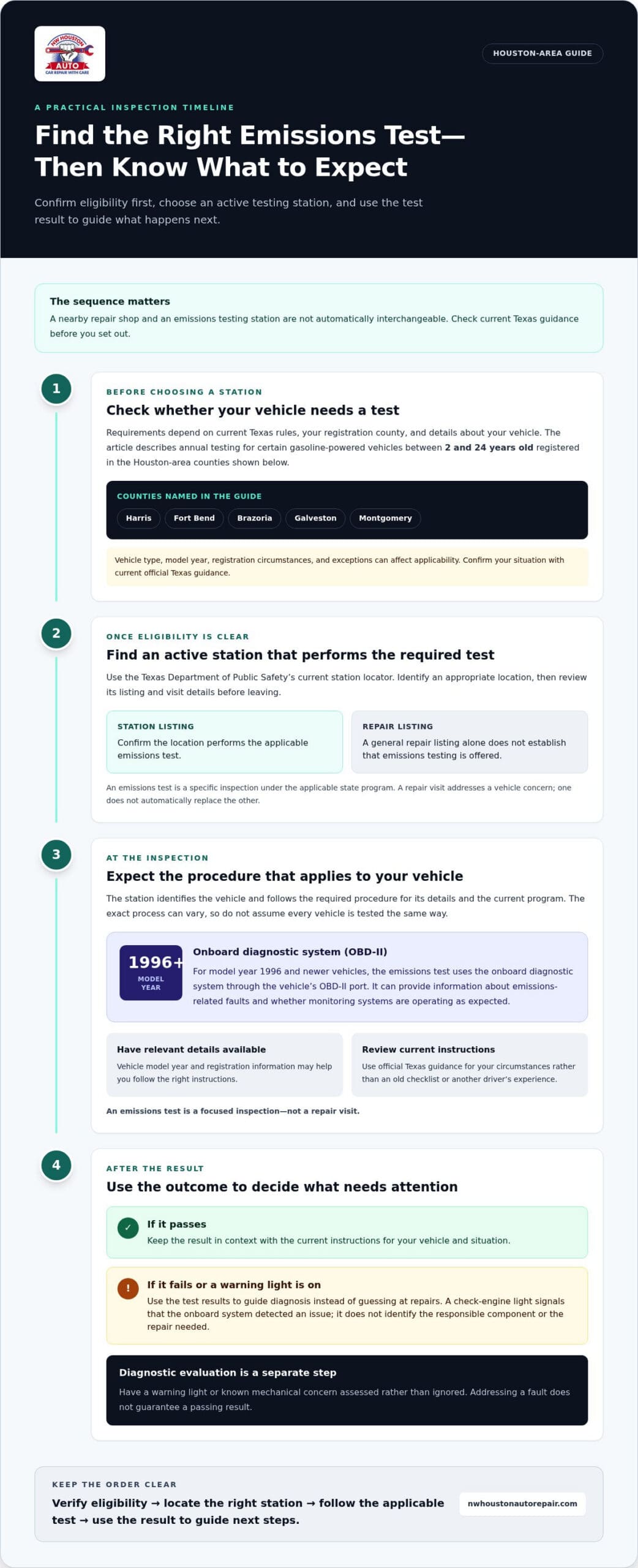
The closest result isn’t automatically the right place for an emissions test. Finding vehicle emissions testing near me in Houston starts with confirming whether your vehicle needs testing and identifying a station that performs the required inspection. Annual emissions testing applies to certain gasoline-powered vehicles between 2 and 24 years old registered in Houston-area counties, including Harris, Fort Bend, Brazoria, Galveston, and Montgomery.
It can be hard to know what the test checks or whether your vehicle is ready. For many modern vehicles, the test reads the onboard diagnostic system, so an unresolved warning light or emissions issue may affect the result. Don’t guess or ignore a warning. Understanding what’s behind it can help you decide what to do before the test.
This guide explains how to find an appropriate testing location, what to expect, and how to prepare. You’ll also learn what to do after a pass or failure. NW Houston Auto Repair and Collision is a family-owned Houston shop offering state inspections, smog checks, and vehicle services to help with inspection-related concerns.
Key Takeaways
- Use current official Texas guidance to check whether testing applies to your vehicle and county before choosing a station for vehicle emissions testing near me.
- Understand what the applicable emissions test assesses, and follow the current instructions for your vehicle and testing location.
- If your vehicle fails, use the test results to guide diagnosis instead of guessing at repairs.
- Review station details before your visit, and address warning lights or known mechanical concerns rather than ignoring them.
Vehicle Emissions Testing Near Me: Finding the Right Houston-Area Station
Need an emissions test in Houston? First confirm whether your vehicle is subject to testing, then find an active station that performs the required test. A nearby repair shop and an emissions testing station aren’t automatically interchangeable. Checking the official information before setting out can save you an unnecessary trip.
Use this order:
- Review current Texas emissions-testing guidance.
- Check whether the requirements apply to your county and vehicle.
- Use the current Texas station locator to find an appropriate location, then review its listing and visit details.
For broader background on the federal framework behind vehicle emissions rules, see United States vehicle emission standards. That overview isn’t a substitute for current Texas requirements or guidance about your vehicle’s eligibility.
How to look for an active emissions testing station near Houston
Start with the Texas Department of Public Safety’s current station locator, the official resource for finding an active station. Use it to identify a location, then review the listing and current instructions before you leave. A general repair listing alone doesn’t establish that emissions testing is performed there.
NW Houston Auto Repair and Collision offers inspection-related services, including state inspections and smog checks. An emissions test is a specific inspection under the applicable state program, while a repair visit addresses a vehicle concern. One doesn’t automatically replace the other.
How to check whether your vehicle needs a test
Requirements depend on current Texas rules, your registration county, and details about your vehicle. As of 2026, emissions testing applies to gasoline-powered vehicles between 2 and 24 years old registered in Houston-area counties, including Harris, Fort Bend, Brazoria, Galveston, and Montgomery. Vehicle type, model year, and registration circumstances can affect applicability, so confirm current guidance and any exceptions through official Texas sources before making plans.
Eligibility depends on current Texas rules and your vehicle’s details, so confirm both before locating a station.
Living in the Houston area alone doesn’t settle whether your vehicle needs a test. Check the county tied to its registration and compare its type and model year with current state criteria. Follow the official instructions for your situation rather than relying on an old result or another driver’s experience. Rules and station information can change, so use current state guidance to make your decision.
What Happens During Vehicle Emissions Testing in Texas?
An emissions test assesses a vehicle under the state program that applies to it. The station follows the required procedure for that vehicle and program. It’s a focused inspection, not a repair visit: the test evaluates emissions-related requirements, while diagnosing a mechanical concern and deciding how to address it are separate steps.
The station will identify the vehicle and carry out the applicable check. The exact process depends on vehicle details and current Texas rules, so don’t assume every car is tested the same way. The Texas Vehicle Emissions Inspections Program overview is a useful official reference. Review current instructions before your visit because procedures may change.
For model year 1996 and newer vehicles, the emissions test uses the onboard diagnostic system through the vehicle’s OBD-II port. The system can provide information about emissions-related faults and whether monitoring systems are operating as expected. This isn’t a universal description of every vehicle’s test; the station follows the procedure that applies to the vehicle being inspected.
What information and vehicle details may matter
Procedures and required information can vary by vehicle and current program rules. Before leaving, have relevant registration information and vehicle details available, and review Texas guidance for specific instructions. Rather than relying on an old checklist or another driver’s experience, use the current official guidance for your circumstances.
It also helps to know the vehicle’s model year and the county where it’s registered. These details can help you follow the right instructions and distinguish a required emissions test from a general service appointment. For questions about what applies, refer to the official program guidance.
What the check-engine light can signal
A check-engine light means the vehicle’s onboard system has detected an issue that may need attention. The light doesn’t identify the responsible component or the repair needed. Don’t guess or replace parts based on the warning alone. A diagnostic evaluation can help identify stored fault information and guide the next step.
NW Houston Auto Repair and Collision offers auto electrical repair and inspection-related services. A vehicle concern can be investigated separately from an emissions test, and addressing a fault doesn’t guarantee a passing result. If a warning light is on or the vehicle is running differently, have the concern assessed rather than ignoring it.
Before setting out, confirm that the test applies to your vehicle, review current Texas instructions, and determine whether you need an emissions inspection or a separate repair. If you have a vehicle concern to discuss with the Houston team, contact NW Houston Auto Repair and Collision.
If Your Vehicle Fails an Emissions Test: Understand the Next Step
A failed emissions result can feel discouraging, but it’s useful information, not a reason to guess at parts or repairs. Keep the report and review its findings. They provide a starting point for diagnosis and help focus the next steps on what the vehicle actually needs.
Think of the process in stages: the station records the result, a technician investigates the concern, you review the findings and repair plan, and then you follow current official instructions about any retest. A failed test doesn’t identify the exact cause by itself. Don’t assume that one repair will address the issue or guarantee a passing result.
Common areas a technician may investigate
The next checks should be based on the test report and vehicle symptoms, not a generic list of possible failures. If a warning light is involved, diagnostic testing can help identify relevant fault information. Depending on the findings, the investigation may also involve emissions-related systems, exhaust concerns, or electrical components. The test result alone may not identify which area needs repair.
If findings point to an exhaust concern, a technician can assess it before repair decisions are made. Muffler repair may be relevant when the diagnosis supports it, but don’t assume an exhaust repair is needed simply because the vehicle failed. Likewise, avoid clearing warnings or replacing parts without understanding what the report and diagnostic results indicate.
How to move from a failed result to a repair plan
Keep the result available for the diagnostic conversation. It gives the technician useful context and helps focus the investigation. Share any related symptoms you’ve noticed, such as a warning light or a change in how the vehicle runs. Describe what you observed rather than trying to diagnose the cause yourself.
The technician can explain what the findings support, which repair options address the identified concern, and what the next step should be. If diagnosis identifies an electrical issue, auto electrical repair may address that specific finding. Ask for a clear explanation before authorizing work, and keep the test report with your vehicle records.
After repairs, don’t assume the inspection result has changed automatically. Follow current Texas guidance for retesting, including where and when a retest may be completed. Requirements can change, so use official state information rather than older online advice. The Texas DPS Emission Inspection Criteria can help you review the applicable criteria and testing information.
If a failed result has left you unsure what to do, take it one step at a time: keep the report, get the concern diagnosed, review the recommended repair, then follow official retest instructions. For help investigating a vehicle concern after vehicle emissions testing near me, contact NW Houston Auto Repair and Collision.
How to Prepare for Vehicle Emissions Testing Near Houston
A little preparation can make the visit more straightforward. Before looking up vehicle emissions testing near me or driving to a station, check whether the test applies to your vehicle, review the latest Texas instructions, and confirm that the station is active. Keep the test separate from repairs: if you already know the vehicle has a concern, address it rather than hoping the inspection will resolve it.
Follow the station’s current instructions because testing procedures and requirements can vary. Use official guidance for the current program, then review the station’s listing and any directions it provides for your visit. Don’t rely on an old checklist or assume another driver’s experience applies to your vehicle.
Before you leave for the station
Confirm the applicable requirements and station details before setting out. Gather vehicle and registration information based on current station instructions, rather than assuming there’s a universal document list. Make a short note of any warning lights, unusual behavior, or recent changes in how the vehicle runs. Clear notes help you describe a concern accurately if questions come up.
- Review current official guidance for your vehicle and registration circumstances.
- Check the station’s current listing and visit instructions.
- Have relevant vehicle and registration details available as directed.
- Write down warning lights or symptoms you’ve noticed.
If your plans or vehicle details change, revisit the guidance instead of relying on information saved from an earlier visit. Follow the station’s directions about what to bring and what to expect. Don’t add steps based on advice that isn’t reflected in current instructions.
If you are concerned about a warning light
Don’t ignore an illuminated warning or a mechanical concern before a test. A warning light indicates that the vehicle has detected an issue, but it doesn’t reveal what needs repair. Having the concern diagnosed can clarify what’s happening and help you make an informed decision. Diagnosis can identify a problem, but it can’t promise a specific inspection result.
NW Houston Auto Repair and Collision offers state inspections, smog checks, and auto electrical repair. If a warning light or symptom leaves you unsure about the next step, describe what you’ve observed and have the concern assessed rather than relying on assumptions. Don’t clear a warning or disconnect the battery just to prepare for a test. Doing so may reset emissions readiness information on applicable vehicles and complicate the inspection.
Preparation isn’t about trying to outsmart the test. It’s about arriving with current information, relevant vehicle details, and a clear understanding of known concerns. If you need help with a warning light or vehicle issue before your visit, contact NW Houston Auto Repair and Collision.
Get Local Help With Emissions Testing and Vehicle Concerns in Houston
Emissions questions can lead to two different needs: finding an appropriate testing station or understanding a vehicle concern that may affect the result. NW Houston Auto Repair and Collision is a family-owned Houston shop offering state inspections, smog checks, and auto electrical repair. The team can help with inspection-related needs and vehicle concerns without promising a particular test outcome.
Keep the steps distinct. A test result shows how the vehicle performed under the applicable inspection. If it points to a concern, diagnosis helps investigate the cause, and repair decisions should follow the findings. A repair visit and an emissions test serve different purposes, so identifying the step you need helps avoid assumptions or arranging the wrong kind of visit.
When local diagnostics can help
A warning light, unusual symptom, or failed result can be a reason to investigate further. Diagnostic work can help identify vehicle faults and provide useful information about what may need attention. Share the test report, if you have one, along with any changes you’ve noticed in how the vehicle runs. That context helps focus the evaluation on the concern at hand.
Recommendations should be based on the findings, not a guess based on one warning or a general list of possible problems. Auto electrical repair can address an electrical concern identified during diagnosis. If an evaluation identifies another repair need, review the proposed work and how it addresses the specific finding. No diagnostic visit can guarantee a passing test, and the time or repair required depends on what the evaluation uncovers.
Plan your next step with a Houston auto repair team
Choose your next move based on where you are in the process. If you haven’t established whether testing applies, start with current Texas guidance. If you’re ready for an emissions test, use official station information and follow the station’s instructions. If you’ve received a failed result or noticed a warning light, keep the information handy and have the vehicle concern investigated before deciding on repairs.
For added preparation, use the Houston emissions inspection passing checklist alongside current official instructions. Treat it as preparation guidance, not a promise about the outcome. A clear report and an accurate description of the vehicle’s symptoms can make it easier to discuss what should happen next.
If your vehicle has a warning light, a failed result, or another concern you’d like investigated, take the next step with a local team. Contact NW Houston Auto Repair and Collision to discuss your vehicle concern.
Take the Next Step With Confidence
Give yourself a clear path forward: base your decision on current official guidance and what your vehicle’s test report or diagnostic findings show. If you’re still deciding where to go for vehicle emissions testing near me, match your vehicle’s needs with the right next step instead of rushing into repairs or relying on assumptions. A calm, informed decision can make an uncertain inspection concern feel more manageable.
Have a warning light, test result, or vehicle symptom you’re unsure about? Share the concern with the NW Houston team and discuss what may help clarify it. Contact the NW Houston team about your vehicle concerns and take the next step with confidence.
Frequently Asked Questions
Does Texas still require vehicle emissions testing in 2026?
Yes, emissions testing remains required for certain vehicles in designated Texas counties, including Houston-area counties. The current program applies to gasoline-powered vehicles between 2 and 24 years old in Harris, Fort Bend, Brazoria, Galveston, and Montgomery counties, subject to applicable criteria. Texas ended annual safety inspections for noncommercial vehicles, but that change didn’t eliminate emissions testing where required. Confirm your vehicle’s eligibility using current state guidance.
Do electric vehicles need emissions testing in Texas?
Fully electric vehicles are exempt from Texas emissions testing under the current program. Don’t assume the same rule applies to every vehicle with an electric motor: hybrids can differ in how their powertrain and fuel type fit the testing criteria. Check official Texas guidance for your specific vehicle and registration county before making testing or registration plans. This is especially useful if a vehicle is marketed as a hybrid or plug-in hybrid.
Can I get an emissions test if my check-engine light is on?
You can take the vehicle to a station, but an active check-engine light can cause an automatic failure during applicable OBD-based testing. The light doesn’t identify the underlying fault, so a scan or diagnostic evaluation can help determine what needs attention. Don’t clear the warning just to prepare for inspection. If it’s illuminated, follow the station’s current instructions and consider investigating the concern before testing.
What happens if my vehicle fails an emissions test in Houston?
Keep the printed or electronic results and use the listed findings to guide a diagnostic evaluation. A technician can compare the test information with warning lights, symptoms, and diagnostic results before recommending repairs. After any repair, follow current Texas instructions for required follow-up testing and registration steps. Don’t apply waiver or retest advice from another state to a Houston vehicle, since program rules differ.
What should I bring to a vehicle emissions test in Texas?
Check the station’s current instructions for required information, since one checklist may not fit every vehicle or testing situation. Have relevant registration and vehicle details available, such as the vehicle’s model year and registration county, and note any warning lights or recent symptoms. Clear notes can help you explain a concern accurately. Avoid relying on an old checklist from another state.
How do I find an active emissions testing station near Houston?
Use the current official Texas station-location resource, then review the station listing and details before driving there. For vehicle emissions testing near me in Houston, confirm that the station is active and that its testing fits your vehicle’s needs. Also check whether your vehicle and registration county fall under current requirements. A map result or general repair listing alone doesn’t establish either point.
Can a repair shop diagnose an emissions problem before testing?
Yes. NW Houston Auto Repair and Collision offers auto electrical repair and state inspection-related services to help address vehicle concerns that may be related to emissions. A diagnostic evaluation can help identify possible causes and inform a repair discussion, but it’s separate from the state emissions test and can’t guarantee a passing result. Bring any available test report and describe the symptoms you’ve noticed so the team has useful context.