

If your car AC smells musty in Houston, the right fix starts with finding the source of the moisture and odor. Depending on what’s causing it, service may involve a cabin air filter replacement, system cleaning, or evaporator treatment. Houston’s humidity can contribute to lingering moisture, so masking the smell alone may not address the cause.
It’s frustrating when the odor returns each time you turn on the AC. If you’re looking for a car AC musty-smell fix in Houston, this guide explains what happens during service, how filter replacement and evaporator treatment work, and which signs can point to a drainage issue. You’ll also learn how AC habits can help keep the system drier and when professional repair may help restore fresher airflow.
Key Takeaways
- A musty odor can come from moisture and buildup inside the AC system, so masking the smell may not address its source.
- A dirty cabin air filter can restrict airflow; replacing it is one step that may help improve cabin ventilation.
- Cleaning the AC system and treating the evaporator target odor sources within the airflow path.
- Houston’s humidity can contribute to lingering moisture, making good drainage and drying habits important for odor prevention.
- Professional AC repair can help identify whether the issue involves the filter, evaporator, drainage, or another part of the system.
Cabin air filter cleaning and replacement
A cabin air filter can affect airflow and cabin odor. Inspecting it helps determine whether cleaning or replacement is appropriate.
Cleaning the Cabin Air Filter
Start by locating and removing the filter, then check for accumulated dust, leaves, and other debris. A dirty filter can restrict airflow, so note whether debris visibly covers it or airflow seems reduced. Clean it only if its design allows, and follow the vehicle’s instructions rather than washing or brushing a filter that isn’t suitable for cleaning.
Many vehicles place the filter behind the glove compartment, though its location varies by model. Check the owner’s manual for access instructions before opening the compartment, and note the filter’s orientation before removing it. If it’s clogged, look for debris around the housing too. A clean housing helps prevent loose material from entering the airflow path when you reinstall the filter.
Replacing the Cabin Air Filter
Replace a filter that is heavily soiled, damaged, or still restricting airflow after inspection. Choose one that matches the vehicle’s specifications, then align its airflow-direction marking correctly when seating it in the housing. Secure the glove compartment or access cover. A poorly seated filter can leave gaps that let unfiltered air and debris bypass it.
A practical replacement interval is 15,000-20,000 miles, or more often in Houston, where local conditions can add to filter debris. Treat that interval as a maintenance guide, then inspect the filter when airflow weakens or the cabin develops a stale smell. On most vehicles, replacing the cabin air filter takes 5 minutes. The actual access method depends on the vehicle’s design, so use its manual when locating the compartment or releasing its cover.
After installing a clean filter, run the fan and compare airflow with the previous setting. If the same fan speed now moves air more freely, the old filter may have restricted ventilation. A filter change can help when dirt is the cause, but it won’t clean odor sources deeper in the AC system. If the musty smell remains, note when it appears, such as right after you start the AC, to help guide diagnosis.
Before buying a replacement, compare the removed filter’s size and airflow-direction marking with the part specified for the vehicle. A similar-looking filter is not enough if it won’t fit securely. Cabin filters are often behind the glove compartment, so check the access route first. If the filter is still serviceable, reinstall it in its original orientation and make sure the cover closes securely.
When assessing the filter, distinguish visible dirt or damage from an odor that remains after replacement. A new filter may improve airflow, but it won’t resolve a smell coming from deeper in the AC system. Use the vehicle’s specifications and manual to guide your replacement choice and installation.
Cleaning the AC system to remove odor sources
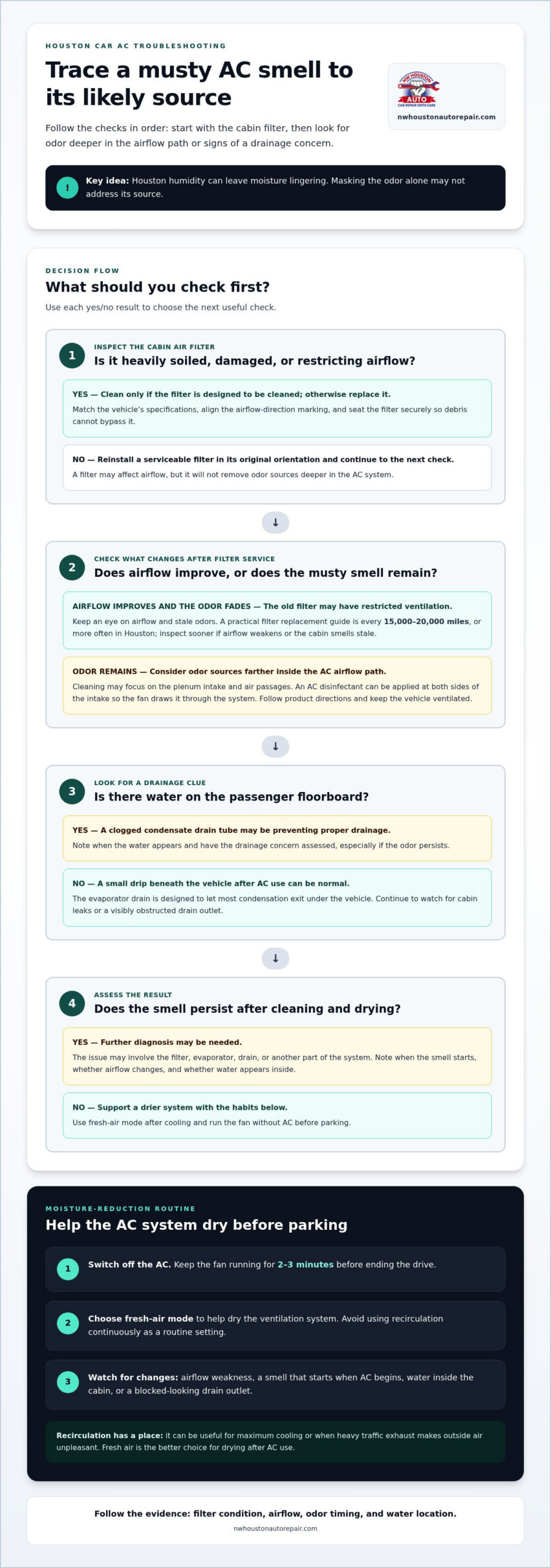
To prevent musty car AC smells in Houston’s hot, humid climate, reduce moisture and clean odor sources in the airflow path. Before parking, run the fan without AC for 2-3 minutes, and use fresh-air mode to help dry the system.
Removing AC Odor Sources
Cleaning focuses on the plenum intake and air passages that carry air into the cabin. The plenum sits at the base of the windshield, near the wipers. One method applies disinfectant at both sides of the intake so the fan can draw it into the system. Removing the cabin filter first may help the cleaner travel through the AC system.
For this approach, run the interior fan on low and open the windows. Use an air-conditioning disinfectant according to its product directions rather than spraying an unspecified cleaner. The aim is to help kill bacteria and reduce musty odor, not simply cover it with fragrance. Keep the vehicle ventilated during treatment, and reinstall the filter afterward if you removed it.
Drying the System with Fresh-Air Mode
Fresh-air mode brings outside air into the ventilation system and can help dry it. Avoid using recirculation continuously as a routine setting. Recirculation can be useful for maximum cooling or when heavy traffic exhaust makes outside air unpleasant, but fresh air is a better choice for drying after AC use.
Before ending a drive, switch off the AC and keep the fan running for 2-3 minutes. This gives airflow a chance to dry the evaporator. The evaporator drain is designed to let most condensation exit beneath the vehicle, so a small water drip under a parked car can be normal after AC use.
Pay attention to changes during ordinary drives. Water on the passenger floorboard may indicate that a clogged condensate drain tube is preventing proper drainage. Note when the smell starts, whether airflow changes, and whether water appears inside. These observations can help distinguish a ventilation odor from a drainage concern.
Simple maintenance can support the cleaning process. After using the AC, switch to fresh-air mode and run the fan without cooling before parking. Check whether the drain outlet beneath the vehicle is visibly obstructed, and watch for cabin leaks. If the musty odor persists after cleaning and drying, diagnosis should examine the drain and airflow path rather than repeat surface treatment.
- Use fresh-air mode after cooling to support drying.
- Run the fan without AC for 2-3 minutes before parking.
- Watch for water on the passenger floorboard and note when it appears.
Treat the intake as the route for the disinfectant: applying it at both sides of the plenum lets the fans carry it into the system, where it can help kill bacteria and reduce musty odor. Follow the product directions when applying the treatment.
Use recirculation occasionally rather than continuously. Fresh-air mode helps dry the AC system, while recirculation may be useful when maximum cooling is needed or heavy traffic exhaust makes outside air unpleasant.
How Houston humidity contributes to musty AC odors
Houston’s humid air can add moisture to the AC system, where condensation may remain on the evaporator. A musty smell can point to moisture-related buildup, but the odor alone can’t diagnose mold or a refrigerant leak.
Humidity and Musty AC Odors
As the AC cools cabin air, condensation forms on the evaporator. If moisture remains there, conditions can support bacteria and mold that produce a musty cabin odor. Houston’s humidity makes moisture management especially relevant because dampness can linger in the system after cooling. The Centers for Disease Control and Prevention identifies moisture control as the most critical factor in preventing mold growth.
The odor may be strongest when you first switch on the AC, then fade as air circulates. Note whether it returns after the vehicle sits, whether airflow changes, and whether you see water inside the cabin. These observations help describe the pattern, but they don’t identify the exact source. They can give a technician useful clues about the evaporator, drain, and ventilation path.
Mold, Mildew, and Bacteria
Condensation that remains on the evaporator can allow bacteria and mold to form, creating a stale or musty smell through the vents. Odor can point toward moisture-related buildup, but smell alone can’t confirm whether mold, mildew, or bacteria is present. Track when it appears, such as after the AC starts or following a parked period, to help narrow the investigation.
A refrigerant leak is a separate mechanical concern, and a musty odor alone doesn’t establish one. If the AC also stops cooling properly, report both the odor and the cooling change during diagnosis. Don’t treat odor as proof of a refrigerant problem or assume fragrance spray has resolved an underlying issue. A technician can assess the AC system and distinguish an odor source from a cooling fault.
Moisture prevention starts with habits that let the system dry. Before parking, switch off the AC while leaving the fan running for 2-3 minutes. Use fresh-air mode to help move air through the system, and notice whether the smell returns after this routine. If the odor persists or water appears on the passenger floorboard, mention that detail; a clogged condensate drain tube can cause water to leak inside.
Keep a short record of what happens: when the odor starts, whether cooling changes, and whether the cabin floor is damp. For example, a recurring smell after a humid, rainy drive gives a clearer pattern than simply noting that the AC smells bad. Those details can guide diagnosis toward moisture and drainage concerns or a separate AC fault.
Antimicrobial evaporator treatment
An antimicrobial treatment targets odor sources in the AC airflow path, including the evaporator area. It works best as part of a process that also addresses moisture, rather than as a way to cover the smell.
A musty odor alone doesn’t establish that ozone treatment is safe or effective. An air-conditioning disinfectant from an auto parts store is one option for treating musty AC odor. Follow the product label.
Before applying a cleaner, locate the vehicle’s plenum intake at the base of the windshield, near the wipers. The intake provides a route into the heating and cooling system. Removing the cabin filter first may help cleaner move through the AC system. If you remove it, note its orientation so you can reinstall it correctly.
For this treatment, spray the disinfectant into both sides of the plenum intake. The fan can draw the product into the system, helping kill bacteria and reduce musty odor. Run the interior fan on low and open the windows during treatment. Use a product labeled for air-conditioning odor treatment, and follow its application and ventilation instructions.
- Locate the plenum intake at the windshield base.
- Remove the cabin filter if the product directions and vehicle access allow it.
- Set the fan to low and open the windows.
- Apply the labeled AC disinfectant to both sides of the intake as directed.
- Reinstall the filter in its original orientation.
Product choice matters. Lysol or an air-conditioning disinfectant from an auto parts store can be used to treat musty car AC odor, but not every household cleaner is suitable for an AC system. Read the label before use and follow its instructions for application, ventilation, and any product-specific precautions.
After treatment, notice whether the odor changes when the fan starts and whether it returns after the vehicle sits. A temporary change doesn’t prove the evaporator or another odor source is clean. If the mustiness persists, repeating sprays without identifying the cause may miss ongoing moisture or buildup. A clogged drain, for example, needs attention as a drainage problem, not another fragrance treatment.
Keep moisture control in the plan. Run the fan without AC for 2-3 minutes before parking to help dry the evaporator, and use fresh-air mode rather than continuous recirculation. Disinfectant can help reduce odor, while drying habits address the damp conditions associated with recurring mustiness. If an odor continues after these steps, system diagnosis can help locate the source before further treatment.
Professional AC repair in Houston
If your car AC smells musty, fix the underlying cause rather than cover it with fragrance. A Houston technician can assess the airflow path, evaporator area, and condensate drainage to distinguish lingering moisture from another system problem.
DIY odor products may cost less upfront because you apply them yourself, but they might not reach the source. Professional evaporator cleaning can target that area while diagnosis checks related causes. For a car AC that smells musty, the right fix in Houston depends on findings from the filter, evaporator, and drainage inspection. The price depends on the work indicated and is provided after a quote request.
For a useful evaluation, describe exactly what happens. Say whether the smell starts when the fan turns on, follows AC use, or returns after the vehicle sits. Mention any change in cooling or water on the passenger floorboard. Those details can connect the odor to the airflow path or a possible condensate drain problem.
A practical diagnostic sequence may include:
- Inspecting the cabin filter and its housing for debris or damage.
- Checking the evaporator area and airflow path for odor sources.
- Examining drainage if water appears inside the cabin.
- Assessing AC cooling separately if the system also blows warm air.
Different findings point to different responses. A dirty filter may need replacement, while odor deeper in the airflow path may call for system cleaning or evaporator treatment. Water leaking onto the passenger floorboard makes drain inspection relevant. If cooling performance has changed too, report that separately rather than treating odor as proof of a refrigerant leak.
DIY treatment is most useful when the odor source is accessible and the product directions suit the vehicle. Professional attention makes more sense when the odor returns after treatment, the source is hard to reach, or another symptom appears. Repeatedly spraying cleaner without checking drainage can leave the underlying moisture problem untouched.
Before arranging service, note when the odor occurs, what cleaning you’ve tried, how strong the airflow is, and whether there’s moisture in the cabin. A clear account helps focus the inspection and explain which work addresses the cause. If the smell persists despite basic maintenance, arrange an AC evaluation rather than adding another scent.
NW Houston Auto Repair and Collision: Synthetic Oil Change
NW Houston Auto Repair and Collision can help when a persistent cabin odor or AC problem needs professional attention. Its Auto Air Conditioning Repair service addresses AC concerns, including musty odors that continue after basic filter care and cleaning.
Share when the smell appears, whether airflow or cooling has changed, and whether you’ve noticed water inside the cabin. Those details help focus attention on the odor source and the repair needed. For a separate routine maintenance need, the shop also offers Synthetic Oil Change.
For musty odor that keeps returning, contact NW Houston Auto Repair and Collision to discuss Auto Air Conditioning Repair.
Take the Next Step Toward Fresher Air
If your car AC smells musty, a lasting fix in Houston starts with identifying what keeps bringing the odor back. Explain when it occurs, what you’ve already tried, and whether cooling or airflow has changed. That gives the repair conversation a practical starting point instead of relying on fragrance to hide the symptom.
Persistent odor is a good reason to discuss the AC system with a professional. NW Houston Auto Repair and Collision offers Auto Air Conditioning Repair, along with Collision Repair and Synthetic Oil Change for other vehicle needs. Share what you’ve observed to help determine the next step for the AC concern.
Contact NW Houston Auto Repair and Collision to discuss your vehicle’s AC odor. A clear description can help you move toward a more comfortable drive.
Frequently Asked Questions
What Happens During a Car AC Service?
AC service starts with your symptoms, then focuses inspection on the system areas they suggest. Weak airflow, for example, draws attention to the filter and ventilation path, while water inside the cabin makes drainage worth examining. The technician can explain findings and recommended work in plain language. Cleaning or treatment depends on the source identified, rather than applying the same procedure to every musty odor.
Why does a car AC smell musty or mildew-like?
A musty or mildew-like smell can develop when condensation remains in the AC system and supports odor-producing growth. The smell is a clue, not proof of a particular organism or exact fault. Note whether it appears as soon as the fan starts, after cooling, or following a parked period. If the cabin also feels damp, mention that along with the odor because it may point to a drainage concern.
Can replacing the cabin air filter fix a musty car AC smell?
Replacing the cabin air filter can help if dirt is restricting airflow or contributing to stale cabin air, but it may not eliminate an odor originating deeper in the AC system. If a fresh filter restores airflow but the smell still appears whenever cooling starts, the filter likely wasn’t the only factor. Record what changed after replacement to help guide the next inspection.
How to clean a car AC evaporator drain and prevent clogged condensate drains
The article gives no drain-cleaning procedure. To help prevent clogs, check that the drain outlet beneath the vehicle is not visibly obstructed, use fresh-air mode, and run the fan without AC for 2-3 minutes before parking. Water on the passenger floorboard can indicate a clogged drain tube.