

After a collision, it can be hard to know where to begin. Collision specialists help assess impact-related damage and identify the repair work that fits the vehicle. For Houston drivers, understanding the basics makes it easier to describe what happened and discuss the next steps.
This guide explains how collision repair differs from routine maintenance, how bodywork, paint, and glass concerns can overlap, and what details to gather before talking with NW Houston Auto Repair and Collision. You don’t need a technical diagnosis. Start with what you observed and where you noticed it.
Key Takeaways
- Collision specialists consider the damage they find, not only the marks visible at first glance.
- Bodywork, paint correction, glass repair, and routine maintenance address different needs.
- Notes about where and when damage occurred can make a repair conversation more focused.
- NW Houston Auto Repair and Collision provides collision repair and auto paint correction for Houston drivers.
What Collision Specialists Do for Houston Drivers
Collision specialists assess and repair vehicle damage caused by an impact. Depending on the vehicle and the damage, the work may involve bodywork, paint, or other affected areas. Unlike routine maintenance, collision repair focuses on restoring areas damaged in a crash or other collision.
An impact can create more than one concern. A door may be dented, its paint scratched, and nearby glass cracked. Another collision might leave only a scuffed bumper. The repair plan should reflect the specific vehicle and the areas affected, rather than assume every collision requires the same work.
How Collision Repair Differs From Routine Auto Maintenance
Routine maintenance helps keep a vehicle operating through services such as oil changes. Collision repair addresses damage resulting from an impact. It may involve repairing or replacing affected body panels, restoring damaged paint, or repairing vehicle glass. These services are related to vehicle care, but they are not interchangeable: an oil change does not address a dent, and a cracked window calls for attention to the glass.
The distinction helps you describe the concern, but the visible mark alone does not determine the repair. A low-speed bump may leave a mark on one panel, while another impact may affect several areas. The vehicle’s condition should guide the work.
When Houston Drivers May Need Collision Specialists
After an impact, look for dents, scratched or chipped paint, cracked windows, or broken vehicle glass. Damage that appears limited may still warrant a closer look. A small mark alone does not establish whether the issue is only cosmetic or whether another area is affected.
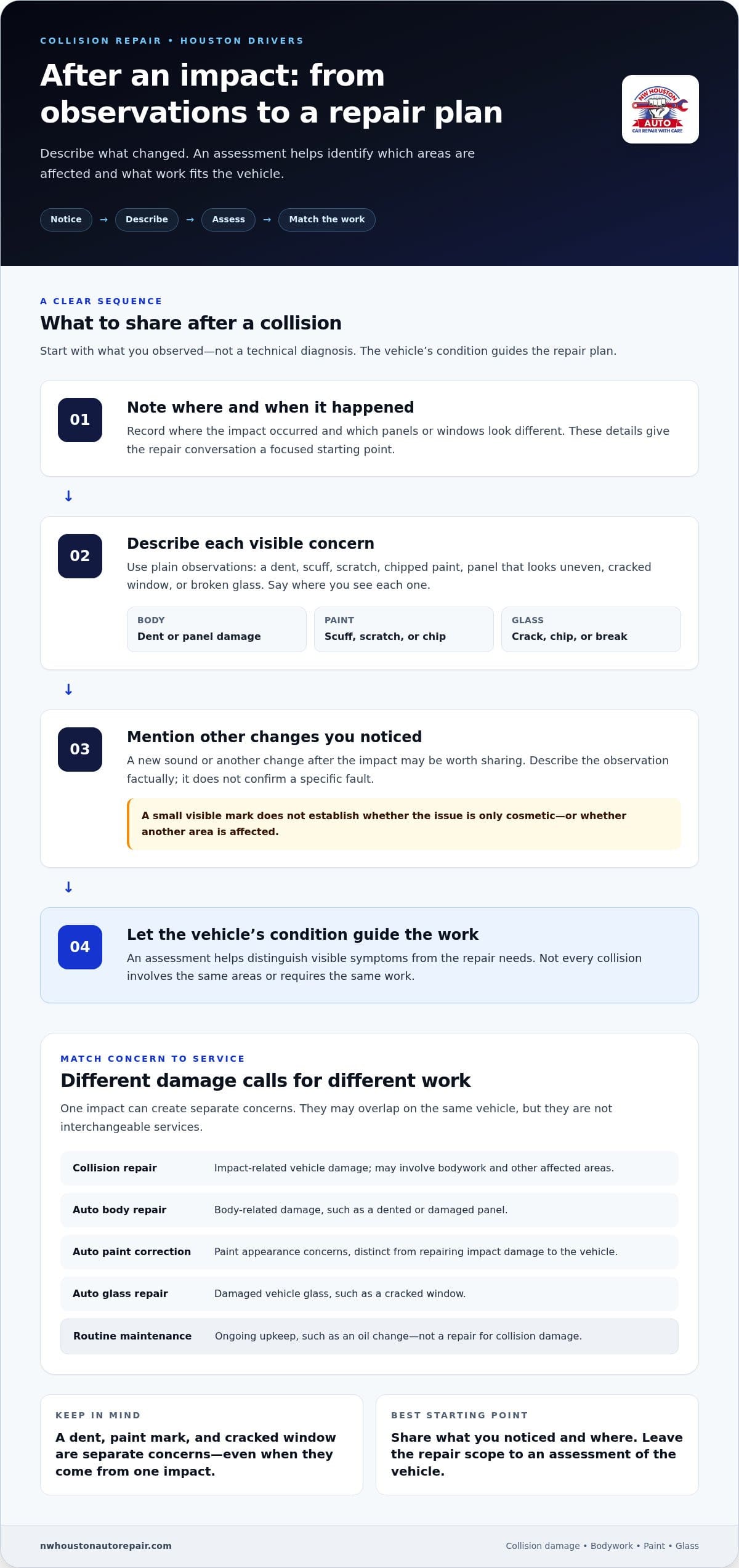
Make a note of where the impact occurred and which panels or windows look different. Describe what you see, such as a dent, surface mark, or crack, rather than trying to determine the full repair scope. These details give collision specialists a useful starting point.
NW Houston Auto Repair and Collision provides collision repair in Houston for drivers dealing with impact-related damage. Bodywork, paint, and glass concerns may call for different types of repair. Describing each concern separately helps make the conversation about your vehicle more focused.
How Collision Damage Can Affect Bodywork, Paint, and Glass
A collision can leave several distinct concerns, even when damage seems concentrated in one spot. One impact can create separate bodywork, paint, and glass repair needs, and each concern should be considered on its own. A dent may affect a body panel, while a nearby scuff marks the finish and a window shows a crack. Not every vehicle has all three types of damage; the details depend on the impact and the vehicle.
Describe what you noticed rather than trying to determine the repair yourself. Point out which areas look different, whether a panel seems out of place, and whether any window is damaged. An assessment helps distinguish visible symptoms from the work the vehicle needs.
Visible Body and Paint Damage After an Impact
Dents and panels that appear misaligned can indicate a bodywork concern. Scuffs, scratches, and chipped paint describe changes to the finish, though paint damage can appear alongside a dent. A surface mark alone does not establish whether the underlying panel is affected. Note what you see and where it is, especially if there are several marks around the impact area.
Auto paint correction addresses paint-related concerns, while collision repair focuses on damage resulting from an impact. The distinction helps avoid treating every scratch as body damage or assuming paint correction alone addresses an impact-related dent. Drivers with a paint concern can learn about auto paint correction as a separate service.
Vehicle technology can also affect the wider repair landscape. The U.S. Government Accountability Office discusses how evolving vehicle technology can affect repair markets and consumer choice in its GAO report on vehicle repair and technology. A dent or scratch may not show the full picture, so describe other concerns you noticed rather than relying on appearance alone.
Glass and Other Concerns to Mention
Cracked or broken vehicle glass is another concern to mention after a collision. Tell the repair team which window appears damaged and describe what you see, such as a crack, chip, or shattered area. NW Houston Auto Repair and Collision provides auto glass repair.
Keep your description factual. A panel that looks uneven, a new sound, or another change you noticed after an impact may be worth mentioning, but it does not confirm a specific fault. Share the observation and let the vehicle’s condition guide the next steps. To discuss collision-related damage, use the contact page.
Collision Specialists Versus General Repair: Matching the Work to the Damage
Different vehicle concerns call for different kinds of work. A collision can affect body panels, paint, or glass, while routine maintenance addresses ongoing service needs rather than impact damage. Identifying the type of concern helps you explain it, but the vehicle’s assessed condition determines the appropriate repair.
| Service category | Problem it addresses |
|---|---|
| Collision repair | Vehicle damage associated with an impact, which may involve bodywork and other affected areas. |
| Auto body repair | Body-related damage, such as a dented or damaged panel. |
| Auto paint correction | Paint appearance concerns, distinct from repairing impact damage to the vehicle. |
| Auto glass repair | Damaged vehicle glass, such as a cracked window. |
| Routine maintenance | Scheduled upkeep, such as an oil change, rather than collision damage. |
These categories can relate to the same vehicle without describing the same service. An impact may leave both a body concern and a paint mark, while a cracked window is a separate glass concern. An assessment helps identify which areas are affected and which services fit the damage.
Collision Repair and Auto Body Repair
Collision repair addresses damage associated with an impact. “Auto body repair” describes body-related work within that broader context, but not every collision requires the same procedure. If a body panel is damaged, that is a bodywork concern. The vehicle’s condition helps establish the work needed.
Collision Repair and Paint Correction
Paint correction concerns the appearance of paint; collision repair addresses impact damage. A visible scuff may prompt a question about the finish, but paint correction alone should not be treated as a repair for a dent, damaged glass, or other collision-related concerns. The services may address different aspects of a vehicle, depending on what an assessment finds.
Think of these categories as a way to describe the concern, not as a diagnosis or an automatic combination of services. Routine maintenance is separate from impact-related work, and glass or paint concerns may need their own consideration. Match the service to the damage and the vehicle’s assessed needs. This helps explain what you’ve noticed and understand why the recommended work may involve one service or several.
What to Do for Collision Repair in Houston
After an impact, clear observations are more useful than a guess about hidden damage. Before discussing collision repair, make a short record of what happened and what you can see or notice now. It gives collision specialists a practical starting point without asking you to diagnose the vehicle.
- Note when the damage occurred. Record the date or your best estimate, along with a brief description of the event. If you’re unsure of the exact time, say so.
- List the areas that look affected. Identify the side or part of the vehicle, such as a door, bumper, or window. Describe visible dents, scratches, chipped paint, or cracks in plain language.
- Write down changes you’ve noticed. Mention anything that seems different since the collision, such as a new sound or a change while using the vehicle. Report the observation without assuming its cause.
- Keep your notes together. A short list on your phone or on paper can help you explain the situation and remember details during a repair discussion.
Useful Details to Gather Before Discussing Repairs
Be specific and observational. “A scrape on the front passenger-side panel” is more useful than “the whole front end is broken.” Note glass concerns separately and include changes you noticed after the impact. You don’t need to identify hidden damage or decide which parts need repair. Stick to what you saw, heard, or experienced.
Questions That Clarify the Repair Conversation
Ask which concerns the proposed repair addresses and whether the plan includes the body areas you pointed out. If paint or glass damage is also present, raise it directly so those concerns can be discussed alongside the collision repair. This helps clarify the scope without assuming every visible mark requires the same service.
You can also ask what the next steps involve and how related paint or glass work fits with the collision repair. If an explanation is unclear, ask for it in straightforward terms. The goal is to understand which concerns are being addressed and what observations informed the plan.
For Houston drivers, having notes ready can make it easier to explain the situation when arranging local collision service. Mention every area that concerns you, even if you’re unsure whether it is related. A clear description supports an assessment but does not replace one.
Ready to discuss the damage you’ve noticed? Contact NW Houston Auto Repair and Collision about collision repair for your vehicle.
NW Houston Auto Repair and Collision: Local Collision Specialists
Each vehicle and impact is different. A dent, scraped panel, chipped finish, or damaged window may raise separate repair questions, and a visible mark alone does not determine the full scope of work. Describe what you’ve observed and which areas look affected. You don’t need to arrive with a technical diagnosis.
Collision Repair and Paint Services at the Shop
Collision repair is the relevant service for vehicle damage associated with an impact. If the damage also affects the paint’s appearance, auto paint correction addresses that separate concern. The two services address different needs, so one should not be treated as a substitute for the other. NW Houston Auto Repair and Collision provides collision repair for drivers dealing with impact-related damage.
Use simple terms to describe your observations. For example, identify a dent on a particular panel or point out a paint mark near it rather than trying to choose a repair method. Mention any other area that appears affected, including vehicle glass, so the concerns can be considered together.
Contact a Local Team About Your Vehicle
Repair questions can feel like a lot to sort through after an accident. Take them one at a time: share when the damage occurred, identify the areas that look affected, and explain any changes you’ve noticed. Straightforward observations help set up a focused conversation without requiring you to know the technical details in advance.
NW Houston Auto Repair and Collision serves Houston drivers with collision repair and paint-related services. Share your observations and questions to begin a conversation about your vehicle’s needs. To get started, contact NW Houston Auto Repair and Collision about collision repair.
Take the Next Step Toward Repair
You don’t need to have every answer after a collision. A clear description of what happened and what you’ve noticed gives collision specialists a practical place to begin. A conversation about your vehicle can help clarify which concerns need attention and how collision repair or paint-related services may fit.
Gather your observations, note any questions, and share them with the local team. Understanding the proposed work starts with a specific conversation, not a perfect diagnosis.
Ready to discuss your vehicle’s collision repair needs? Contact NW Houston Auto Repair and Collision to start the conversation with a local Houston team.
Frequently Asked Questions
What does a collision specialist do?
A collision specialist helps assess vehicle concerns connected to an impact and discuss the work that may address them. Ask which areas the proposed repair covers, what work is planned, and how the plan relates to the vehicle’s condition. A plain-language explanation can help you understand the scope before moving ahead.
When should I contact a collision repair shop after an accident?
Reach out when you have a repair concern after an accident. You do not need to identify the cause or full extent of the damage before starting the conversation. If the vehicle’s condition raises an immediate safety concern, do not rely on an online description to decide it is safe to drive. Seek appropriate help before continuing to use it.
Can collision damage affect more than the body panels?
Is paint correction the same as collision repair?
No. They are distinct services, and paint correction is not automatically part of every collision repair. If the finish matters to you, ask whether paint-related work is included in the proposed scope or handled separately. This clarifies the purpose of each service without assuming they are bundled together.
Can a collision repair shop handle damaged auto glass?
Yes. NW Houston Auto Repair and Collision offers auto glass repair. If you’re discussing a collision, mention glass damage alongside your other concerns so it can be considered as part of the repair discussion. Glass damage alone does not establish what additional work the vehicle may need.
How do I describe collision damage when contacting a shop?
Give a brief account of the incident and separate what you know from what you’re unsure about. Explain when you first noticed the damage, whether you saw the incident, and which areas appear affected. A photo may help illustrate the concern, but it does not replace a discussion of the vehicle’s condition.
Where can Houston drivers contact NW Houston Auto Repair and Collision about collision repair?
Houston drivers can contact NW Houston Auto Repair and Collision to discuss collision repair and concerns about a vehicle. Use the contact page to share what prompted you to reach out and discuss the next step.