

If you’re looking for clear coat scratch repair in Houston, the first step is understanding what the mark may involve. A scratch’s appearance can offer clues, but it doesn’t always show how deep the damage goes. This guide explains what to look for, how common repair approaches differ, and how to prepare for an assessment.
NW Houston Auto Repair and Collision is a family-owned Houston business that provides auto paint correction and collision repair. These services address different kinds of damage, so identifying whether a scratch is limited to the finish or accompanied by panel damage can help frame the next step.
Key Takeaways
- Scratch appearance alone can’t reliably show how deep the damage goes, so an assessment matters before choosing a repair.
- Compare paint correction, spot painting, and collision repair by the damage type and the area that needs attention.
- For clear coat scratch repair Houston, clear photos in good light can help document a mark, but they can’t diagnose it.
- Note the scratch’s location, visible finish changes, and any dents or panel damage before arranging an assessment.
- Damage depth and the surrounding finish help determine a practical repair approach.
Clear Coat Scratch Repair in Houston: What the Damage May Tell You
A scratch can look thin and shallow yet extend beyond the outer finish. Its colour, shape, and visibility offer clues, but they can’t reliably reveal its depth. That distinction matters because a surface mark and damage through the colour coat may need different repair approaches. For clear coat scratch repair, Houston drivers can start by learning how the paint layers differ, then arrange an assessment if the damage is uncertain or visibly deeper.
Clear coat scratch repair is the assessment and correction of a mark affecting the transparent outer layer of a vehicle’s paint finish. The phrase describes the area of damage, not a guaranteed outcome or a specific repair method. Lighting and reflections can make depth difficult to judge, and a mark that appears light may extend deeper. A technician can inspect the finish and determine whether auto paint correction suits its condition.
How clear coat, colour coat, and primer differ
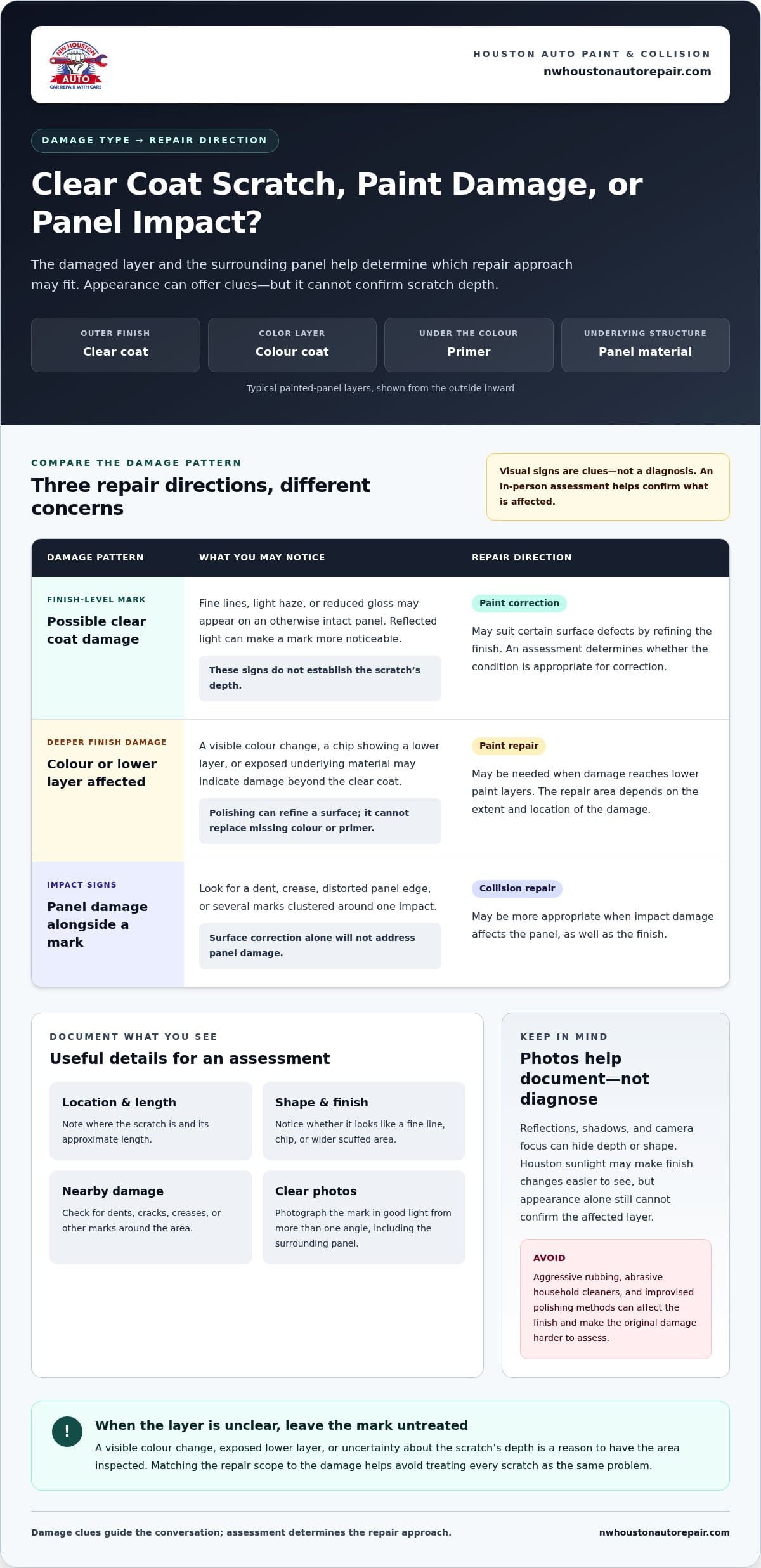
From the outside inward, a typical painted panel has a clear coat over the colour coat, with primer beneath the colour layer and the vehicle’s underlying material below that. Clear coat is the transparent protective finish that contributes to gloss. The automotive paint and clear coat overview explains how these layers form part of a vehicle’s paint system.
A mark limited to the clear coat affects a different layer than one that exposes colour, primer, or the panel material. Polishing may be considered for suitable surface defects, while damage reaching lower layers can require more extensive paint repair. A visible colour change, primer, or exposed material is a reason to arrange professional assessment, not to assume a simple correction will address it.
What Houston drivers should notice before choosing a repair
Before choosing a repair, note where the scratch is, roughly how long it is, and how it looks from different angles. Look for a change in colour, a rough or chipped edge, or surrounding signs such as a dent or crease. Houston’s strong sunlight can make changes in the finish easier to see. If you notice a visible change, have the area inspected rather than relying on appearance alone.
- Record the scratch’s location and approximate length.
- Notice whether it looks like a fine line, a chip, or a wider scuffed area.
- Check for nearby dents, cracks, or other marks that may point to impact damage.
- Take clear photographs in good light to document what you see, not to diagnose the scratch.
Be gentle with the area. Avoid aggressive rubbing, abrasive household cleaners, or improvised polishing methods, which can affect the finish and make the original damage harder to assess. If you can’t tell whether the mark has changed colour or exposed a lower layer, leave it untreated and get a professional opinion. A careful assessment helps match the repair scope to the damage instead of treating every scratch as the same problem.
How Clear Coat Scratches Differ from Paint and Collision Damage
A surface mark, a cut through the colour coat, and a scratch beside a dent may look like variations of the same problem, but they can need different repairs. The approach depends on which layers are affected and whether the panel itself is damaged. A product or technique described as “scratch repair” isn’t enough to determine what your vehicle needs.
Light haze, fine wash marks, or shallow-looking scratches may affect the clear coat and reduce gloss, often resulting from improper washing techniques. Following structured vehicle care routines—such as the cleaning and maintenance packages offered by Arab Car Wash—can help minimize surface marring over time. These defects can be candidates for paint correction, which refines the surface finish rather than replacing missing colour or reshaping a panel. NW Houston Auto Repair and Collision provides auto paint correction for suitable finish defects. A visual impression alone, however, can’t establish whether correction is the right fit.
When a mark may be limited to the clear coat
Fine lines that appear pale or become more noticeable in reflected light may be surface defects, while a broader haze can make an otherwise intact panel look dull. These signs are clues, not a diagnosis. A fingernail catching on a mark can’t reliably identify the affected layer either. Clear coats are designed to protect the finish, and NIST research on clear coat scratch resistance explores how their scratch performance is tested. An in-person assessment helps establish whether correction is suitable.
When paint or body repair may be the better path
A definite loss of colour, a chip showing a lower layer, or visible underlying material suggests the scratch may extend beyond the clear coat. Polishing can refine a surface, but it can’t replace missing colour or primer. These conditions may call for paint repair, with the repair area determined by the extent and location of the damage.
Look beyond the line itself. A dent, crease, distorted panel edge, or several marks clustered around one impact can indicate that the concern involves the body as well as the finish. Surface correction alone won’t address that full damage. Collision repair may be more appropriate when impact damage affects the panel.
Photographs are useful for showing where a mark is and how it appears in different light. Take clear images from more than one angle if possible, and include the surrounding panel. Reflections, shadows, and camera focus can hide changes in depth or shape, so a photo can support a repair discussion but can’t replace an in-person assessment.
For clear coat scratch repair, Houston drivers can use the damage pattern to start the conversation: surface haze may point toward correction, while colour loss or impact signs merit a closer look. An assessment helps match the repair scope to what’s actually affected.
Which Clear Coat Scratch Repair Option Fits Your Vehicle?
The right repair addresses the damaged layer without treating a surface flaw like panel damage or a deeper scratch like a quick polish. Suitability depends on the assessed depth of the scratch and the condition of the surrounding finish. A repair professional can compare the mark with the rest of the panel and explain the scope needed.
Paint correction for suitable surface marks
Paint correction may suit defects confined to the surface finish, such as certain fine marks or haze affecting gloss. It refines the existing finish. It doesn’t apply new colour or replace paint that’s missing. NW Houston Auto Repair and Collision provides auto paint correction, with the approach guided by the finish’s condition.
Spot painting or collision repair for deeper damage
If a scratch has removed colour or reached a lower layer, surface correction alone may not address it. Paint application may be needed, with the repair area shaped by the location and extent of the damage. If the mark accompanies a dent, crease, or other impact-related panel damage, collision repair offers a broader approach than treating the surface alone.
Think of the options in terms of what they change:
- Paint correction works on suitable surface-level finish defects and aims to refine the existing finish.
- Spot painting applies paint to a limited repair area when damage extends beyond what surface correction can address. The affected area and surrounding finish influence the scope.
- Collision repair addresses a broader repair need when impact damage involves the panel as well as its finish.
Each approach has trade-offs. Correction works on the existing surface and doesn’t add new paint, but it isn’t designed to replace lost colour. Spot painting addresses a localized area with new paint, so the work involves more than refining the original finish. Broader collision repair may be appropriate when panel damage accompanies the scratch. The goal is to match the repair scope to the actual condition, not to choose the option with the smallest-sounding service label.
DIY scratch kits can be tempting, but they can’t reliably establish whether damage reaches the colour coat or lies near a dent or panel edge. Avoid using a kit to make a deeper scratch appear resolved before its depth has been assessed. Professional refinishing also has environmental considerations; the EPA’s information on automotive refinishing provides context about regulated coating operations.
For clear coat scratch repair, Houston drivers should choose an approach after considering both scratch depth and finish condition. An assessment helps determine whether the mark calls for correction or a broader paint and collision repair approach.
How to Prepare for a Clear Coat Scratch Assessment in Houston
A little preparation can make an assessment more useful. You don’t need to identify the damaged paint layer yourself. Focus on recording what you see and explaining what happened. Clear notes and photos give the repair conversation a useful starting point and help distinguish the scratch from surrounding marks.
Document the scratch without disturbing the finish
Start with a clear view of the affected area. Take one wide photo showing the panel and the scratch’s location, then close photos from more than one angle in good light. Include the surrounding finish so nearby dents, chips, or scuffs are visible too. Photos are useful records, not a diagnosis of scratch depth.
Write down the panel location, approximate length, and visible changes in colour, texture, or shape. Note when you first noticed the damage and whether anything happened around that time, such as an impact or contact with another object. If you don’t know how it occurred, say so. That’s more useful than guessing.
Leave the surface untreated before it’s assessed. Don’t sand, scrape, aggressively rub, or apply unfamiliar products to make the mark less visible. These steps can alter the finish and make the original condition harder to evaluate. Keep your notes factual: describe the appearance rather than deciding whether the scratch is “only clear coat.”
Questions that help clarify the repair plan
At the assessment, ask which paint layer appears affected and how that finding shapes the repair choice. You can also ask whether the visible damage points toward surface correction, paintwork, or broader body repair. These questions keep the conversation focused on your vehicle’s condition and the scope of work being considered.
Before arranging an assessment, use this quick sequence:
- Inspect the vehicle in a safe, well-lit place without touching or treating the scratch.
- Document the panel with wide and close photos from multiple angles.
- Describe the location, appearance, when you noticed it, and any nearby damage.
- Arrange an in-person assessment and bring your notes and photos.
Clear photos can help explain whether the mark is a fine line, a broader scuff, or part of a damaged area, but lighting and camera angles can hide important details. Treat them as supporting information, not a substitute for seeing the vehicle in person. For clear coat scratch repair, Houston drivers can make the first conversation more productive by sharing observations without trying to diagnose the paint layers themselves.
Have your notes ready and contact the Houston repair team to discuss an assessment. A clear description helps the team understand what you’re seeing and begin a practical conversation about the repair approach.
Get Clear Coat Scratch Repair Guidance from a Houston Auto Paint Team
The practical next step is an assessment, not a guess based on how a scratch looks in one moment of light. Damage depth, the surrounding finish, and any signs of impact all help shape the repair plan. A surface defect may suit paint correction, while colour loss or panel damage can call for a broader approach. The recommendation should reflect what’s visible and what an in-person inspection reveals.
What a clear repair recommendation should explain
A useful repair explanation connects the observed damage to the proposed work. Ask which layer appears affected, whether the finish itself is intact, and whether there are dents or other impact signs nearby. The explanation should clarify why the issue appears superficial or deeper and whether correction, paintwork, or broader body repair is being considered.
It also helps to understand the scope. Is the concern limited to a small surface area, or does the damage involve more of the panel? What part of the visible mark will the proposed repair address? A straightforward explanation lets you compare the repair category with your vehicle’s condition, rather than relying on a label such as “scratch repair” to tell the whole story.
Take the next step with a local repair team
NW Houston Auto Repair and Collision provides auto paint correction and collision repair. These services give Houston drivers a local place to discuss whether a scratch appears limited to the finish or connected to broader impact damage.
Bring the details you’ve gathered: where the scratch is, what changes you can see, when you noticed it, and whether there’s a dent or other nearby damage. Photos can support the conversation, while an in-person assessment helps clarify the affected area and likely repair category. You don’t need to arrive with a diagnosis. Describe what you see and let the assessment guide the next step.
If you’re considering clear coat scratch repair, Houston drivers can start with a focused conversation about the damage and the approach that may fit. Explain your concern and ask how the recommendation relates to the visible condition. Contact NW Houston Auto Repair and Collision to discuss your vehicle’s scratch with the Houston team.
Make Your Next Repair Decision with Confidence
You don’t have to decide on a repair before understanding what the scratch involves. Use the details you’ve gathered to start a focused conversation, then let an assessment clarify the practical options for your vehicle. The right next step for clear coat scratch repair in Houston depends on the actual condition of the finish, not just how prominent the mark looks in a photo.
NW Houston Auto Repair and Collision provides auto paint correction and collision repair for Houston drivers. Whether you’re concerned about a small surface mark or damage that appears tied to an impact, understanding the repair approach can help you move forward without guessing.
Take the next step with the team. Contact the Houston repair team about your clear coat scratch to discuss an assessment for your vehicle. A thoughtful repair decision starts with a closer look.
Frequently Asked Questions
Can a clear coat scratch be repaired without repainting?
Yes, if the mark is limited to the clear coat and the finish is suitable for correction, repainting may not be needed. A faint scuff on a panel with no colour loss is different from a scratch that has removed paint. The repair decision depends on an in-person assessment, so don’t assume a scratch can be polished away just because it looks small.
How can I tell whether a scratch has gone through the clear coat?
You can look for a visible change in colour, a chip, or a line that appears to reveal a lower layer, but these signs aren’t a reliable diagnosis on their own. Reflections and shadows can change how deep a mark appears. A fingernail catching on the scratch doesn’t prove which layer is affected. For clear coat scratch repair, Houston drivers should rely on an assessment rather than a home depth test.
Is it safe to use a scratch-removal product on clear coat?
Not always. Scratch-removal products vary, and an abrasive formula or forceful application may alter the surface rather than resolve the underlying damage. If you don’t know whether the mark reaches the colour coat, avoid experimenting with compounds or polish. A product can change the scratch’s appearance without showing how deep it is, so get the damage assessed before treating a mark that looks more than superficial.
Does Houston sun exposure affect how I should care for a scratched finish?
Yes. Strong sun can make finish changes more noticeable, and ultraviolet exposure can contribute to clear coat deterioration over time. If you spot a new scratch, avoid leaving it covered with residue or dirt, and don’t use harsh cleaners to make it look better. When practical, park in shade while arranging an assessment. A visible change in gloss or colour deserves attention, especially if it’s spreading beyond the mark.
Is clear coat scratch repair the same as paint correction?
No. Clear coat scratch repair describes addressing a particular kind of damage, while paint correction is an approach that refines suitable surface-level finish defects. Correction doesn’t replace colour that’s missing from a deeper scratch. If a mark has exposed another layer, an assessment may point to paintwork instead. NW Houston Auto Repair and Collision provides auto paint correction when the finish condition suits it.
What should I do before bringing my vehicle in for a scratch assessment?
Keep the scratch untreated and be ready to explain what you noticed, including whether you’ve already applied a product or had the area polished. That history can help the repair team understand the surface as it appears now. Mention any nearby impact or panel concern, even if it seems unrelated. You don’t need to identify the paint layer yourself. Share your observations and let the assessment guide the discussion.