

What if the safer tire repair isn’t simply a plug or a patch? Tire plug vs patch: which is safer? It’s a fair question when a puncture leaves you wondering whether you can trust your tire on the road. The answer depends on the damage, the tire’s condition, and how the repair is done.
A plug and a patch work differently, so treating them as interchangeable can leave important questions unanswered. A plug fills the puncture channel, while a patch seals the tire from the inside. An inspection can also reveal damage you can’t see from the outside, including problems related to the puncture’s location or the tire’s condition.
In this guide, you’ll learn how plug-only, patch-only, and combination repairs compare, what can make a puncture unsafe to repair, and what to do if a repaired tire keeps losing air. NW Houston Auto Repair and Collision provides tire and flat repair for local drivers. We’re a family-owned shop serving Houston since 1999, and we’re here to help you take a careful next step.
Key Takeaways
- Learn why tire plug vs patch which is safer depends on the puncture and repair method, not just the repair’s name.
- See how external plugs, internal patches, and combination repairs differ in how they address a puncture.
- Recognize why damage location and the tire’s overall condition affect whether repair is a safe option.
- Follow practical next steps after a puncture, including prioritizing safety and arranging a professional inspection.
- Find out how tire and flat repair in NW Houston can help assess the damage and determine what comes next.
Tire Plug vs. Patch: Which Repair Is Safer?
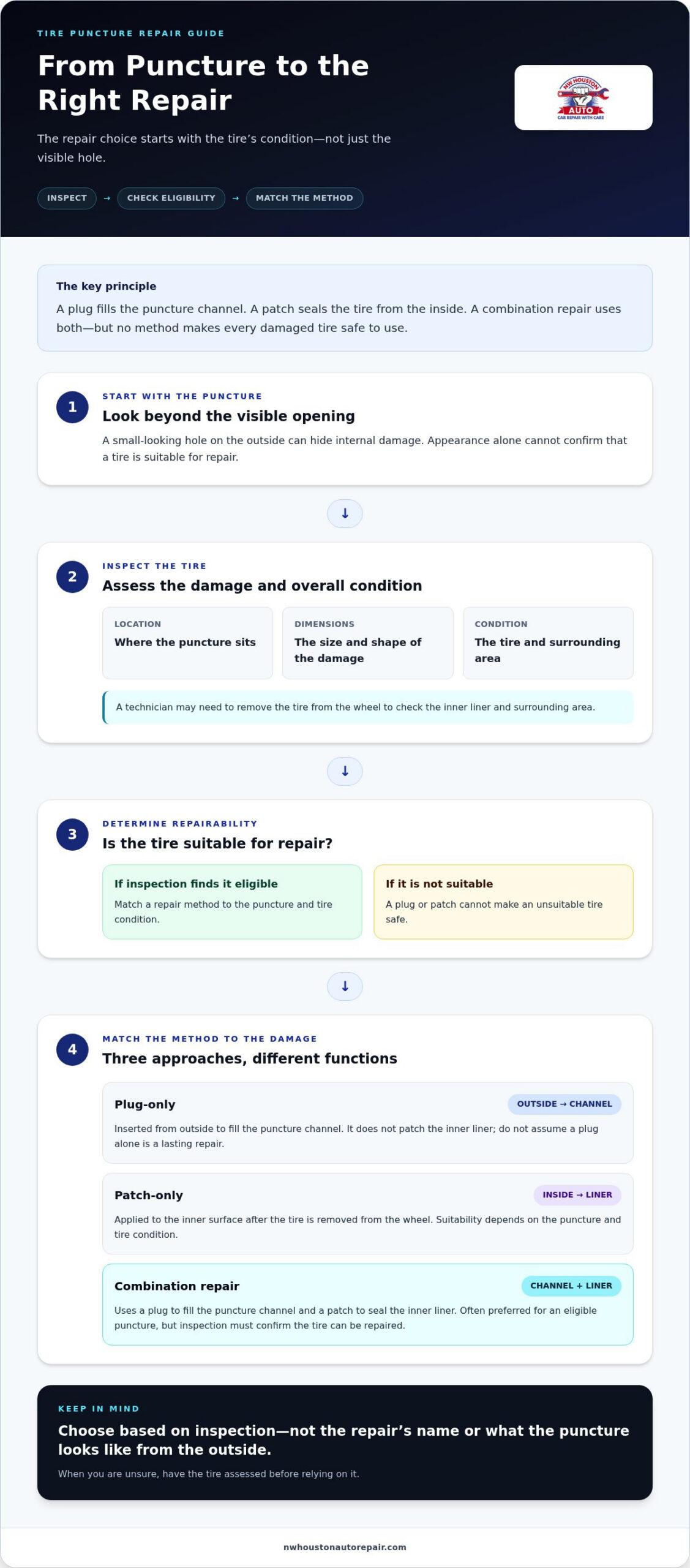
A safe tire repair depends on the damage and the repair method, not the label alone. The tire plug vs patch which is safer question doesn’t have one answer for every puncture. A plug works from outside the tire, while a patch is applied inside. A combination repair uses both, addressing the puncture channel and the inner liner. Whether any method is appropriate depends on the tire’s condition and a proper inspection.
Fixing the visible hole isn’t the same as confirming the tire is sound. A repair method can address a puncture, but it can’t make every damaged tire safe to use. An inspection helps reveal whether the tire can be repaired and which approach fits the damage. If you’re uncertain, have the tire assessed before relying on it.
What does a tire plug do?
A plug is inserted through the puncture from the outside, filling the channel where air is escaping. It can address the opening without applying a patch to the tire’s inner surface. But a plug-only repair shouldn’t automatically be treated as a permanent fix. Have the tire inspected so its condition and the puncture can be assessed before you rely on the repair.
What does a tire patch do?
A patch is placed against the inside of the tire after the tire has been removed from the wheel and inspected. It seals the inner liner rather than filling the puncture channel from the outside. That makes it different from a plug, even though both address punctures. A patch alone isn’t suitable for every kind of damage, so inspection should guide the decision.
A combination repair brings the two functions together: the plug fills the puncture channel, and the patch seals the inner liner. This addresses both parts of the puncture path instead of treating only the exterior opening or interior surface. It can be a more complete approach for a tire that’s suitable for repair, but it isn’t a solution for every tire.
Consider a tire with a puncture that looks small from the outside. That view can’t show whether there’s internal damage or whether the tire’s condition supports repair. Choosing a plug, patch, or combination based only on what’s visible risks missing important information. An inspection looks beyond appearance and helps determine whether repair is appropriate at all.
For NW Houston drivers, professional tire repair offers a practical next step when the right method isn’t clear. Assess the tire first, then match the repair to the damage. No plug or patch can make an unsuitable tire safe.
How Plug, Patch, and Combination Repairs Differ
The three methods differ in where they work and how much of the puncture they address. A plug is installed through the tire’s exterior, a patch is applied to the inner liner, and a combination repair uses both. Comparing methods isn’t enough on its own: the tire must also be inspected to determine whether the damage is appropriate for repair.
| Repair method | Location and basic process | Limitations and typical use |
|---|---|---|
| Plug-only | Inserted from the outside to fill the puncture channel. | Doesn’t seal the inner liner with a patch or involve examining the tire’s interior. Don’t assume a plug alone is a lasting repair. |
| Patch-only | Applied to the tire’s inner surface after removal from the wheel. | Addresses the inside surface but doesn’t fill the puncture channel in the same way as a plug. Suitability depends on the puncture and tire condition. |
| Combination repair | Uses a plug to fill the channel and a patch to seal the inner liner. | Often preferred for an eligible puncture, but inspection must show the tire can be repaired. |
Why is a plug-and-patch repair different?
A combination repair addresses two parts of the puncture path: the channel through the tread and the inner liner. That’s why a plug-and-patch repair is often preferred for an eligible puncture. The key word is eligible. Even this method can’t make every damaged tire repairable, and it doesn’t guarantee how long a tire will remain in service.
For an eligible puncture, a combination repair can address both the channel and the inner liner, but inspection determines whether repair is suitable. That’s a more useful rule of thumb than choosing by name alone. For general tire safety information, see NHTSA tire safety resources.
What does a professional tire inspection look for?
Inspection considers where the puncture sits, its dimensions, and the tire’s overall condition. A technician may need to remove the tire from the wheel to assess the inner liner and surrounding area. An outside view can’t reveal all internal damage. Exact size and location limits should be checked against current industry and tire-manufacturer guidance, not guessed from appearance.
For example, a puncture that looks small from the tread surface may still be unsuitable if its location or surrounding damage makes a safe repair impractical. The repair method can’t be selected just by how the hole looks from outside. Disassembly provides a clearer view of the area and helps identify concerns that could change the recommendation.
That inspection step makes a method comparison useful in practice. If you’re unsure how a puncture should be handled, arrange a professional tire assessment before relying on the tire.
When Is a Tire Plug or Patch Unsafe?
A plug or patch can appear to fit a puncture and still be the wrong choice for the tire. The visible opening is only part of the picture. Damage location, shape, nearby repairs, and the tire’s internal condition all affect whether repair is appropriate. The tire plug vs patch which is safer decision starts with assessing the tire, not choosing a material based on what you can see.
How do puncture location and damage affect repairability?
A puncture in the main tread area is different from damage near the shoulder or in the sidewall. The shoulder curves away from the tread, while the sidewall is the tire’s flexible outer wall. Damage in these areas may be unsuitable for repair because they flex differently under driving forces. Exact repair boundaries depend on applicable tire-industry guidance, so don’t judge suitability by appearance alone.
The shape and condition of the damage matter, too. A clean puncture is not the same as a tear, gash, or visibly distorted area. Multiple punctures or a new puncture close to an earlier repair can raise concerns, but neither detail alone tells the whole story. An inspection helps establish whether repairs overlap, whether surrounding material is affected, and whether the tire can be assessed for repair.
Internal damage may not be visible while the tire is mounted. A tire driven while low or flat may have damage inside, even if the exterior looks manageable. That doesn’t mean every such tire is automatically unrepairable, but an outside glance can’t settle the question. Inspection gives a technician a chance to assess the inner liner and surrounding area.
When should you stop driving and seek help?
If the tire is visibly damaged or losing air rapidly, get to a safe place and stop driving. Don’t continue just to see whether the pressure holds. If you’re in an unsafe stopping location, prioritize moving yourself and passengers away from traffic, then follow the vehicle manual or roadside assistance guidance for what to do next.
A plug or sealant kit may seem like an easy answer, but using one doesn’t prove the tire is safe for continued driving or suitable for a permanent repair. Treat it as an intervention, not a diagnosis. Likewise, a tire that appears to hold air after a repair still needs assessment if you’re unsure about the puncture location, tire condition, or repair history.
Safety takeaway: Don’t assume a puncture is repairable because a plug or patch seems to fit. Have the tire inspected before relying on it, especially if it’s losing pressure, visibly damaged, or has a previous repair nearby. For local help assessing a puncture, contact our NW Houston team.
What to Do After a Tire Puncture: A Safe Decision Process
A puncture can be unsettling, especially if you’re unsure whether the tire is losing air or safe to move. Don’t start by choosing between a plug and a patch. First protect yourself and your passengers, then arrange an inspection so the tire’s condition can guide the next step.
- Stay steady and look for a safe place to stop. Avoid abrupt steering or braking. If you can do so safely, move out of traffic and stop somewhere stable. Don’t put yourself at risk trying to examine a tire beside moving vehicles.
- Check your vehicle’s owner’s manual. Tire instructions can vary by vehicle, so use the manual for guidance on your specific vehicle and its tire equipment. Follow its directions rather than assuming a repair kit or spare is appropriate for every situation.
- Decide whether roadside assistance is safer. If you’re stopped in an unsafe location, the tire is visibly damaged, or you’re not confident handling the situation, stay clear of traffic and follow your manual’s guidance for roadside help. A repair kit isn’t a reason to work beside traffic or continue driving on a tire that may be unsafe.
- Note what you observed. Share which tire is affected, where the puncture appears to be, and whether pressure dropped suddenly or has continued to fall. Mention any warning light or recent pressure checks, and tell the technician if the tire has been repaired before.
- Arrange a professional assessment. Avoid relying on the tire until its condition has been evaluated. The question of tire plug vs patch which is safer comes after the technician determines whether the damage is repairable and which method fits.
What should you do immediately after noticing a puncture?
Keep the response simple: control the vehicle, find a safer stopping place when possible, and consult the owner’s manual. If you can’t safely reach a suitable place or the tire is losing pressure quickly, don’t attempt a roadside fix in a dangerous spot. Follow the vehicle’s roadside assistance guidance, and keep yourself away from passing traffic while you wait.
What happens during a professional tire repair assessment?
A technician evaluates the puncture and the tire’s condition before selecting a repair method. The tire may need to be removed from the wheel so the inside can be checked for damage that isn’t visible from outside. This assessment helps distinguish a repairable puncture from damage that calls for a different solution. NW Houston drivers can arrange an assessment through the shop’s tire repair service.
Share what you’ve observed, but don’t feel you need to diagnose the tire yourself. The safest next step is to contact our team to arrange a tire assessment. A careful inspection can clarify what the tire needs before you depend on it for your next drive.
Tire Repair in NW Houston: Get the Puncture Assessed
A puncture can leave you weighing repair options before you know what the tire needs. In NW Houston, NW Houston Auto Repair and Collision provides tire repair and flat repair, giving local drivers a place to have damage assessed. The inspection comes first. It helps determine whether the tire is suitable for repair and which method, if any, fits its condition.
The answer to tire plug vs patch which is safer depends on what the assessment reveals, not on which option seems easiest from the outside. A puncture’s visible opening may not show its full path or any damage inside the tire. A technician can evaluate the puncture and tire condition before recommending a next step.
How can local inspection help you choose safely?
An in-person assessment connects the repair decision to the actual puncture, its location, and the tire’s condition. A method that works for one tire may not suit another, so the recommendation should follow inspection rather than a guess based on appearance. Our local tire and flat repair service gives Houston drivers a practical way to have a tire evaluated.
To make the assessment useful, share what you’ve noticed. Explain which tire is affected, where the puncture appears, and whether pressure dropped quickly or continues to fall. Mention any previous repair or whether the tire was driven while losing air. These details provide helpful context, but they don’t replace an examination of the tire itself.
An inspection can also clarify what happens next if a repair isn’t suitable. The purpose isn’t to force a plug or patch onto every puncture, but to make a decision based on the damage and tire condition. You’ll have a clearer understanding of the recommendation instead of relying on a repair label alone.
Ready to have your tire checked?
If you’re in NW Houston and uncertain about a puncture, start by sharing what happened and any visible damage. Note whether the tire is losing pressure and whether it has been repaired before. If the tire appears unsafe to drive, follow your vehicle’s guidance or seek roadside assistance rather than driving to the shop on a questionable tire.
Professional tire repair begins with an informed assessment. Reach out to the NW Houston team to discuss the puncture and arrange tire repair. Contact the NW Houston team.
Make Your Next Drive a Confident One
Uncertainty about a puncture can linger even after the tire seems to hold air. Don’t rely on the repair label or appearance alone. The question of tire plug vs patch which is safer is best answered by assessing the tire and choosing the next step based on its actual condition.
If you’re still unsure, you don’t have to make that call alone. NW Houston Auto Repair and Collision provides tire and flat repair for Houston drivers, with an inspection to help determine what the puncture needs. Share what happened, including any pressure loss or visible damage, so the team has useful context.
Contact NW Houston Auto Repair and Collision about tire repair and take the next step toward driving with greater peace of mind.
Frequently Asked Questions
Is a tire plug safe for long-distance driving?
Don’t assume a plugged tire is ready for a long trip without a professional assessment. A plug alone doesn’t show whether the puncture’s location or the tire’s condition makes it suitable for continued driving. Before a highway journey, have the tire evaluated and follow the technician’s recommendation. If it’s losing pressure or shows visible damage, avoid setting out on it and consult your vehicle manual or roadside assistance guidance.
Can a tire be patched on the sidewall?
Sidewall damage is generally not considered suitable for a tire repair. That area flexes as the tire operates, so a patch shouldn’t be treated as a safe fix just because it covers the visible damage. The assessment depends on the tire and the damage, and a technician can inspect it. If you see a puncture or bulge on the sidewall, don’t rely on a patch kit to make the tire safe.
Is a plug-and-patch repair safer than a plug alone?
A plug-and-patch repair can address the puncture channel and the tire’s inner liner, so it may be the more complete approach for a puncture that qualifies for repair. That doesn’t make it suitable for every tire. The tire’s condition and the damage still matter. For the tire plug vs patch which is safer decision, focus on inspection and suitability rather than assuming one method is right in every situation.
How long can I drive on a tire plug?
There’s no reliable distance or time that applies to every plugged tire. The answer depends on the puncture, how the tire was handled, and whether it’s otherwise in sound condition. If a plug was installed roadside, don’t treat that as proof the tire is ready for routine commuting or a long trip. Arrange a professional assessment, and stop safely if pressure drops or the tire appears damaged.
Can I repair a tire puncture myself with a plug kit?
A plug kit may let you address a puncture, but using one doesn’t establish that the tire is safe for continued driving or that the damage is repairable. Follow the vehicle and kit instructions, and avoid attempting a repair where traffic or the surroundings put you at risk. If you’re uncertain about the puncture or the tire’s condition, arrange a professional inspection before relying on it for everyday driving.
Does a tire patch last longer than a plug?
There’s no reliable lifespan that applies to every tire and repair. A patch and a plug work differently, and suitability depends on the damage and the tire’s condition. Instead of judging by method alone, have the tire inspected and ask what the assessment means for continued use. If the tire later loses pressure, have it checked again rather than assuming the repair is holding.
Can every punctured tire be repaired?
No. Some tires have damage or condition issues that make repair unsuitable, even if the puncture looks small from outside. Damage near the sidewall, a tear instead of a straightforward puncture, or concerns inside the tire can change the assessment. A professional inspection helps determine the next step. If you’re in Houston and unsure whether your tire can be repaired, have it assessed before driving on it.