

What if the best way to challenge a car repair estimate isn’t to argue over a number, but to show exactly where the repair plan and the documented damage differ? Insurance negotiation for car repairs can feel daunting when an estimate leaves you unsure what’s covered or what you may have to pay. Start with the details, not a confrontation.
Before repairs begin, review the estimate alongside photos and repair documentation. Note specific differences, ask focused questions, and keep a record of the answers and next steps. That gives you a clearer basis for discussing the claim.
This guide explains how to review an insurer’s estimate, organize damage records, document differences, and discuss them with your insurer. You’ll find practical steps for moving toward a clear, well-documented collision repair plan, informed by the collision-repair experience of NW Houston Auto Repair and Collision, a family-owned Houston business established in 1999.
Key Takeaways
- Insurance negotiation for car repairs is a discussion about estimate scope, documented damage, and next steps, not simply a request for a higher payment.
- Compare the estimate’s repair operations, parts, labor, and paint work with the damage description and repair assessment.
- Separate a disagreement about repair scope from a total-loss valuation discussion so you can focus on the right questions.
- Prepare by organizing claim records, identifying specific differences, and asking focused questions about individual estimate items.
- Clear collision-repair documentation can help you understand the damage and discuss a well-documented repair plan.
Insurance Negotiation for Car Repairs: What You Can Discuss
Insurance negotiation for car repairs means discussing the scope of an insurer’s estimate, the damage documented by a repair facility, and possible next steps. It isn’t simply demanding a higher payment or bargaining over a shop’s price. An insurer’s claim estimate reflects its assessment of the claim. A repair facility’s assessment describes the vehicle’s visible condition and damage identified during inspection. The documents relate to the same vehicle but serve different purposes.
A written repair assessment can describe the work considered necessary for the vehicle, but it doesn’t determine what the insurer will cover. Policy terms, claim facts, and insurer decisions affect the outcome. The general overview of vehicle insurance explains common coverage concepts, but your policy and claim communications are the relevant documents for your situation.
Keep the discussion grounded in the vehicle and the records. Ask how the estimate relates to the documented damage, and separate questions about the repair assessment from questions about the insurer’s coverage position. A difference between documents is a reason to seek an explanation, not proof of wrongdoing or a guarantee that a particular repair will be covered.
Why an insurer’s estimate and a repair assessment can differ
Documents may be prepared at different stages of examining the vehicle. An initial estimate may reflect damage visible at that point, while a later inspection may identify damage that wasn’t apparent earlier. The documents may also describe the work differently. If they don’t appear to align, point to the specific difference and ask what information could clarify it. Keep what you observed separate from assumptions about why an item is missing.
What to clarify before opening a negotiation
Gather the claim number, insurer contact details, estimate date and version, and reported damage description. Ask which repair items the estimate includes, excludes, or lists as pending, and record the answers. Review your policy documents and claim communications for relevant terms and stated next steps. This preparation helps you understand the issue without assuming that an unclear or omitted item has already been denied.
Keep the conversation calm and specific. For example: “I’m trying to understand how the estimate addresses the damage described in the repair assessment. Can you explain what’s included and what remains pending?” This invites a clear explanation while distinguishing the insurer’s coverage decision from the repair facility’s assessment.
How to Review an Insurance Estimate for Car Repairs
Read the estimate alongside the damage description, photographs, and written repair assessment, rather than treating it as a standalone total. An estimate disagreement is clearest when each question is tied to supporting documentation. Identify what the estimate says, what the vehicle’s condition shows, and what still needs an answer. In insurance negotiation for car repairs, a precise comparison is more useful than a general claim that the estimate seems too low.
First, confirm that the document describes the correct vehicle and damage areas. Then compare its itemized repair scope with the available evidence. Review the operations, parts, labor, and paint-related work listed, and note whether each appears consistent with the damage description and repair assessment. If an item isn’t clear, ask about it rather than guessing why it was left out.
- Vehicle and estimate details: Check the vehicle information, estimate date, and version so you’re reviewing the correct document.
- Damage areas: Match each described area against your photographs and the repair assessment. Separate visible damage from items that may need further inspection.
- Line items: Review listed operations, parts, labor, and paint-related work. Mark entries that are unclear, missing, or difficult to connect to the described damage.
- Assumptions and pending items: Look for notes or conditions indicating that an item is based on an assumption or awaits further inspection or documentation.
- Unfamiliar wording: Ask the insurer to explain a term, calculation, or listed operation instead of guessing what it means.
Which estimate details deserve a closer look?
Start with differences you can describe plainly. For example, if the written assessment identifies damage in a particular area but the estimate doesn’t show a related operation, point to both documents and ask whether the work appears under another line item. Distinguish confirmed observations from questions that require inspection. A missing or unclear entry is a prompt for clarification, not evidence that the omission was intentional.
How repair documentation can clarify differences
Keep dated photographs, the insurer’s estimate, and the repair facility’s written assessment together. Ask the repair professional to describe specific differences in clear, itemized language and connect each observation to the relevant damage. A collision repair assessment can help explain the vehicle’s condition and repair scope; it doesn’t decide what an insurer will cover.
When you follow up, refer to the estimate version and name the specific item. For example: “The assessment describes damage here, but I can’t find a matching line on this estimate. Is it included elsewhere, or is more documentation needed?” Record the response and next step. Houston-area drivers can contact NW Houston Auto Repair and Collision for clear collision-repair guidance and documentation.
Estimate Disagreement or Total Loss? Compare Your Next Steps
Start by identifying the decision in question. A repair-scope disagreement is about whether the estimate accounts for work associated with documented damage. A total-loss discussion concerns the insurer’s decision and its valuation of the vehicle. These are different issues, so organize the records and follow-up separately. Don’t assume a universal repair-cost threshold or a right to a particular outcome. Review the applicable policy documents and seek current Texas-specific guidance if you need legal or procedural information.
| If the issue is… | Focus your review on… | Ask… |
|---|---|---|
| Repair-scope disagreement | Itemized damage, supporting repair records, and estimate items that appear omitted or unresolved | What information is needed to review this specific line item? |
| Possible total loss | The insurer’s explanation, valuation information, vehicle condition, mileage, and relevant policy documents | What is the basis for the decision, and which vehicle details informed the valuation? |
If the vehicle is being repaired
Keep the conversation centered on repair scope, not assumptions about the insurer’s motives. Identify each unresolved estimate item and connect it to the relevant damage description or repair record. Ask what additional information would help the insurer review it. Record the name or role of the person who will review it, the documents you provided, and any discussed follow-up. This creates a clear record without treating a review as a promise of coverage.
If the insurer says the vehicle may be a total loss
Focus on the decision and valuation. Ask the insurer to explain the basis for its position and identify the valuation information used. Check the vehicle’s condition and mileage details against your records, and gather documents that may clarify them. Keep valuation questions separate from repair-scope questions in your notes and correspondence. That makes it easier to track which issue remains unresolved.
For example, a question about whether a damaged area is fully represented on a repair estimate belongs in the repair-scope record. A question about whether the valuation reflects the vehicle’s recorded mileage belongs in the total-loss record. Direct each concern to the information that can address it instead of relying on a repair estimate to answer a valuation question, or vice versa.
In insurance negotiation for car repairs, match your next steps to the insurer’s current position, and keep each question specific and supported by records. Policy terms, claim facts, and insurer decisions affect the outcome, so general online guidance can’t guarantee a particular result. If the insurer’s position changes, update your notes and ask which documents or next steps apply.
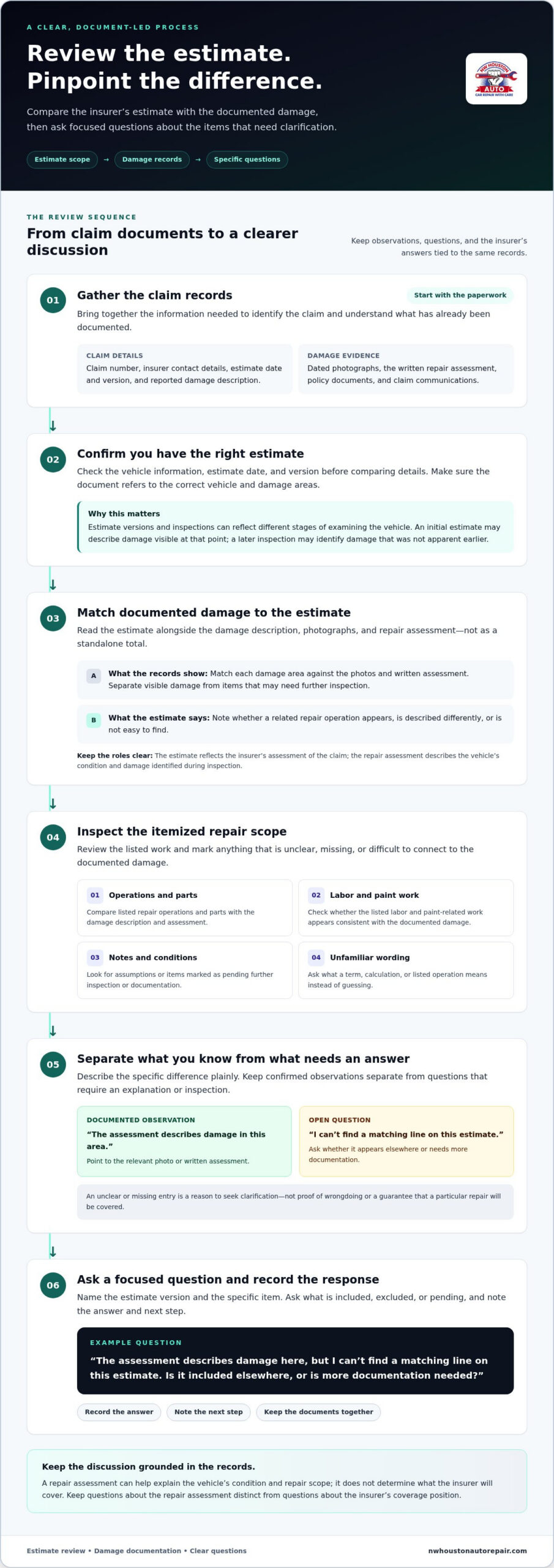
How to Negotiate an Insurance Repair Estimate: A Practical Sequence
An organized approach makes insurance negotiation for car repairs easier to manage. Keep the discussion focused on the estimate, supporting information, and the question that needs an answer. You don’t have to resolve every difference in one conversation. Work through these steps and keep a record as you go.
- Organize the claim documents. Put the claim reference, current estimate and date, damage description, relevant photographs, and written repair assessment in one place. Use the same estimate version in each conversation so you and the insurer are discussing the same line items.
- Identify each specific difference. Note the estimate item, what the repair documentation says, and why it needs clarification. Separate confirmed observations from issues that may require further inspection or documentation. An item-by-item list is easier to review than a general objection.
- Ask a focused question. Name the line item and supporting evidence, then request an explanation or review. For example: “The written assessment describes damage in this area, but I don’t see a related operation on the estimate. Can you explain whether it’s included elsewhere or what information is needed to review it?” Keep your wording neutral and specific.
- Record the response and next step. Note the date, contact’s name or role, your question, the response, and any follow-up discussed. If you speak by phone, send a brief written summary afterward to create a shared record. Don’t treat a lack of response as approval; ask how to follow up.
Prepare a focused request for estimate review
In a written request, identify the claim reference, estimate date, item you’re questioning, and reason you’re requesting a review. Attach relevant photographs or a written repair assessment, and label each file so its connection to the question is clear. Close by asking what additional documentation or inspection would help address the difference. Keep a copy of what you send.
Keep the conversation clear and documented
Stay factual, even if the process feels frustrating. Ask for an explanation rather than making an unsupported accusation, and summarize phone conversations by date, contact, key response, and next action. If the answer remains unclear, ask the insurer to explain its review or complaint process and how to submit your concern. Record the guidance without assuming it determines coverage.
Accurate collision-repair documentation can make the vehicle’s damage and repair needs easier to describe. For local collision-repair guidance in Houston, contact NW Houston Auto Repair and Collision.
Get Clear Collision-Repair Guidance in NW Houston
A clear repair plan starts with understanding the vehicle’s condition. If the insurer’s estimate and the damage you see don’t seem to line up, collision-repair documentation can help explain what’s visible and what questions remain. It won’t guarantee that an insurer will approve a repair item, but it gives you a more specific basis for discussing the estimate and considering next steps.
NW Houston Auto Repair and Collision is a family-owned Houston business that provides collision repair. The team can help explain the vehicle’s damage and repair needs with an assessment of the work involved. That information is separate from the insurer’s coverage decision. Direct claim questions to your insurer, and use repair documentation to describe the vehicle and proposed work.
What a collision-repair assessment can help explain
A written assessment can describe observed damage, connect repair needs to those observations, and identify questions that may warrant insurer review. For instance, if the damage description and estimate seem to address different areas, a clearly documented assessment can help you point out the difference and ask what information is needed. It reflects the vehicle and the repair professional’s observations; it doesn’t decide what an insurer will cover.
Paint-related concerns can also be part of understanding the repair scope. If collision damage affects a painted area, the assessment can clarify the finish work being considered. NW Houston Auto Repair and Collision provides collision repair with documentation focused on the vehicle’s specific damage, not a promise about claim outcomes.
Choose a clear next step for your repair
Before discussing repair needs, gather the insurer’s estimate, damage photographs, and any written assessment or claim communication you have. Put the documents together and note the questions you still need answered. This helps you explain what you’re seeing without mixing repair details with assumptions about coverage.
Claim discussions can leave you unsure about what happens next. Take it one step at a time: understand the damage, keep records organized, and ask the insurer clear questions about its estimate and process. For repair guidance, talk with the local team about the vehicle’s condition and the collision-repair work under consideration. NW Houston Auto Repair and Collision can help you move toward a clearly documented repair plan, without promising an insurer’s decision.
Contact NW Houston Auto Repair and Collision to discuss your collision-repair needs.
Take the Next Step Toward a Clear Repair Plan
You don’t have to settle every claim question at once. Focus on the next decision you can make: understand the vehicle’s damage and keep repair information organized as discussions continue. That can help you make informed choices while the insurer reviews its position.
Good insurance negotiation for car repairs is grounded in clear records and specific questions, but the insurer determines how it responds under the policy and claim facts. Keep those roles distinct. A repair professional can explain the vehicle’s condition and repair needs; your insurer can clarify its estimate and claim process.
If you’re in NW Houston and want guidance on the collision-repair side of the process, contact NW Houston Auto Repair and Collision to discuss your vehicle and repair documentation. A calm, informed next step can make the process easier to manage.
Frequently Asked Questions
Can I negotiate with my insurance company about car repairs?
Yes. You can ask the insurer to explain its estimate and review specific repair items. Keep the conversation focused on the claim, the damage, and the work being discussed, rather than treating it as a negotiation over the shop’s price. Insurance negotiation for car repairs can clarify what the estimate addresses, but coverage and claim outcomes depend on the policy and claim facts.
What should I do if the insurance estimate is lower than the repair shop’s estimate?
Compare the documents item by item before focusing on their totals. A repair facility’s estimate may describe work that the insurer’s estimate doesn’t show, or the documents may use different wording for related operations. Ask the insurer to explain the specific differences and whether further review is possible. A repair facility’s estimate alone doesn’t establish what the insurer will pay.
Can I choose where my car is repaired after an accident?
Your options may depend on the policy, claim circumstances, and the insurer’s process. Review your policy and ask the insurer how repair-facility choices are handled for your claim. If you have a Houston collision repair facility in mind, share its details and ask what information the insurer needs. Clarify any effect on estimates, communication, or payment before making repair arrangements.
What happens if more damage is found during car repairs?
If inspection reveals additional damage, ask the repair facility to document what was found and how it relates to the collision. Keep the updated assessment, relevant photographs, and any revised estimate together. Contact the insurer to ask how to submit the additional information and what review steps apply. The process can vary, so don’t assume newly identified work is automatically included in the original estimate.
How do I dispute an insurance estimate for collision repairs?
Send the insurer a concise written request identifying the estimate item you question and why it may not reflect the documented damage. Attach records that support the concern, such as a relevant photo or repair note, and ask what review process applies. Keep a copy of your request and the response. If the answer remains unclear, ask how to raise the concern through the insurer’s review process.
Does negotiating a car repair estimate delay repairs?
It can affect timing if a decision or additional review is needed before certain work proceeds, but the effect depends on the claim and repair circumstances. Ask the insurer what can move forward while a specific item is under review, and ask the repair facility what work depends on that answer. Confirm any potential out-of-pocket responsibility before authorizing work you believe may be disputed. For collision-repair guidance in Houston, contact NW Houston Auto Repair and Collision to discuss your vehicle’s damage and repair documentation.